

Decoding Downtime: Understanding User Behavior During Outages
- Watchman Tower Team
- Updated: July 21, 2026
- Category: Website Monitoring
- Read Time: 3 min
User behavior during outages reveals why downtime is not just technical. This guide explains the customer-side consequences that make earlier visibility matter.
Introduction
In a world where online presence is crucial, website downtime can lead to panic not just for businesses, but also for users. Understanding user behavior during these outages is vital for developing effective communication strategies. This blog will delve into the emotional responses and actions users take during these critical moments, allowing businesses to enhance their trust and communication efforts.
The Emotional Landscape of Downtime
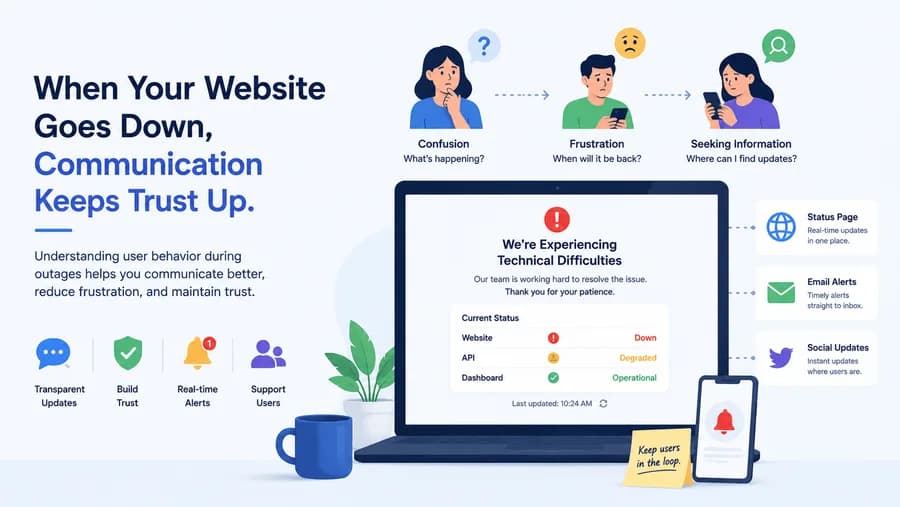
When a website goes down, users experience a range of emotions. Understanding these feelings can foster better communication.
Frustration and Confusion
Initially, users may feel frustrated and confused. They often wonder if the problem lies with their device or internet connection. This uncertainty can lead to:
- Increased anxiety about transaction completeness.
- Frustration leading to negative perceptions of the brand.
- Searching for alternative platforms to fulfill their needs.
Seeking Information
User behavior shifts towards seeking information during outages. They may:
- Check social media for updates.
- Search for status pages or any other official communications.
- Contact customer support for immediate assistance.
What Users Expect From Brands During Downtime
Users navigate through challenging emotions during outages, and they expect businesses to take specific actions to alleviate their concerns.
Transparent Communication
During downtime, users look for transparency. They appreciate:
- Timely updates via email, social media, or status pages.
- Clear explanations about the nature and expected duration of the outage.
- Acknowledgment of their feelings and experiences.
Support and Resources
In addition to information, users expect resources to help them cope with the inconvenience:
- FAQs addressing common concerns during outages.
- Alternative options or compensations for impacted services.
- Links to relevant community forums or support contacts.
Enhancing Trust Through Proactive Measures
Businesses can significantly improve user trust by adopting proactive approaches in downtime management.
Establishing a Status Page
A public status page acts as a centralized communication hub. Users can check the status of services anytime. Benefits include:
- Building transparency and reducing the need for inquiries.
- Providing real-time updates during outages.
- Creating a historical performance record.
Utilizing Automated Alerts
Automated alerts ensure that users are informed as soon as an outage occurs. General benefits are:
- Targeted messages to specific users or customer segments.
- Reduced reliance on customer support for status updates.
- Improved user experience by keeping them in the loop.
Real-World Examples of Effective Communication
Many companies have successfully navigated downtime challenges by implementing strong communication strategies. Here are a few.
Case Study 1: Company A
Company A had a significant outage that lasted several hours. They used social media to provide real-time updates, explaining the issue and time expected to resolve it. This transparency helped maintain user trust.
Case Study 2: Company B
Company B maintained an up-to-date status page that users frequently checked. When an outage occurred, users found the information they needed without feeling abandoned.
Conclusion
Understanding user behavior during website outages is essential for businesses aiming to enhance trust and communication. By prioritizing emotional responses and expectations, organizations can develop effective strategies to manage outages better. Whether through transparent communication or proactive measures like status pages and automated alerts, companies can maintain user trust even in their darkest downtime moments. Remember, building trust starts with acknowledging your users' experiences and responding in meaningful ways.
Free plan available. No credit card needed.
FAQ
What emotions do users typically experience during website outages?v
Where do users look for information during an outage?v
What do users expect from brands during downtime?v
Why is a status page important during outages?v
How do automated alerts improve outage communication?v
Blog Posts
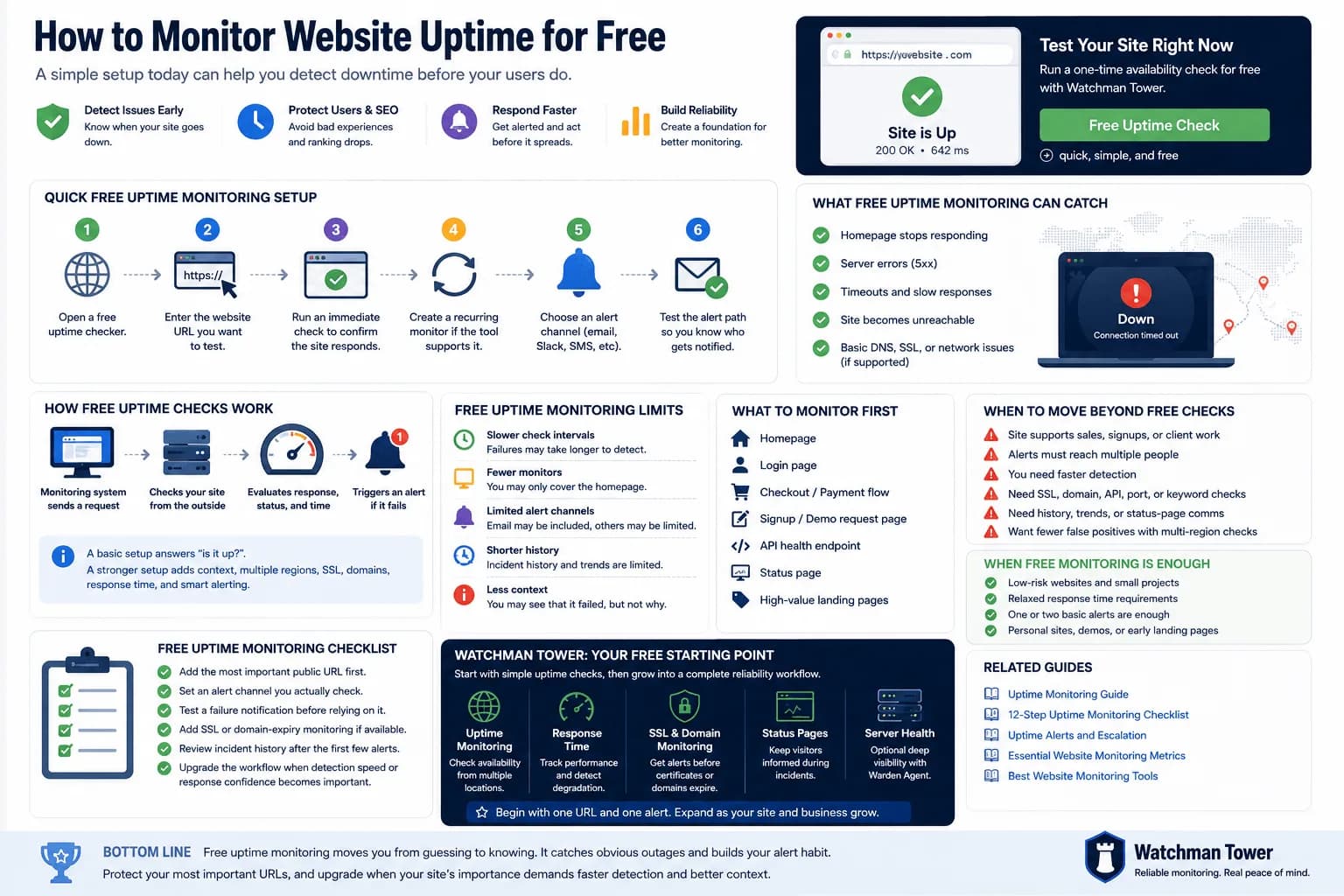
Monitor Website Uptime for Free: Setup, Limits, and Next Steps...
You can monitor website uptime for free by adding your URL to a basic checker, choosing an interval, and enabling alerts. This guide explains the fastest setup, what free checks can catch, and where free monitoring starts to fall short.
Learn more about Monitor Website Uptime for Free: Setup, Limits, and Next Steps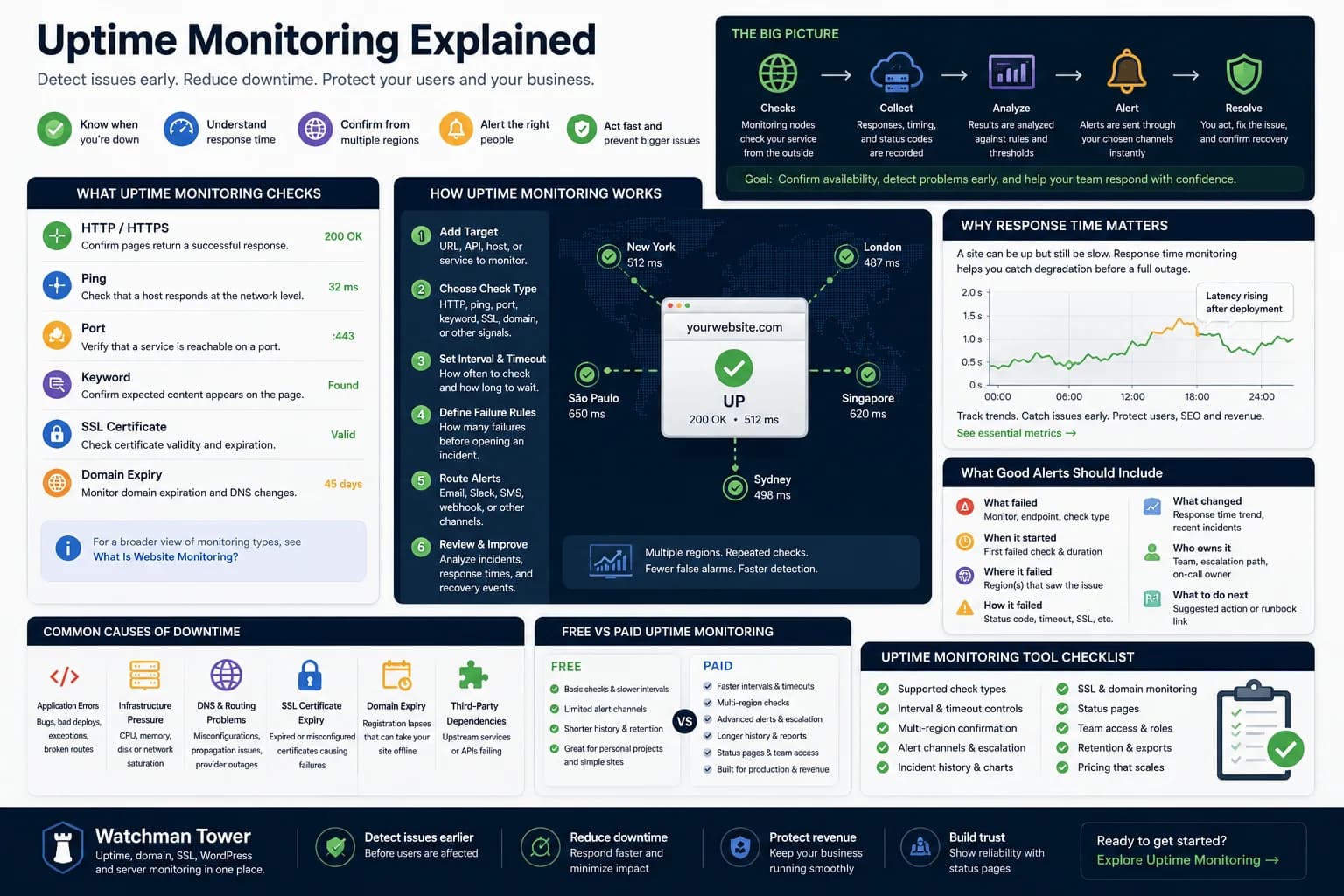
Uptime Monitoring Guide: How to Detect Downtime and Alert Faster...
Uptime monitoring helps you detect when a website, app, or service becomes unavailable. This guide explains how checks work, which signals matter, how alerts should be routed, and how to turn basic uptime checks into a practical response workflow.
Learn more about Uptime Monitoring Guide: How to Detect Downtime and Alert Faster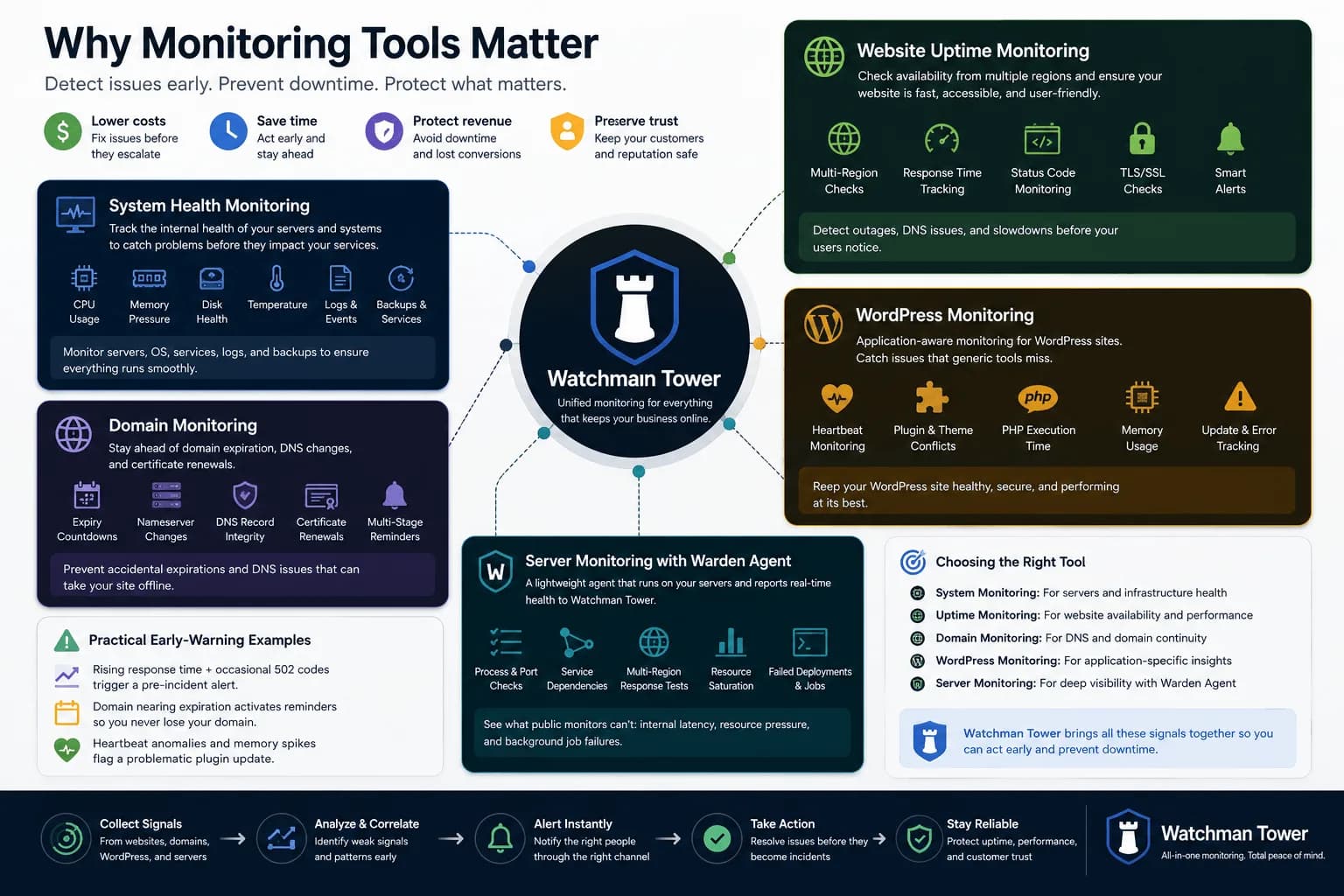
Different Types of Monitoring Tools: From System Health to Website Uptime...
Monitoring tools have expanded far beyond one-dimensional checks. This guide explains the main tool categories and where broader health visibility starts to matter.
Learn more about Different Types of Monitoring Tools: From System Health to Website Uptime