

Our Blog
Stay updated with the latest news, tips, and insights from Watchman Tower. Our blog features articles on website and server monitoring, security best practices, and product updates to help you make the most of our platform.
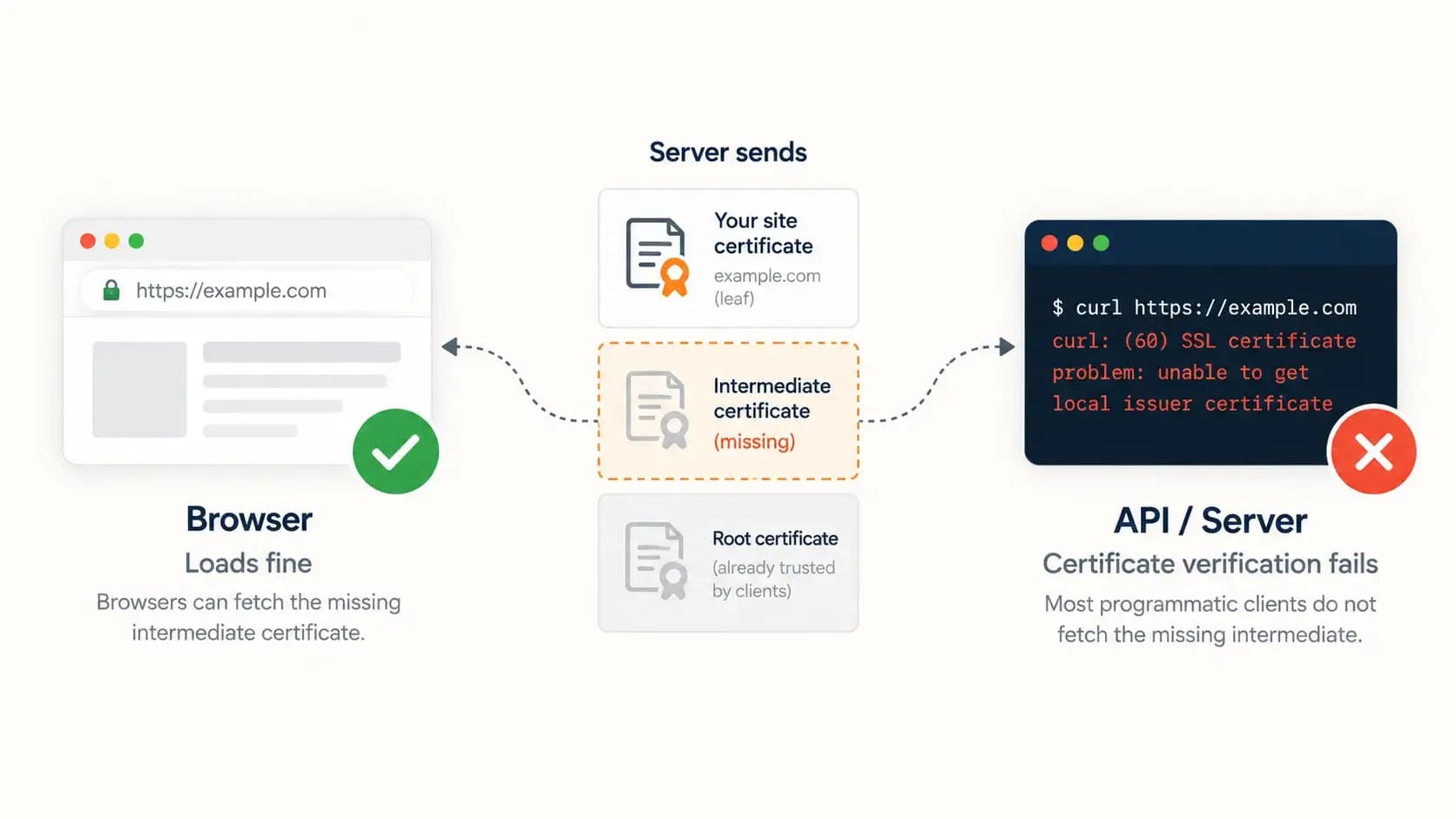
Unable to Verify the First Certificate: Why Your Site Works in Chrome but Fails for APIs
Your site opens fine in Chrome, but curl, Node.js and webhooks fail with "unable to verify the first certificate". The cause is usually a missing intermediate certificate. Here is how to confirm it and fix it on the server.
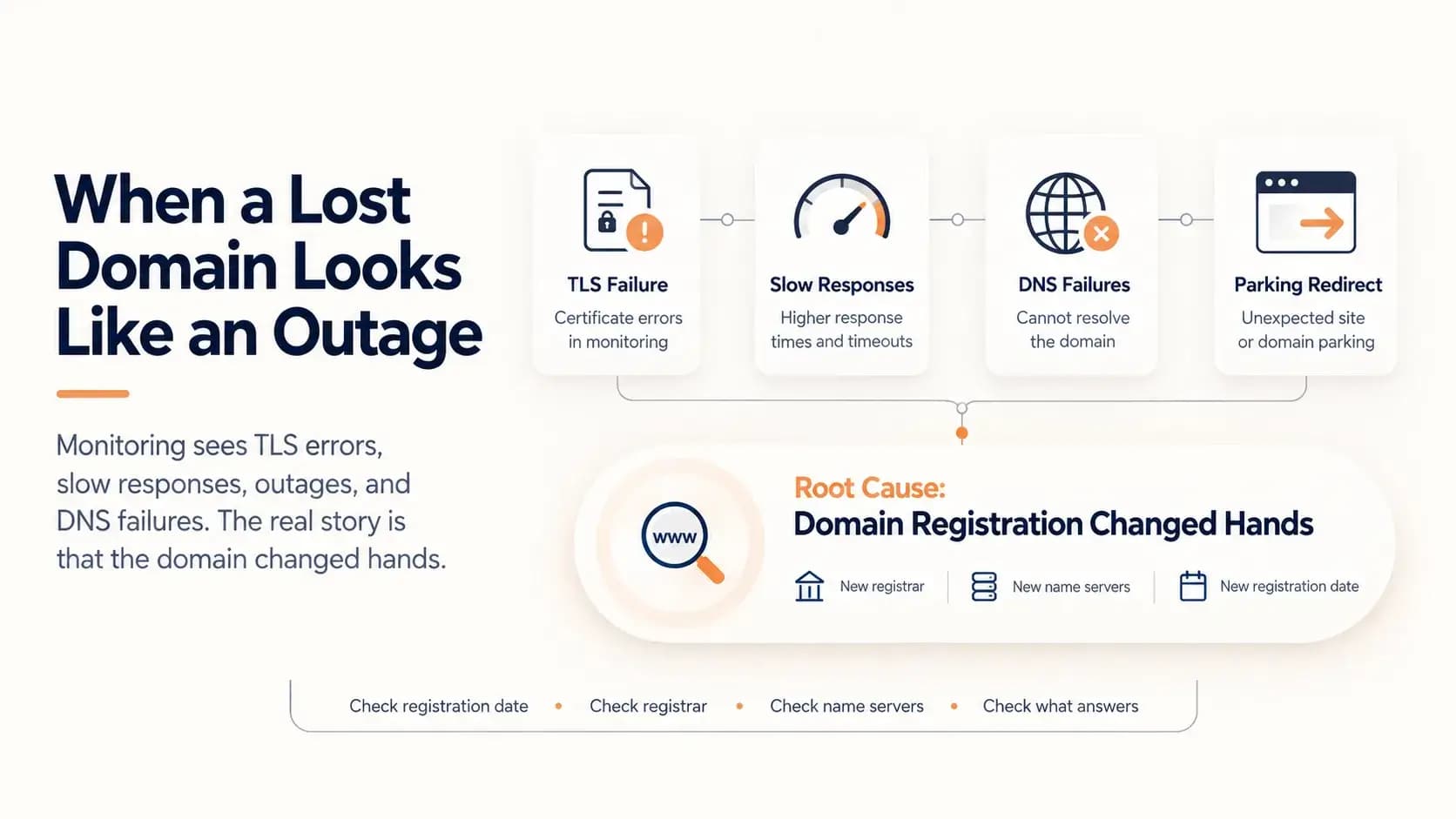
What Happens When a Domain Expires and Someone Else Registers It
A domain that lapses and is registered by someone else does not look like a lost domain. It looks like a certificate error, slow responses, an outage and DNS failures. This case follows one such domain through five weeks of accurate but misleading alerts, and shows how to tell the difference.
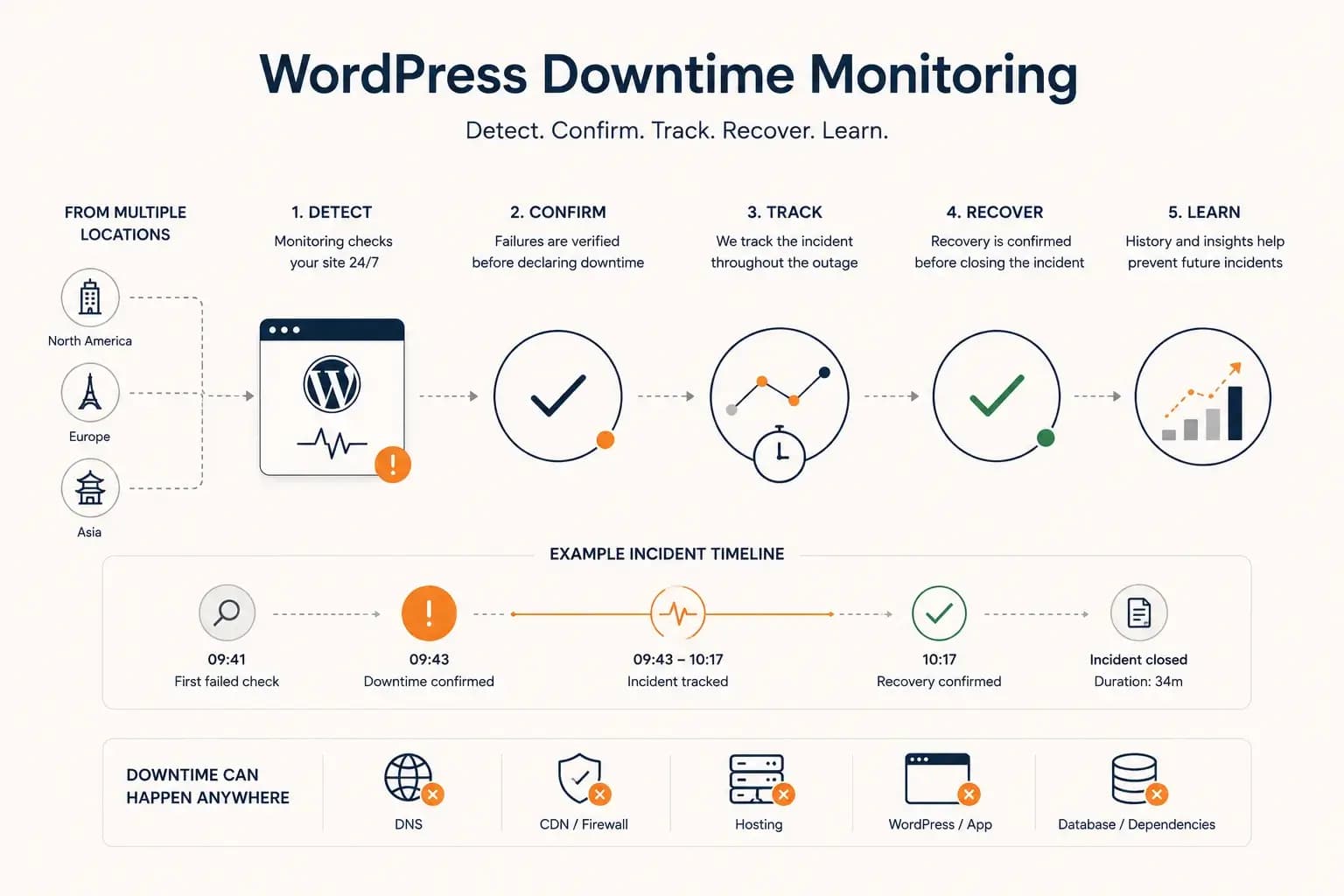
WordPress Downtime Monitoring: How to Detect and Track Outages
WordPress downtime monitoring goes beyond detecting a failed request. Learn how to confirm real outages, track incidents, verify recovery, and use downtime history to improve reliability.
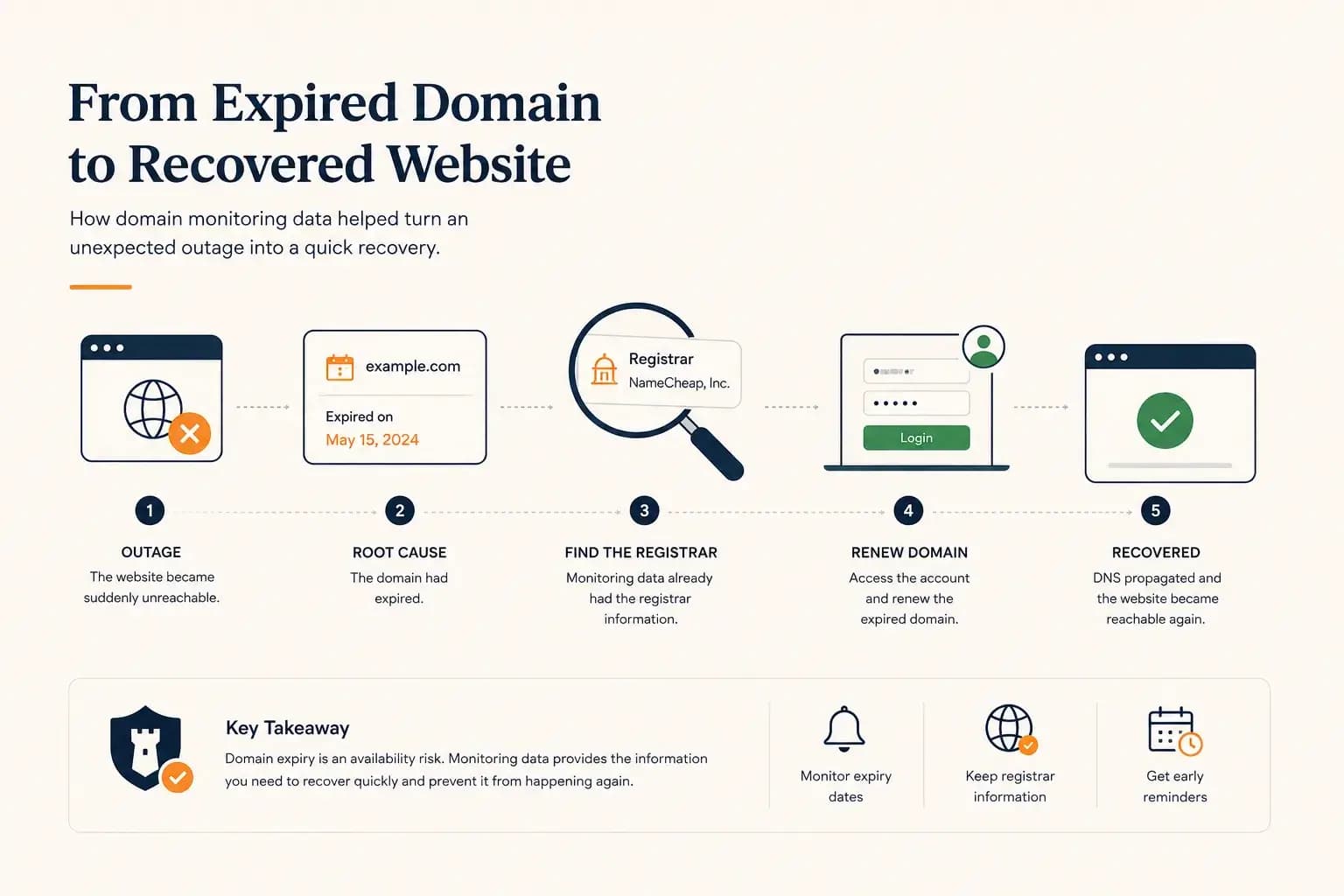
The Website Went Down — and the Owner Didn’t Know Where the Domain Was Registered
A real-world expired domain recovery case: how a website went offline, how we identified the registrar from monitoring data, and how the domain was renewed before it was lost.
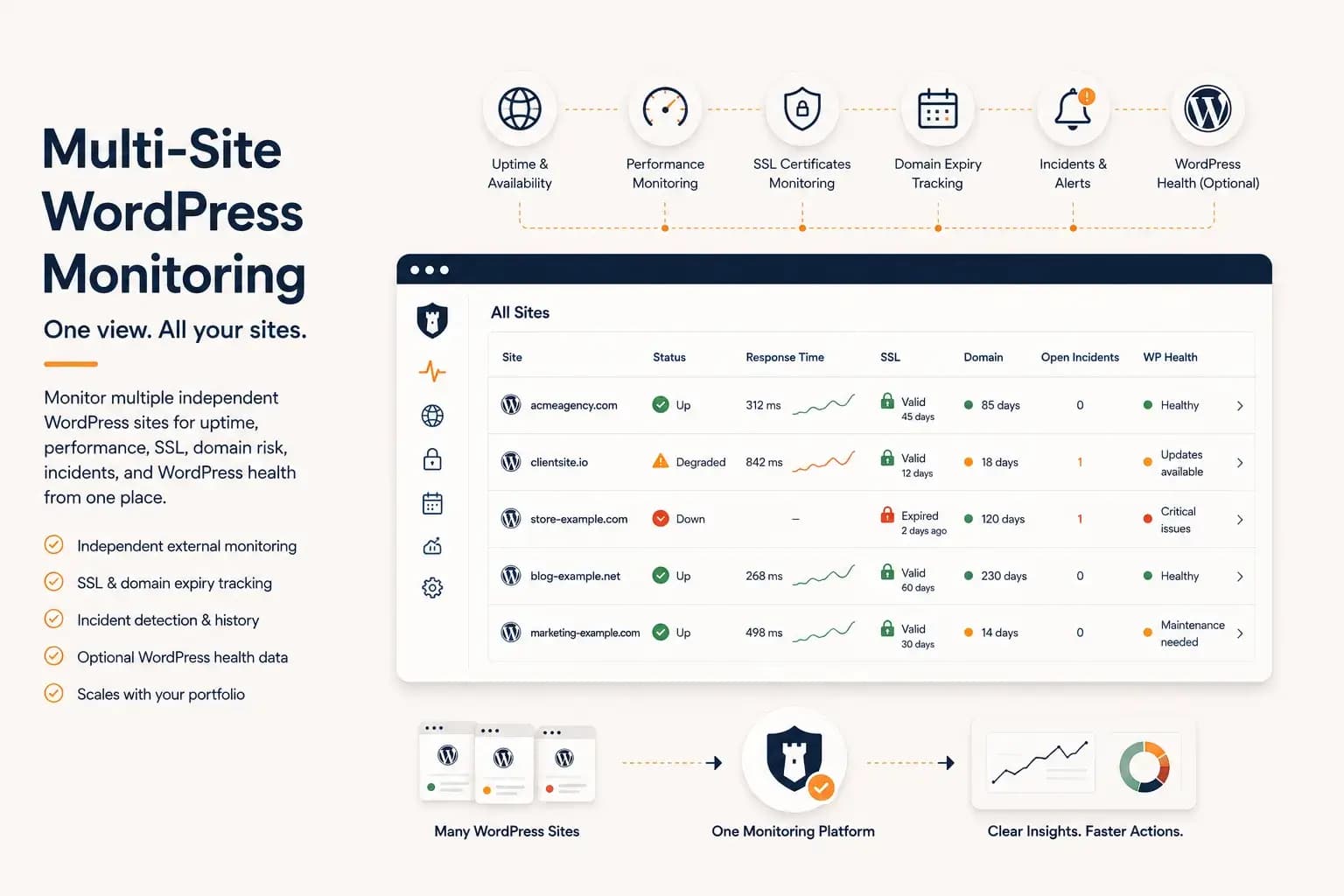
WordPress Multi-Site Monitoring: Manage Multiple Sites Efficiently
Managing multiple WordPress websites requires more than uptime checks. Learn how to centralize monitoring, reduce operational overhead, and gain visibility into performance, SSL, domains, and WordPress health from a single dashboard.
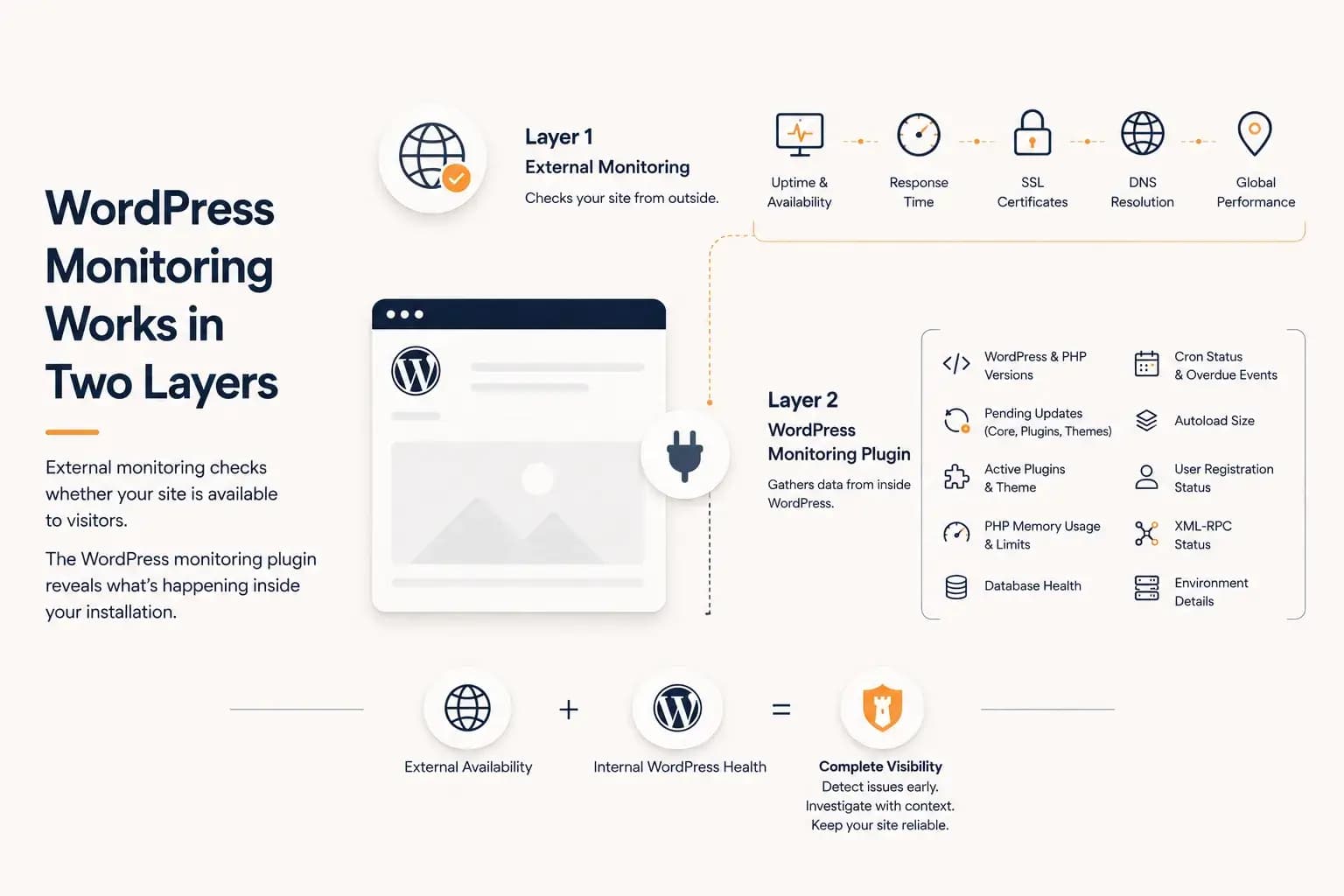
WordPress Monitoring Plugin: What It Tracks and What It Misses
A WordPress monitoring plugin reveals application-level health such as updates, PHP memory, database status, cron activity, and plugin inventory. This guide explains what it can monitor, what it cannot see, and why it works best alongside external monitoring.
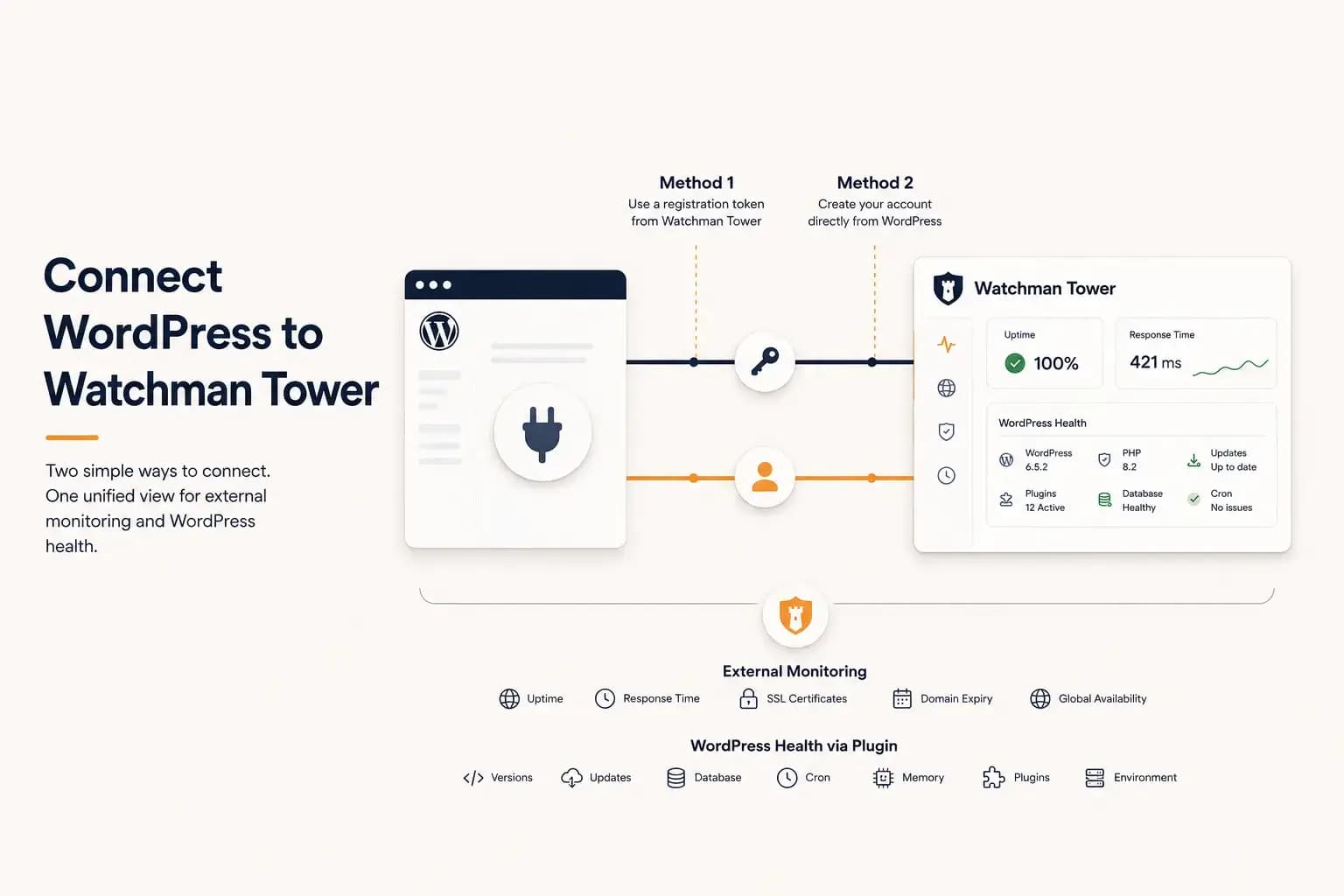
How to Connect WordPress to Watchman Tower
Learn how to connect a WordPress site to Watchman Tower using either an existing account or by creating a new account directly from the official WordPress plugin.
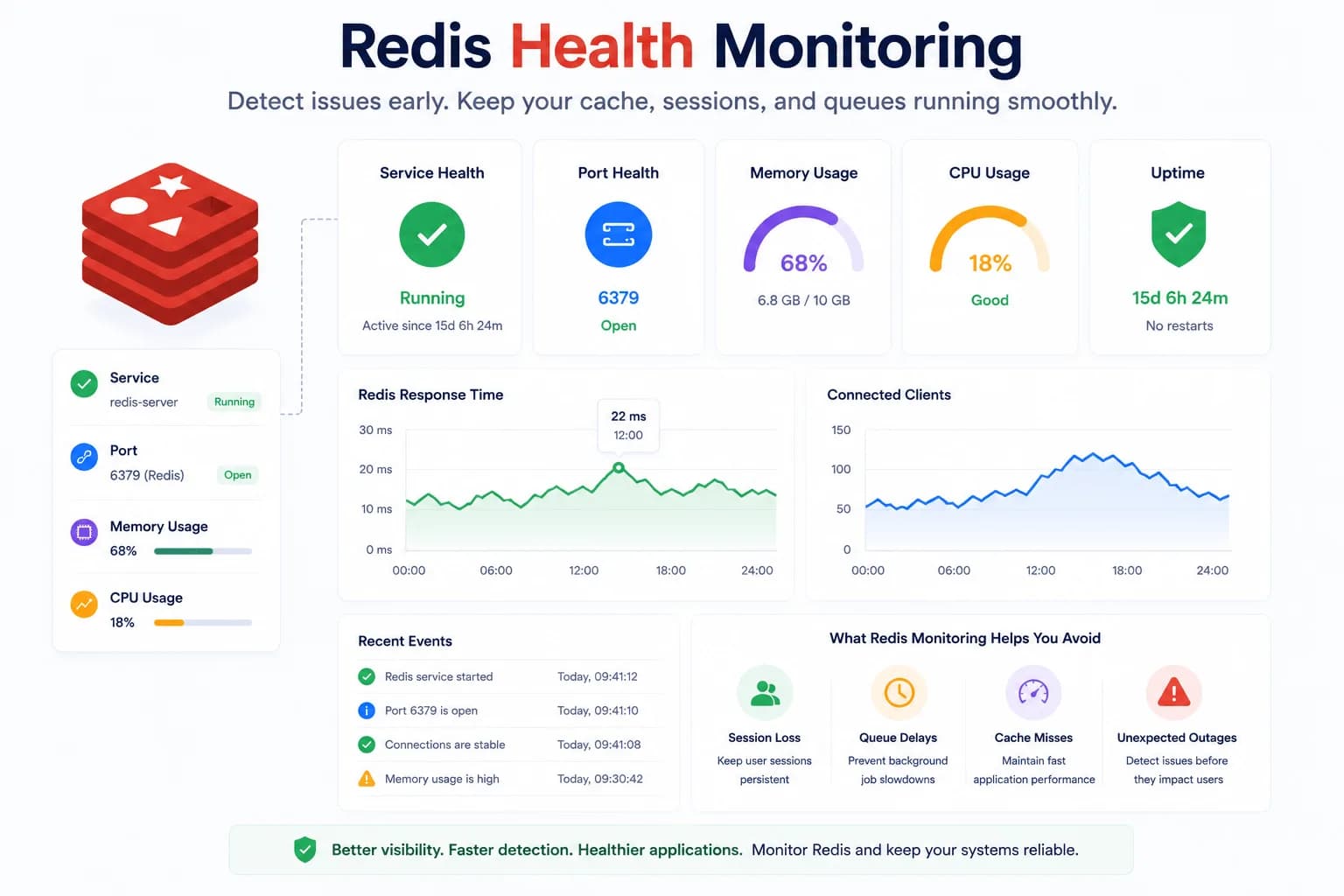
Redis Health Monitoring: What to Watch First
Redis problems often show up as application symptoms before they look like server incidents. Good monitoring starts with the signals that tell you whether Redis is available, reachable, and supported by a healthy host.
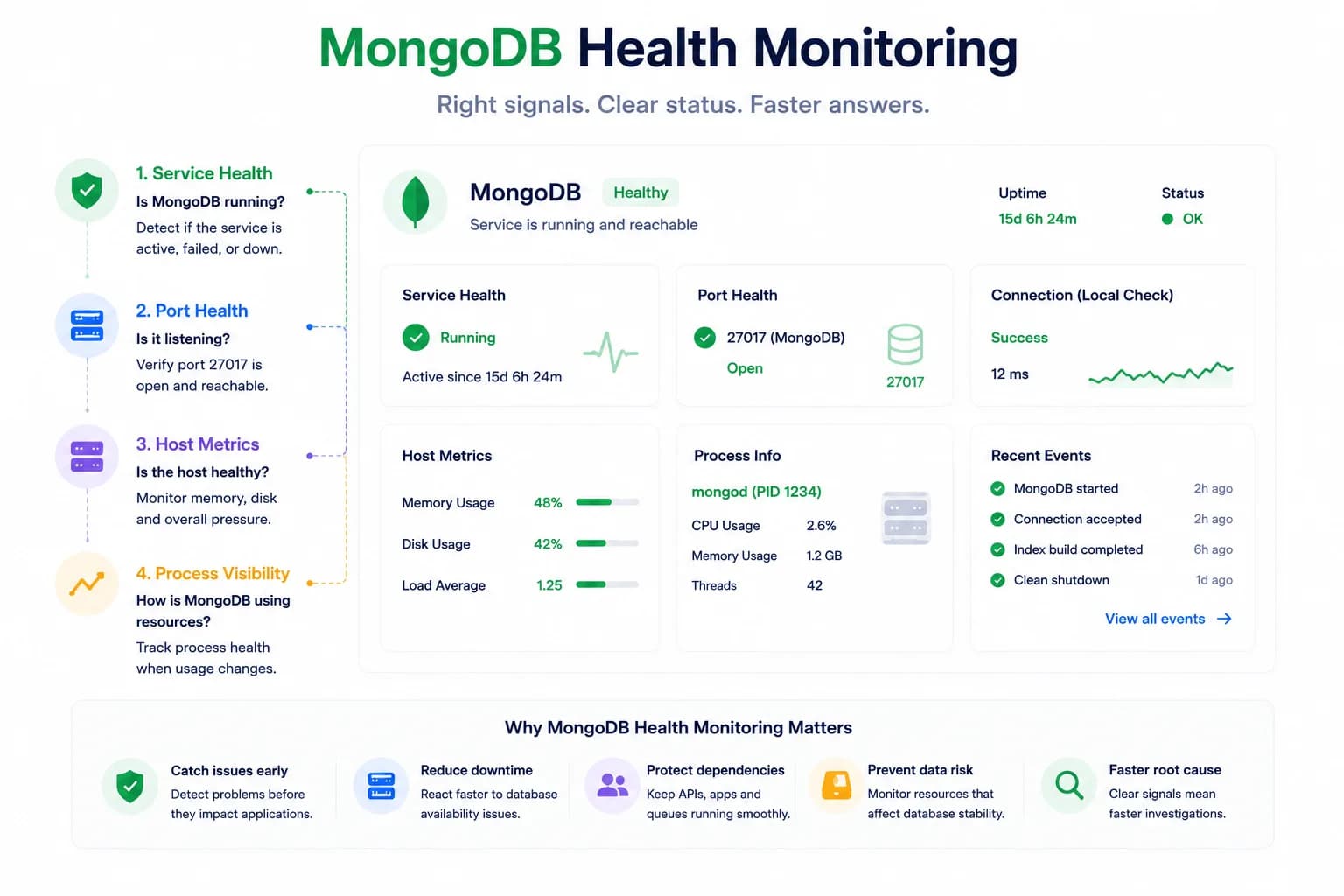
MongoDB Health Monitoring: What to Watch First
MongoDB issues do not always look like host pressure. Good monitoring starts with the signals that tell you whether the database is available, reachable, and behaving inside the wider system.
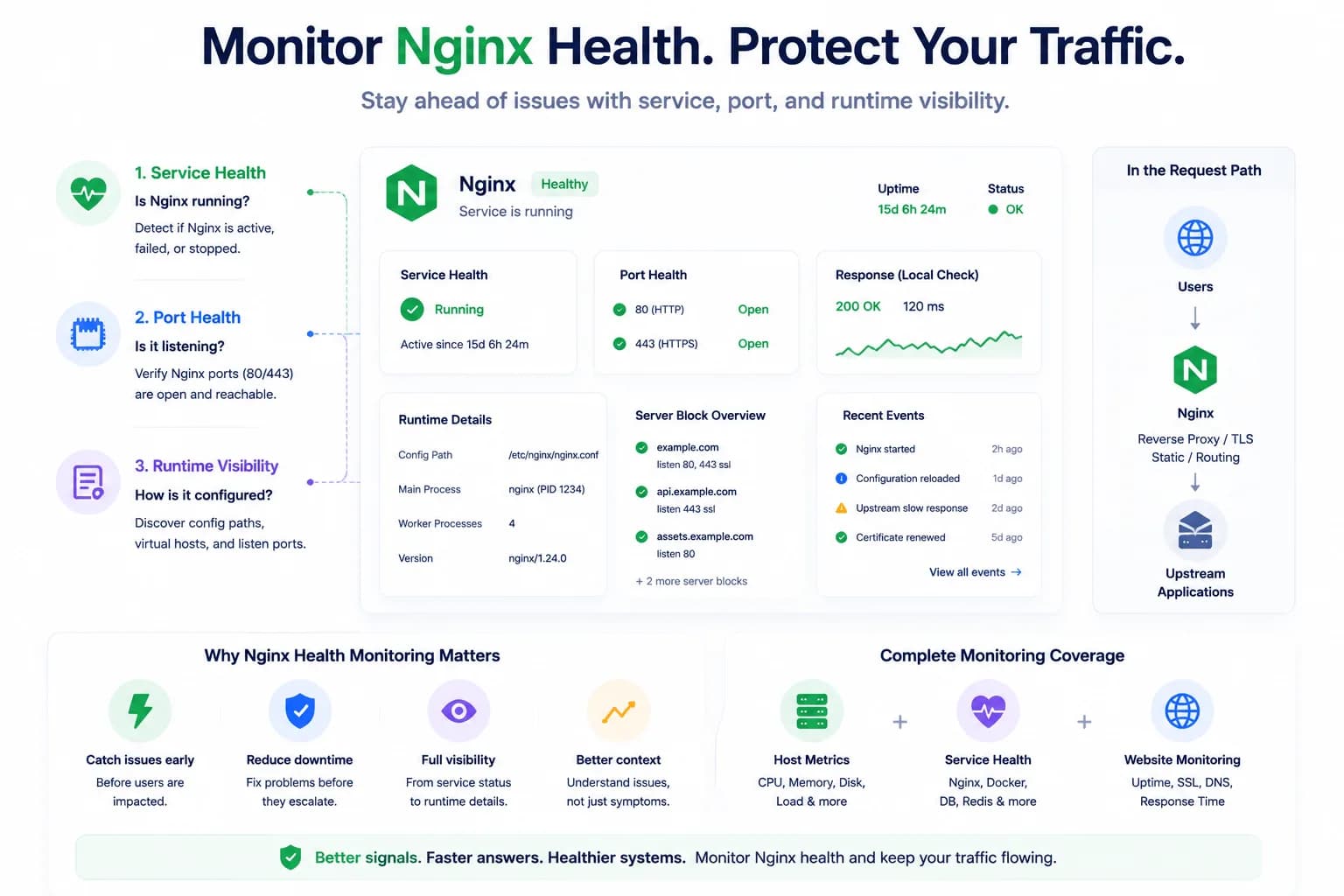
How to Monitor Nginx Health and Detect Serving Issues Early
Nginx problems do not always begin with a full outage. Good monitoring helps teams detect service failures, port issues, and serving risk before traffic breaks completely.
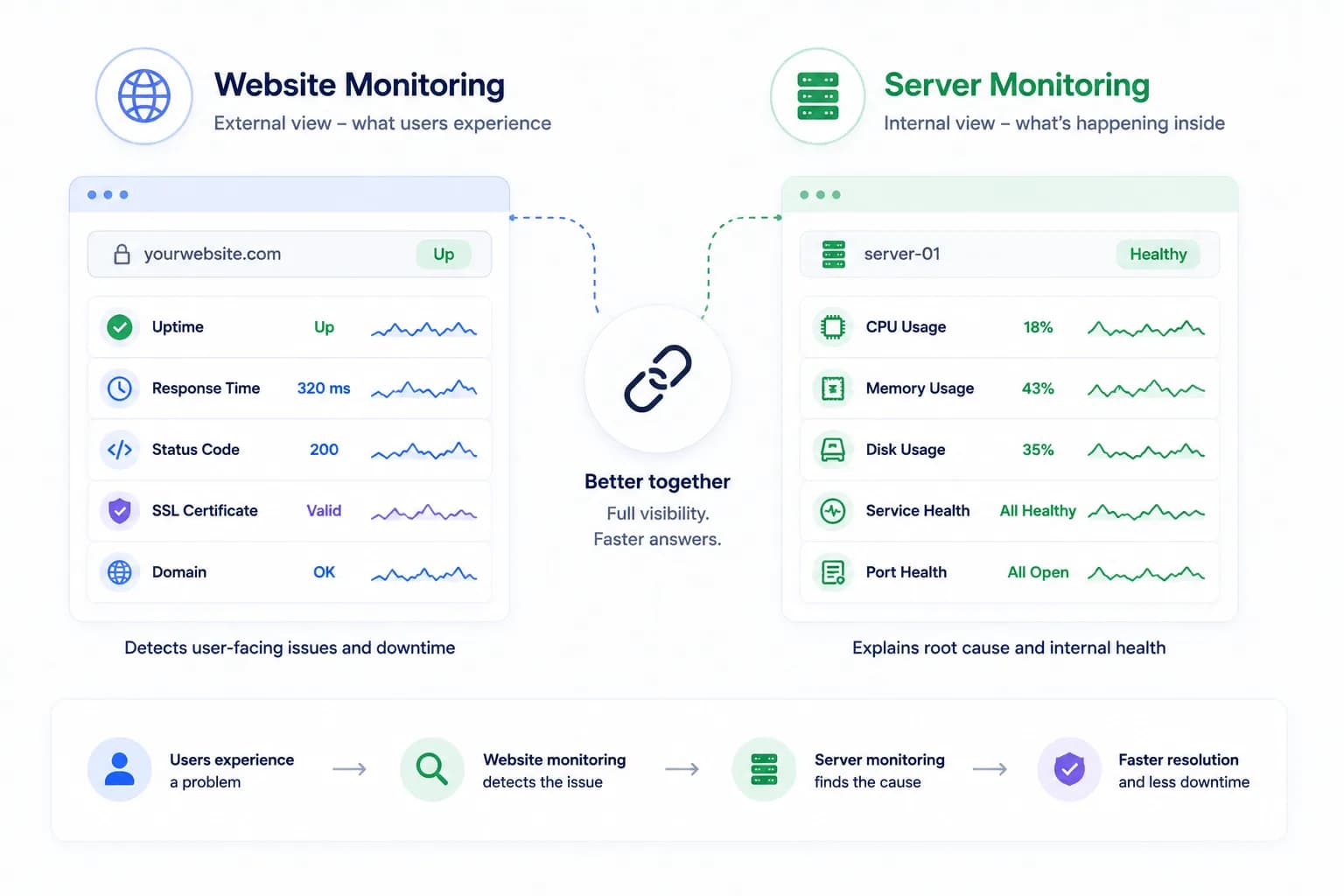
Server Monitoring vs Website Monitoring: Why You Need Both
Website monitoring tells you what users are likely experiencing. Server monitoring tells you what is happening inside the environment serving that traffic. The strongest monitoring strategy needs both.
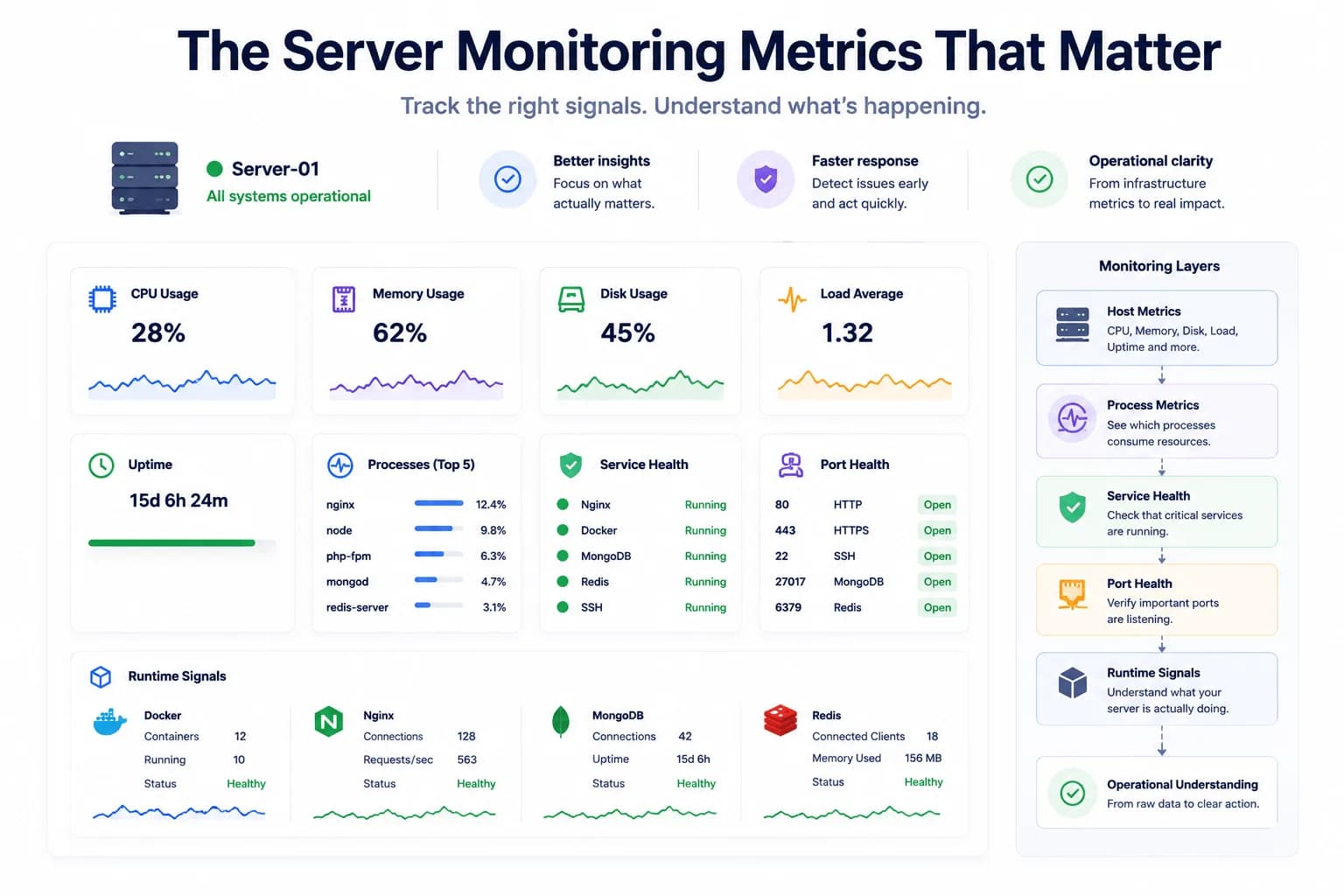
Server Monitoring Metrics That Actually Matter
Good server monitoring is not about collecting more charts. It is about knowing which metrics actually explain risk, pressure, and real operational problems.
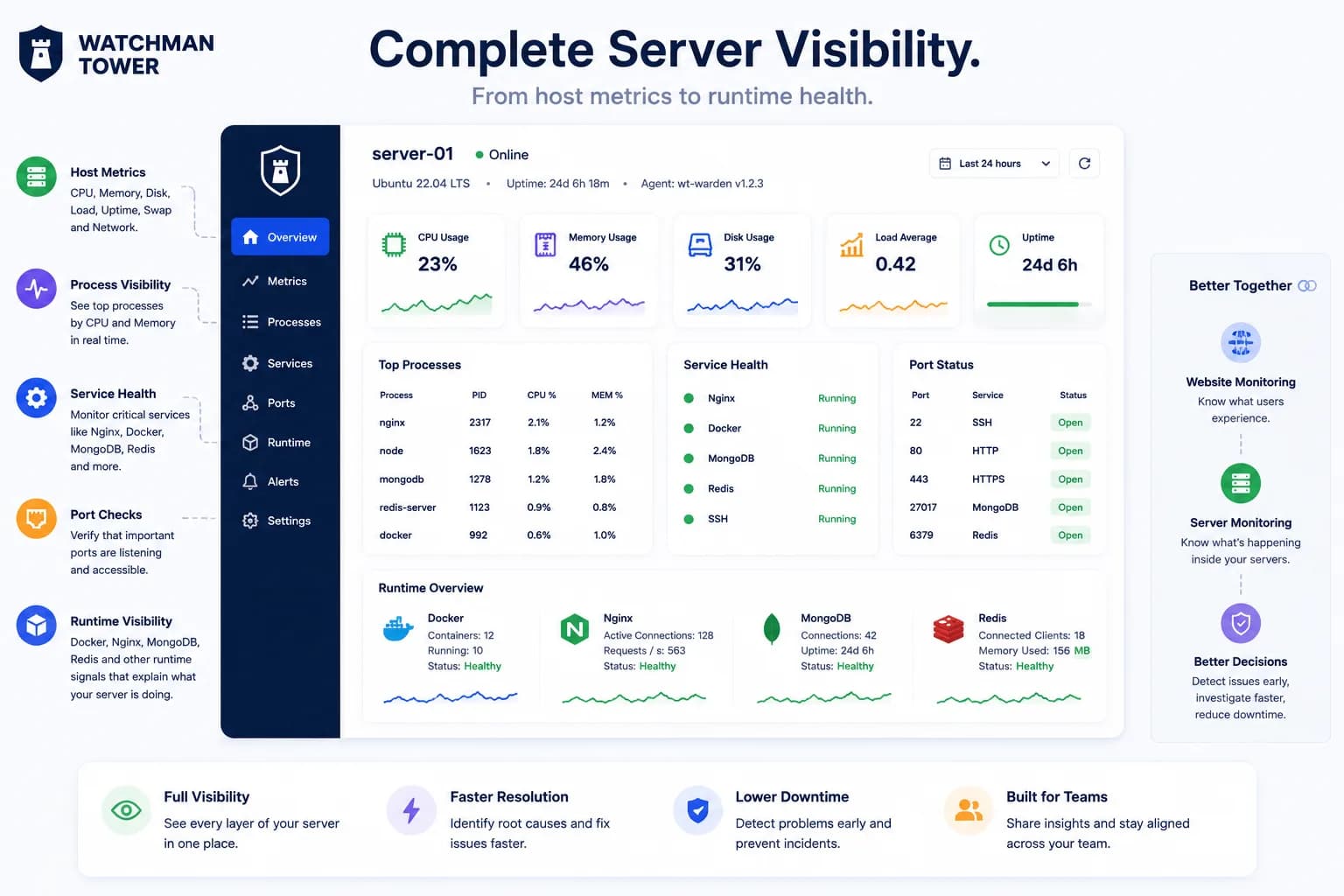
What Is Server Monitoring? Metrics, Services, Ports, and Runtime Visibility
Server monitoring is no longer just about CPU, memory, and disk charts. Modern teams need visibility into processes, services, ports, and the runtime behavior actually serving production traffic.
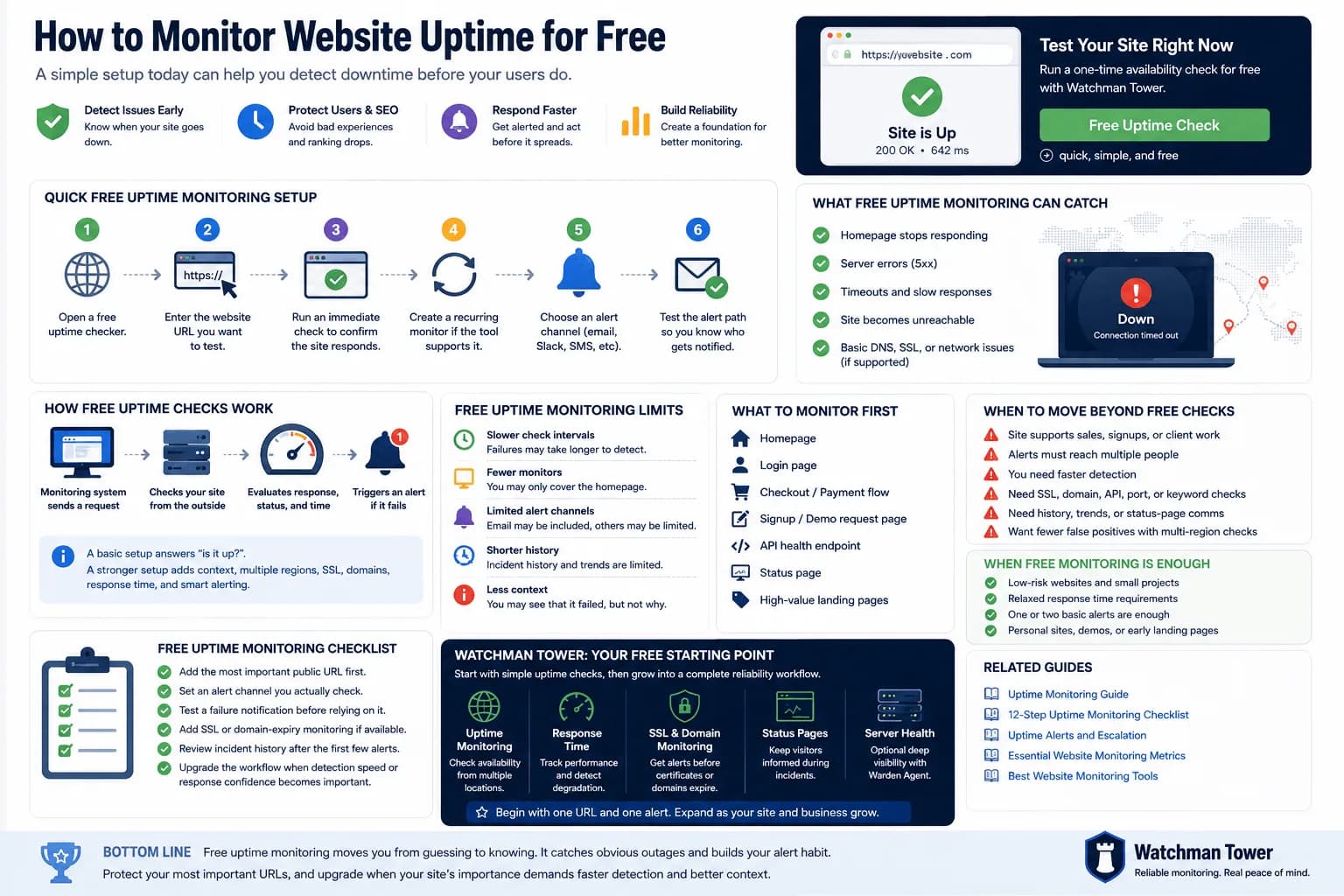
Free Uptime Monitor: How to Monitor Your Website Without Paying
A free uptime monitor checks your URL on a schedule and alerts you when it stops responding. This guide shows the fastest setup, compares a one-off checker with a free monitoring plan, and explains where free monitoring falls short.
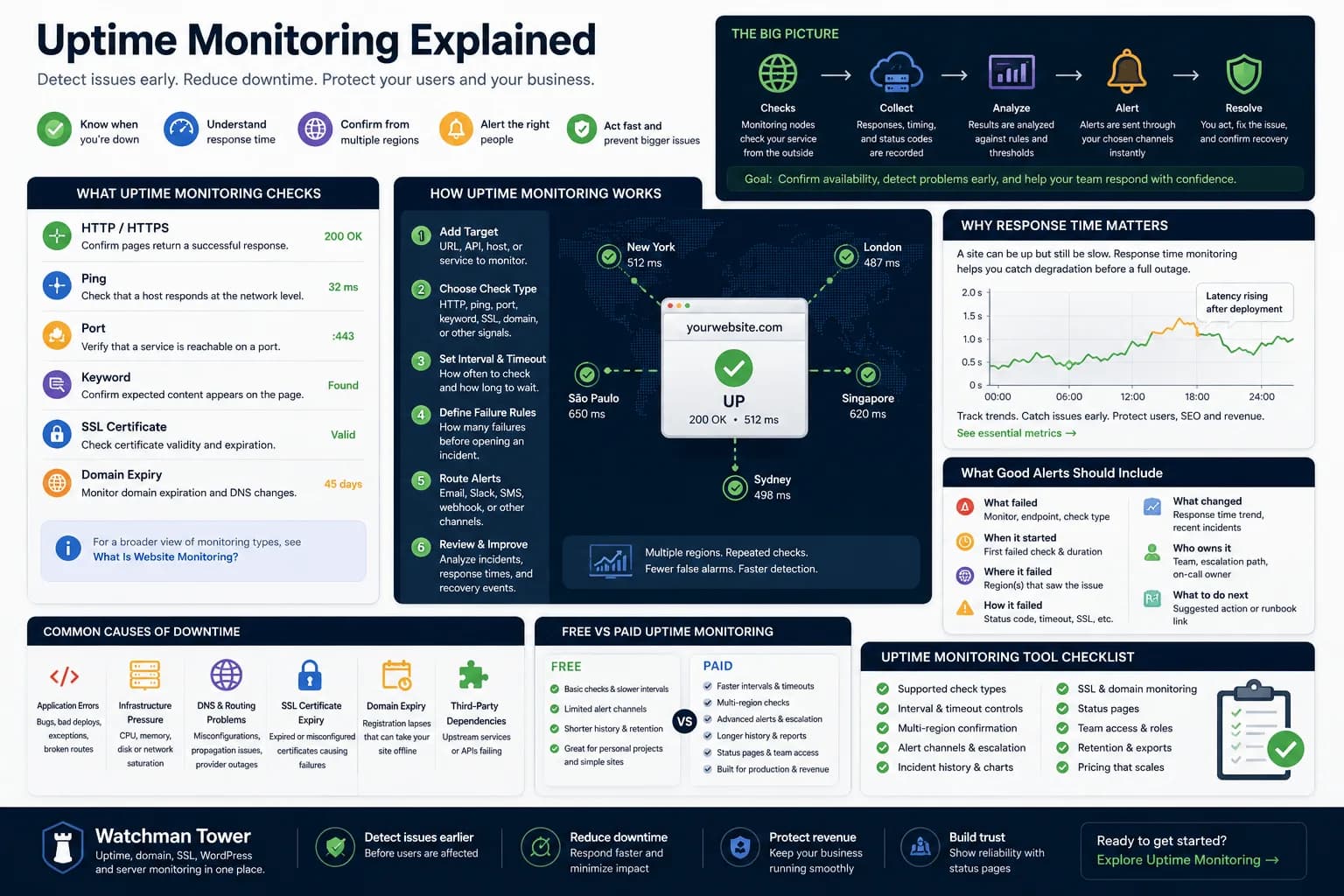
Uptime Monitoring Guide: How to Detect Downtime and Alert Faster
Uptime monitoring helps you detect when a website, app, or service becomes unavailable. This guide explains how checks work, which signals matter, how alerts should be routed, and how to turn basic uptime checks into a practical response workflow.
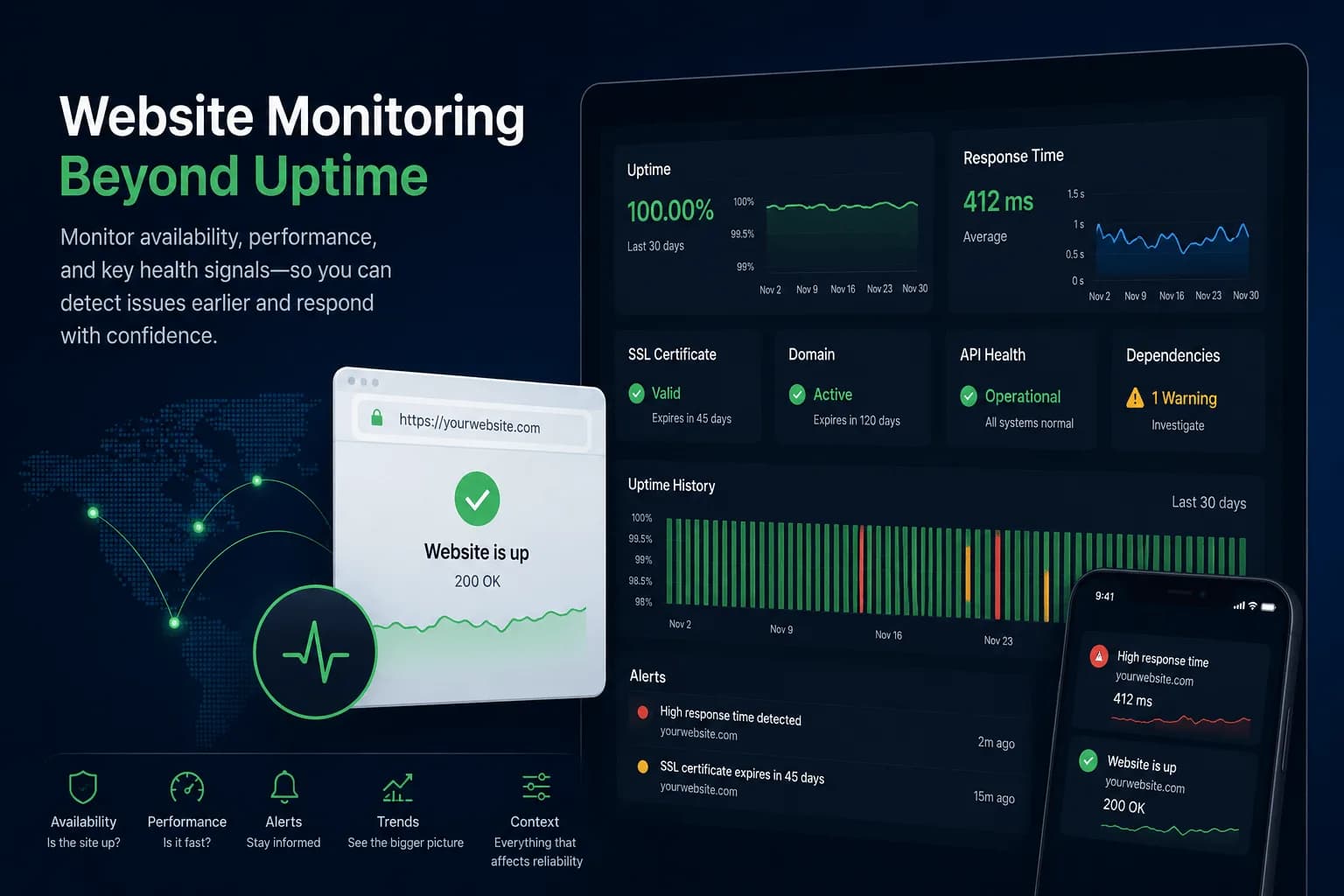
What Is Website Monitoring? How It Works and Why It Matters
Website monitoring checks whether a site is available, how it performs and whether SSL, domain or dependency risks are building up around it. This guide explains how it works and how it differs from uptime monitoring.
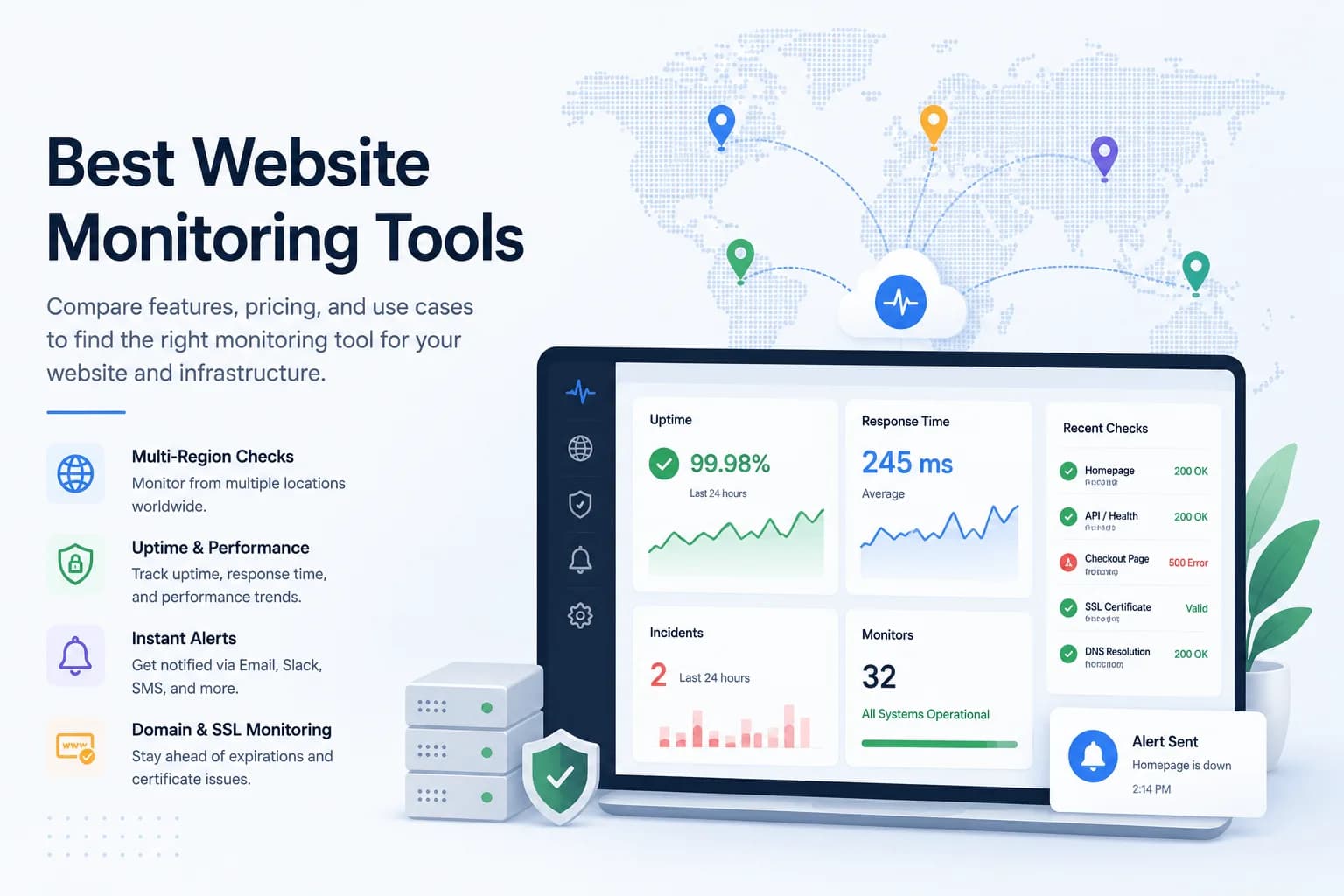
10 Best Website Monitoring Tools in 2026
The best website monitoring tool depends on what happens after a failed check. This 2026 comparison evaluates five options across uptime coverage, alert quality, status communication, incident workflows, and infrastructure context.

Watchman Tower vs UptimeRobot: 2026 Monitoring Comparison
Watchman Tower and UptimeRobot both monitor website availability, but they are designed for different operational depths. This 2026 comparison explains where each platform fits across uptime checks, alerting, status pages, server context, and team workflows.
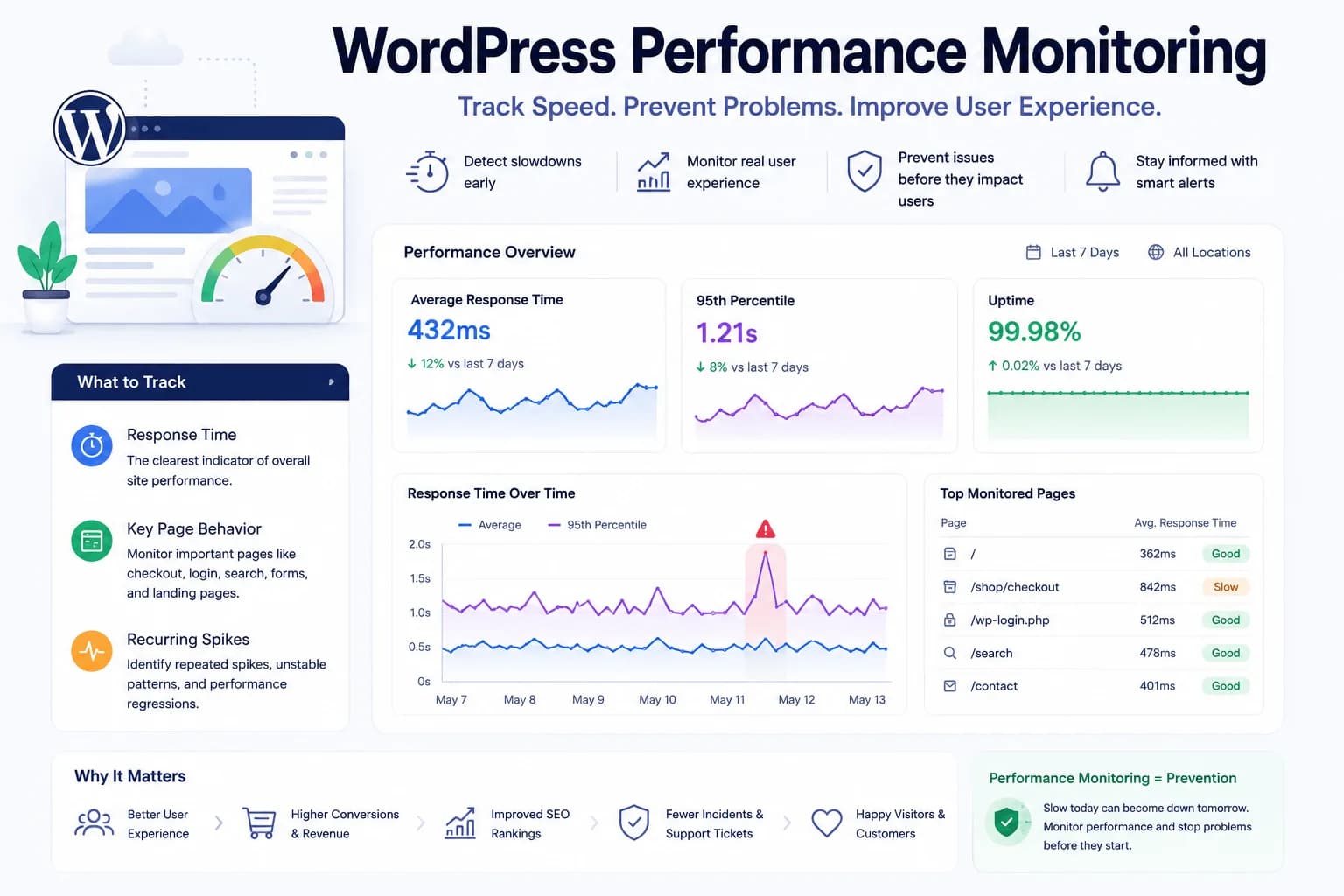
WordPress Performance Monitoring: What You Should Actually Track
WordPress performance monitoring combines two views: how fast the site answers from outside, and what WordPress reports from inside. This guide explains what each one measures, how slowness is detected, and what neither can prove.
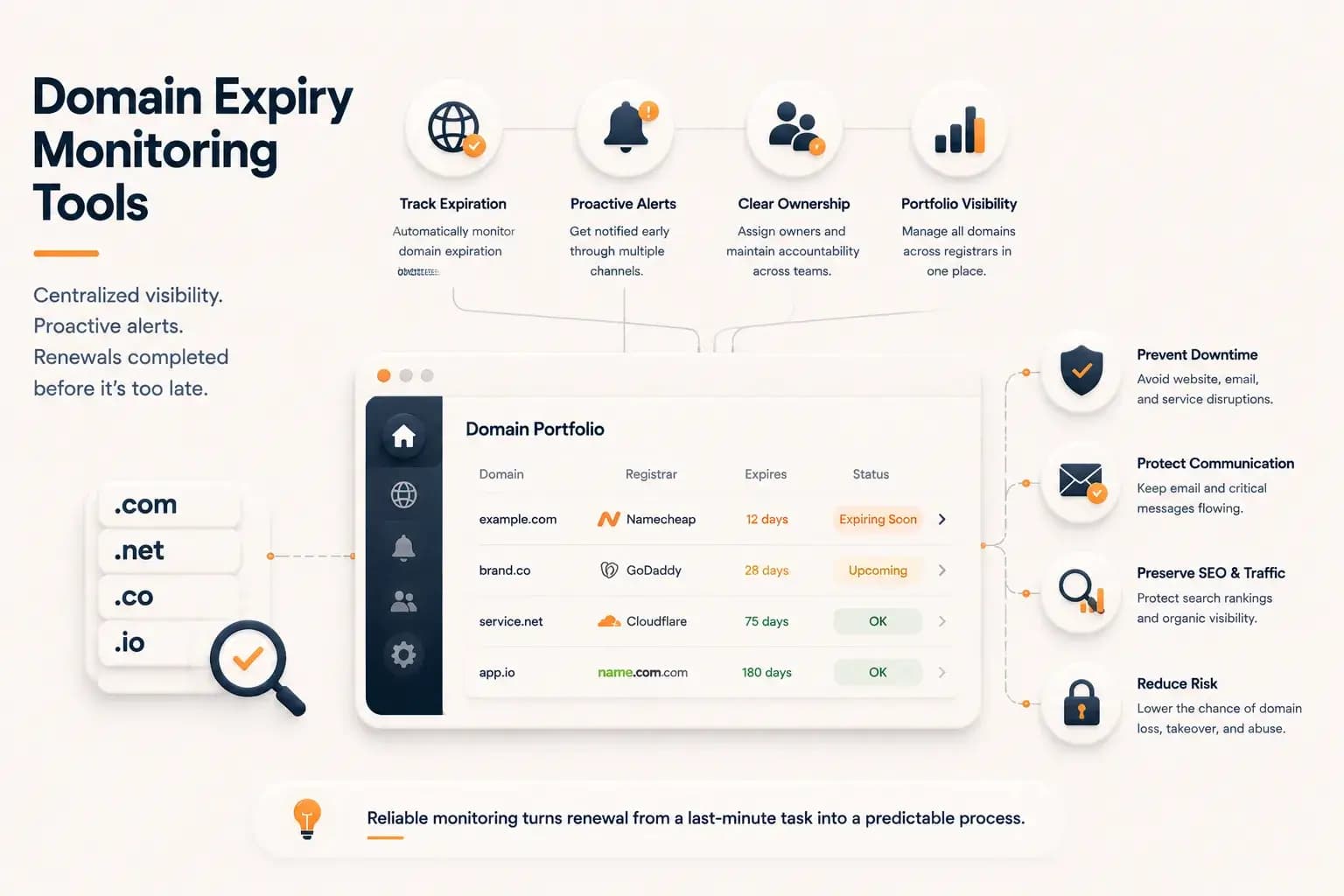
Best Domain Expiry Monitoring Tools: How to Choose the Right Solution
Explore how domain expiry monitoring tools help organizations track renewal risks, manage multiple domains, and choose the right solution based on visibility, automation, and operational needs.

Uptime Monitoring Checklist: 12 Steps to Ensure 24/7 Availability
Use this uptime monitoring checklist to review coverage, reduce alert noise, and build a clearer response path before small availability issues become customer-facing incidents.
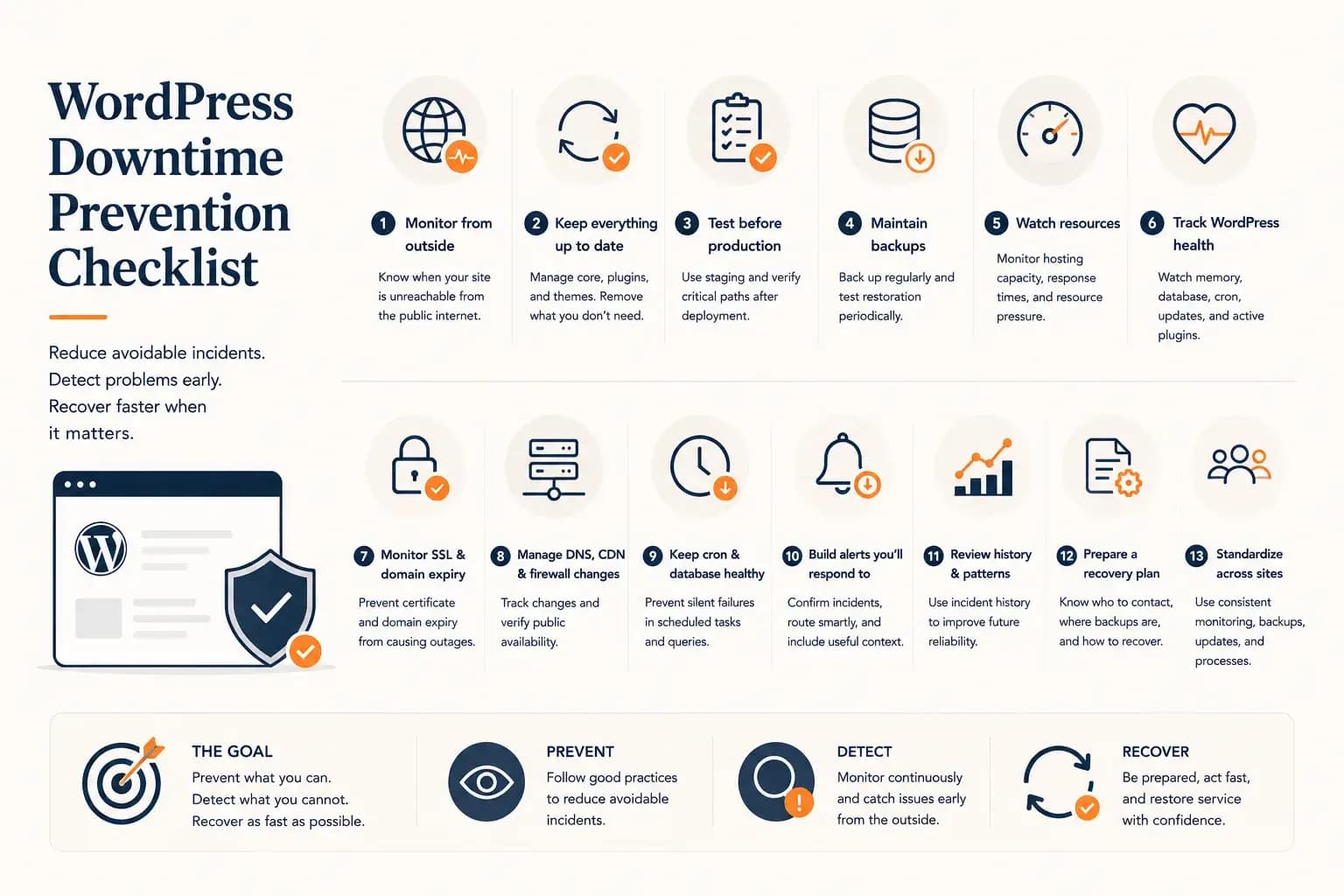
How to Prevent WordPress Downtime: A Practical Checklist
Prevent WordPress downtime by reducing avoidable failures, detecting warning signs early, and preparing for faster recovery with this practical operational checklist.
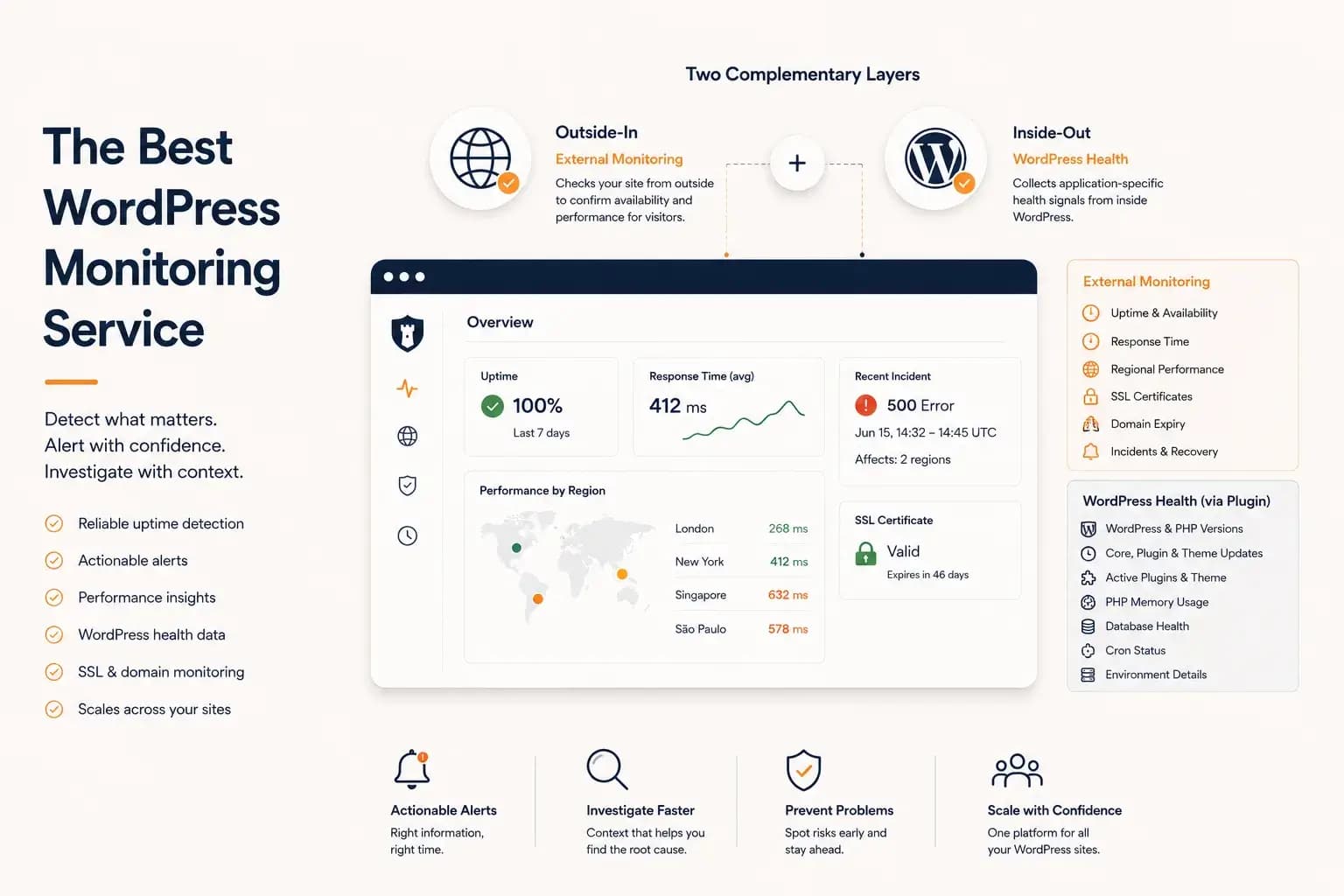
Best WordPress Monitoring Service: What to Look For
Choosing the best WordPress monitoring service requires more than comparing feature lists. This guide explains how to evaluate uptime coverage, alert quality, performance visibility, WordPress health data, scalability, and operational reliability.
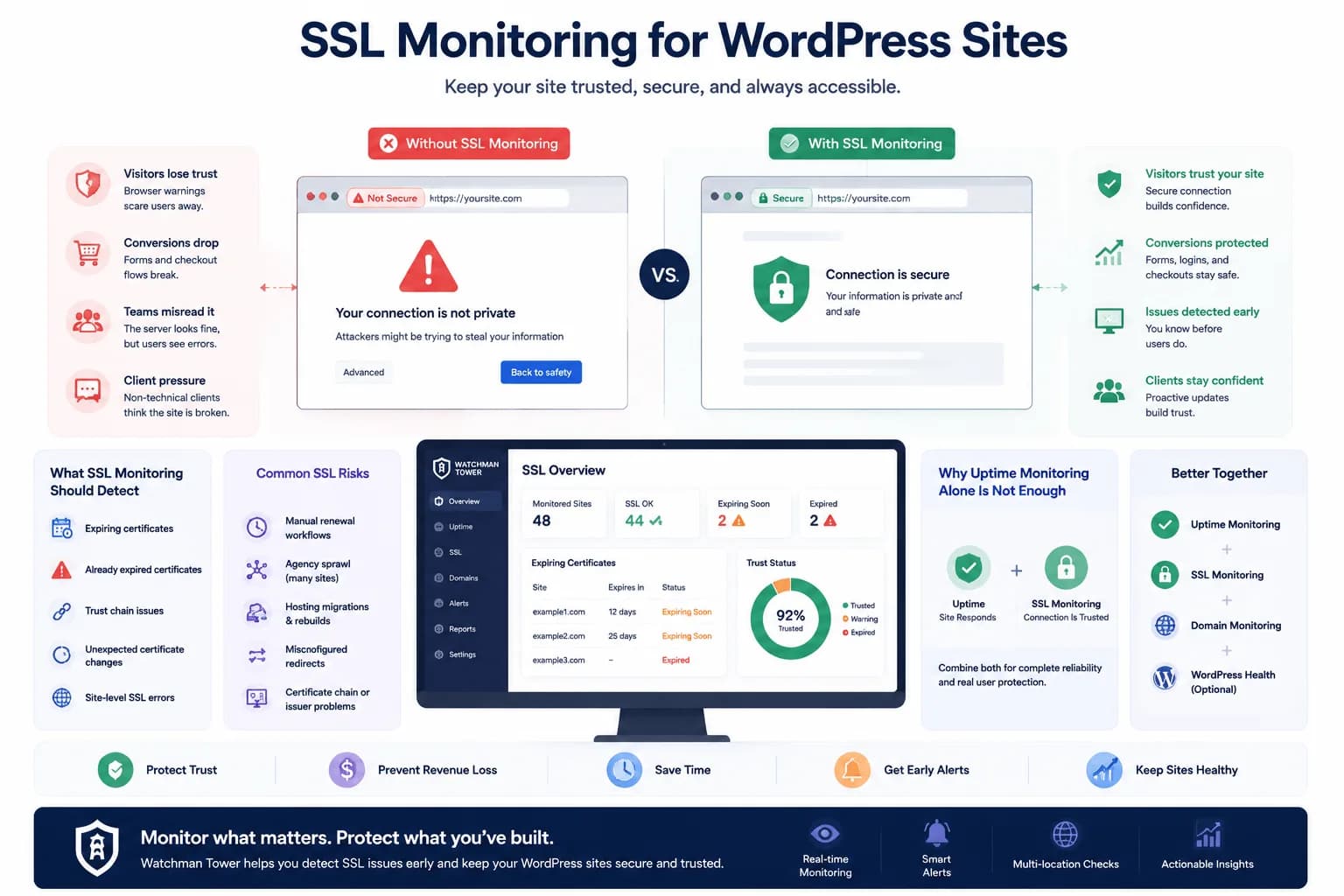
SSL Monitoring for WordPress: Prevent Expiry and Security Issues
WordPress SSL monitoring matters because certificate issues often look external until users are already affected. This guide explains how teams stay ahead with better visibility.
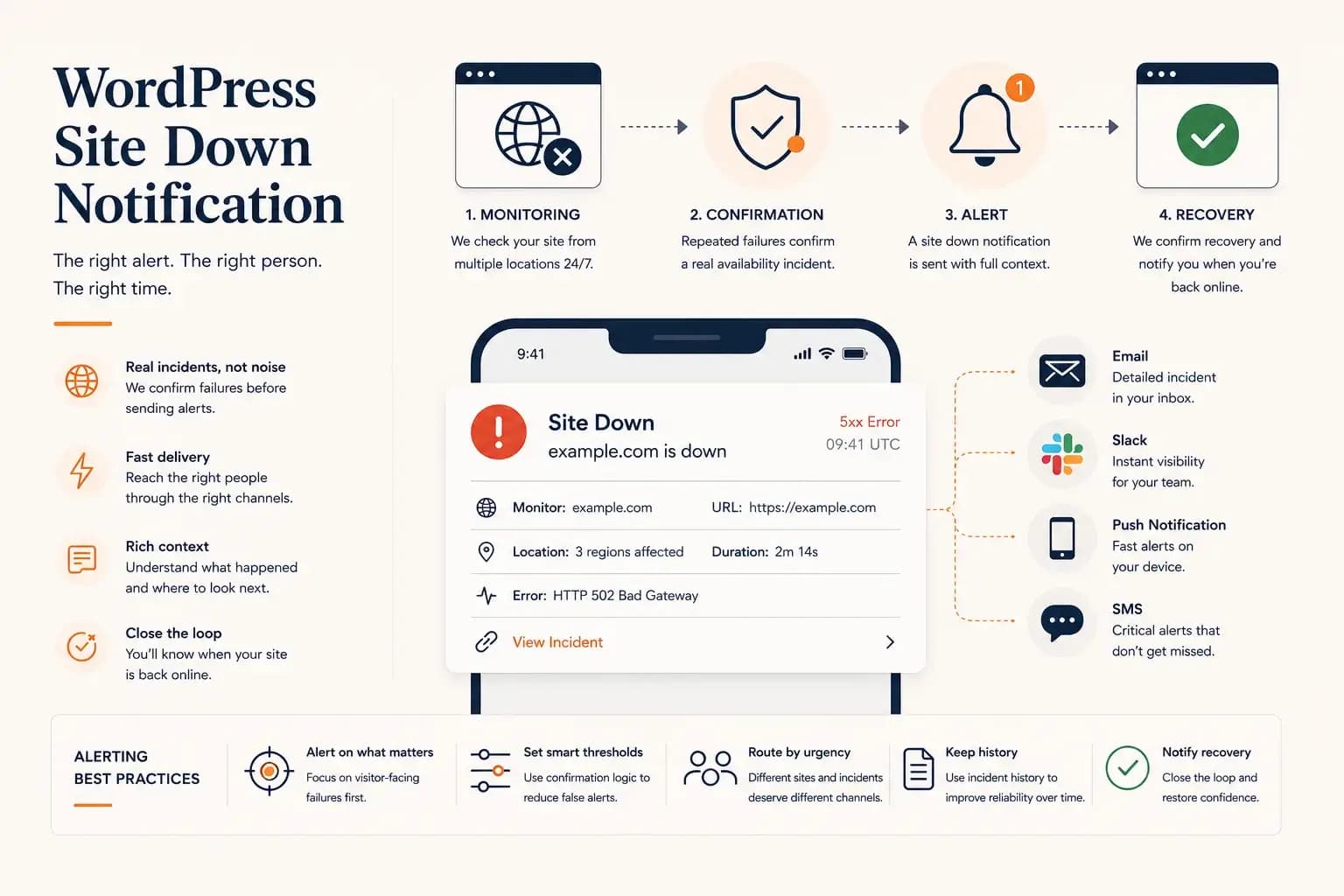
WordPress Site Down Notification: How to Get Instant Alerts
WordPress site down notifications help teams react quickly when a real outage is confirmed. Learn how to choose channels, reduce noise, include useful context, and verify recovery.
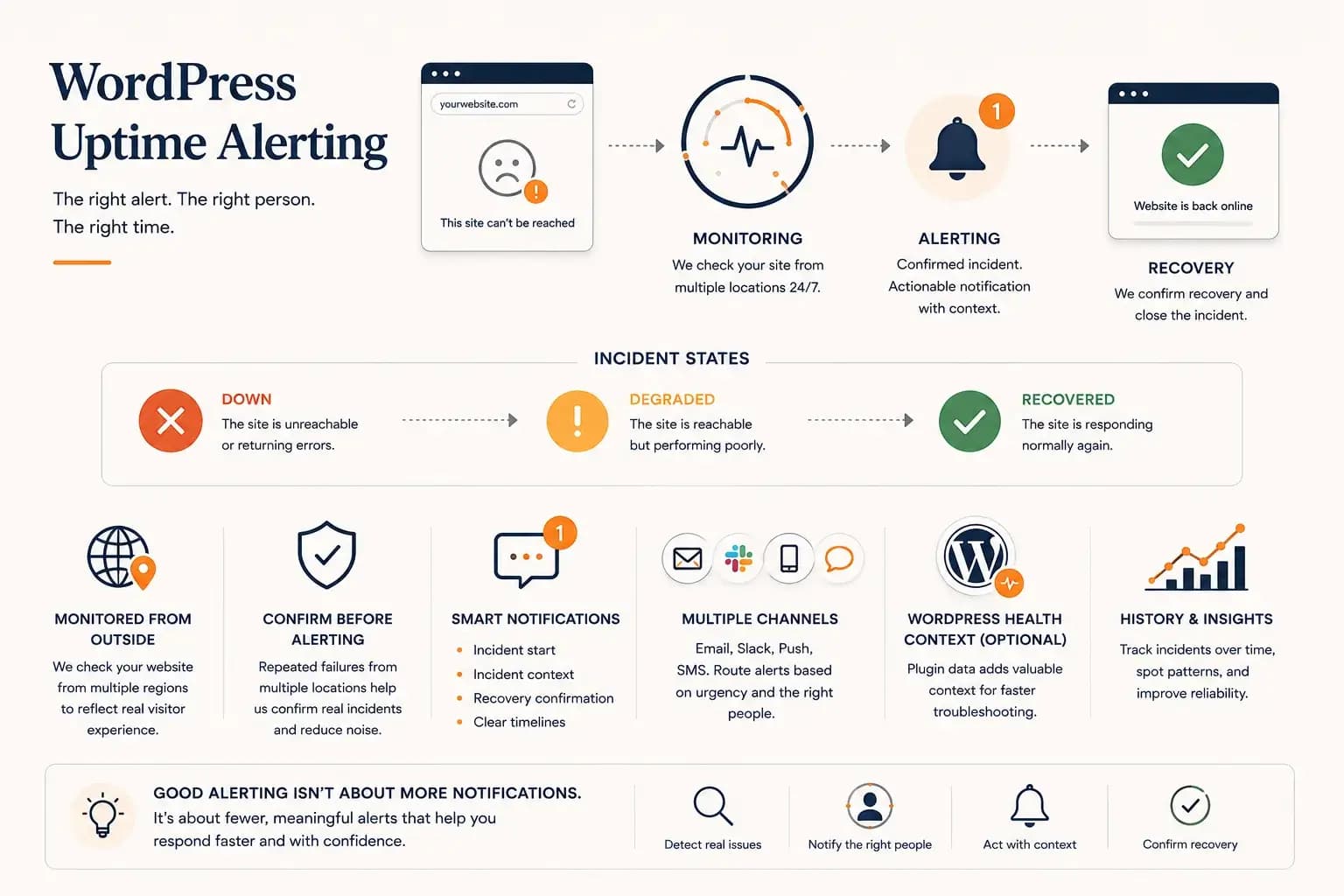
WordPress Uptime Monitoring and Alerting: Best Practices
Good WordPress uptime alerting is not about more notifications. It is about confirming meaningful incidents, routing them correctly, and giving teams enough context to respond and verify recovery.

Decoding Downtime: Understanding User Behavior During Outages
How users react when a site goes down, what they expect from the business, and what an outage does to the team handling it. A guide to the human side of downtime and the communication that protects trust.

Building a Resilient DevOps Culture: Best Practices for Uptime and Performance
A resilient DevOps culture treats uptime as a shared responsibility. This guide covers the practices that make it work: shared ownership, monitoring tied to deployments, a clear incident path, and reviews that change something.
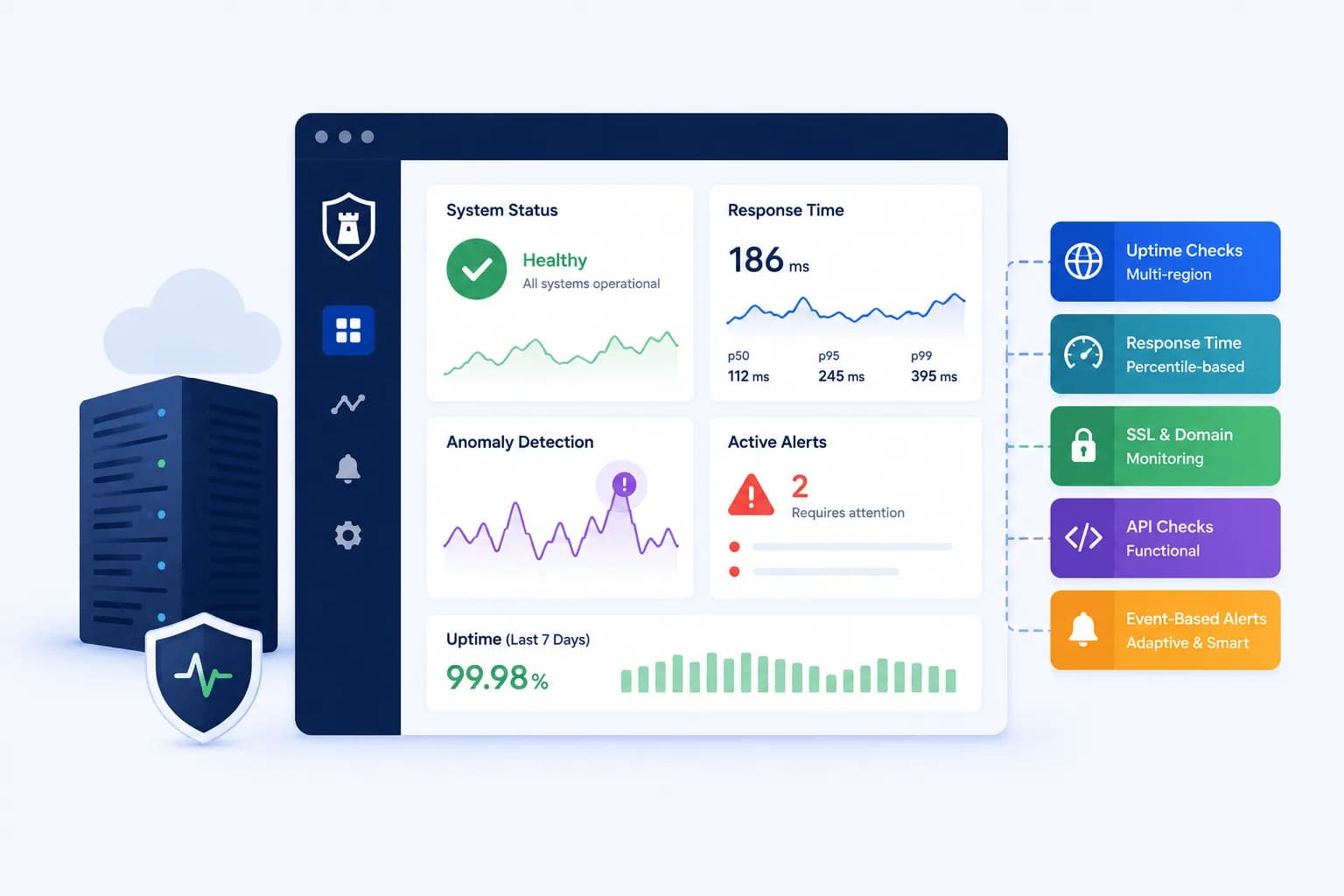
What Is Smart Monitoring? And Why Traditional Methods Are No Longer Enough
Smart monitoring means alerts that carry context: a failure is confirmed, compared with how the site normally behaves, and read together with other signals. This guide explains what that looks like and where AI realistically fits.
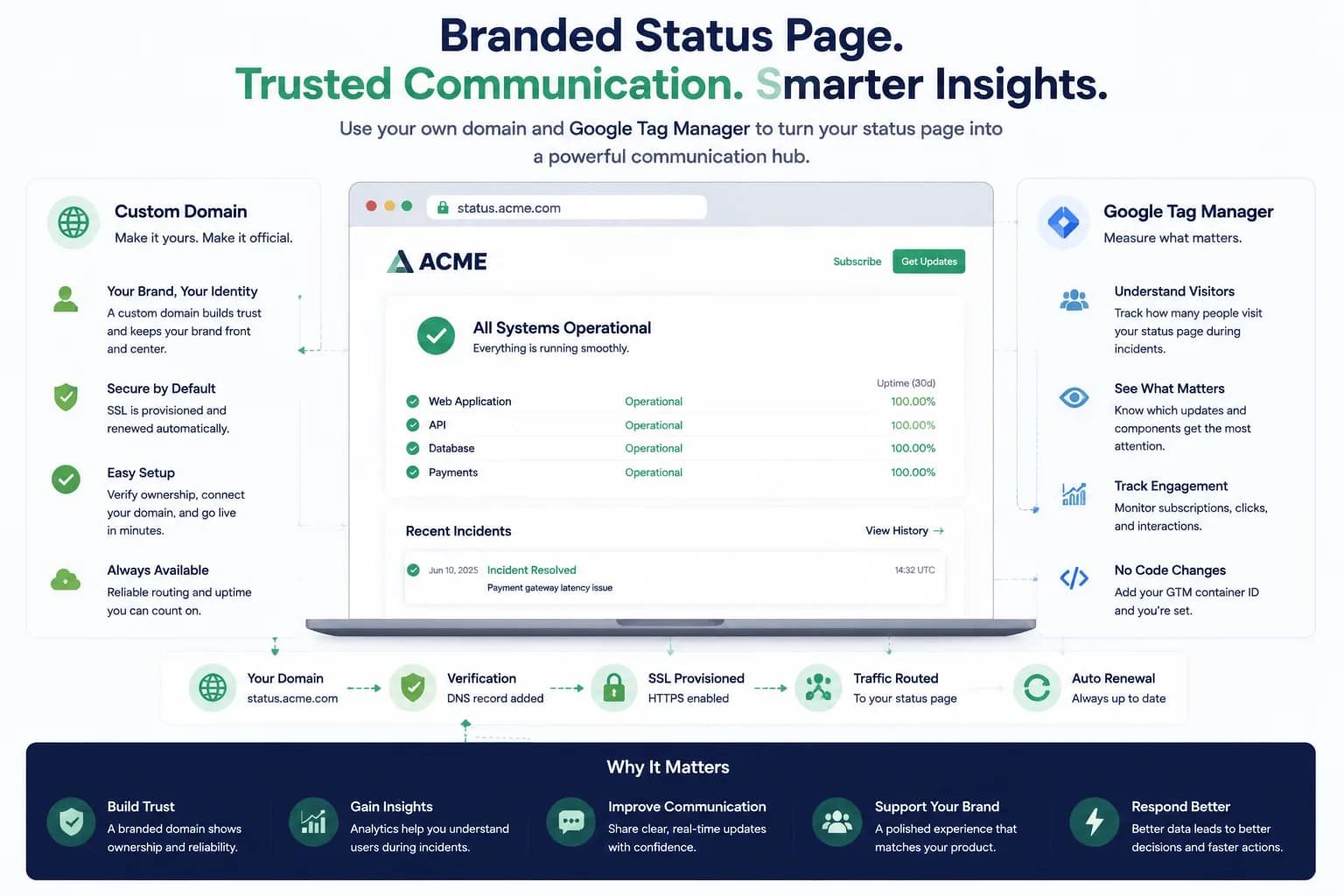
Custom Domains and Google Tag Manager Integration for Your Status Page
Custom domains and analytics make status pages feel like a real product surface instead of a generic incident page. This guide explains why that matters.
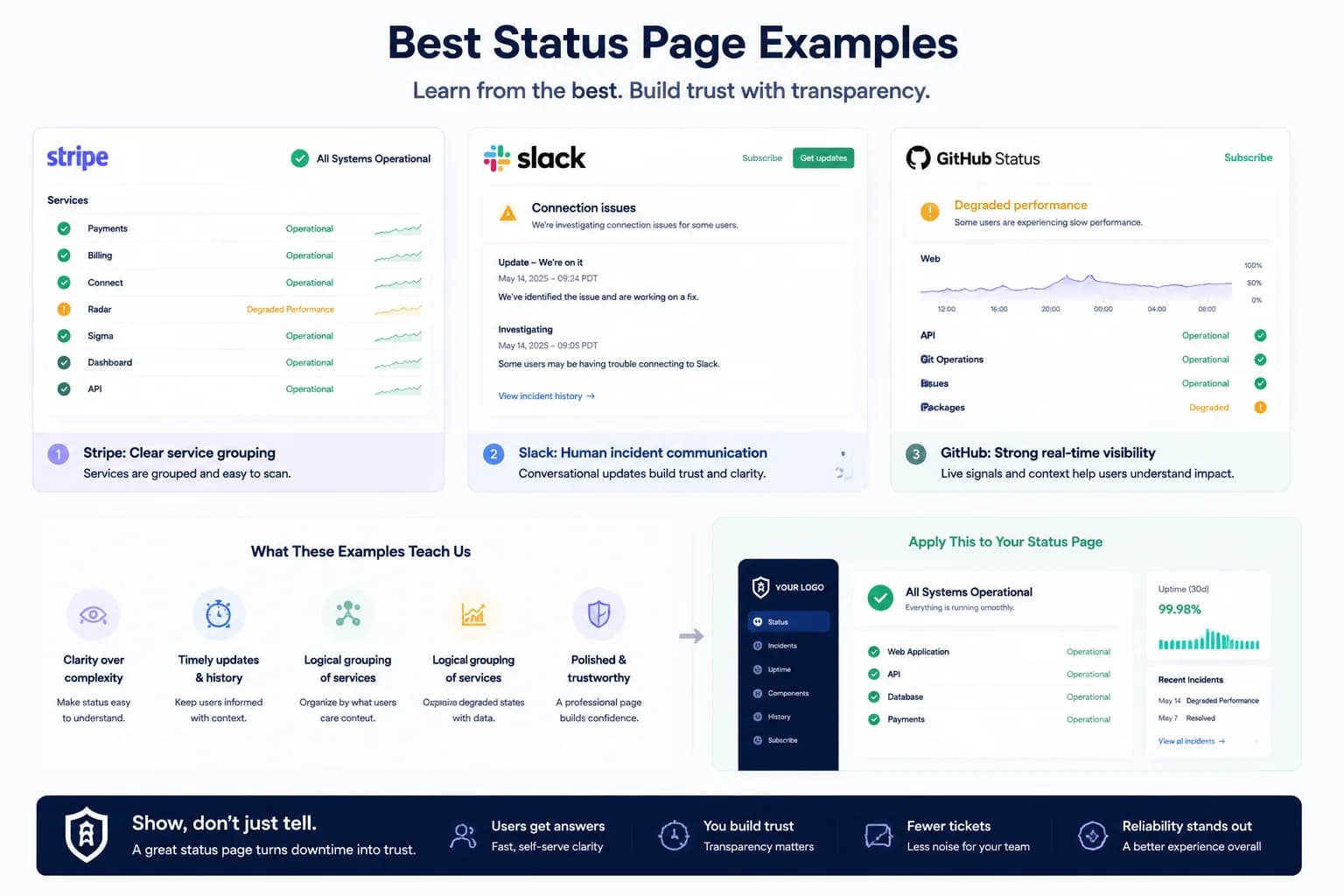
Status Page Examples That Do It Right
Strong status page examples show more than design taste. They show how teams communicate reliability clearly when customers need answers.
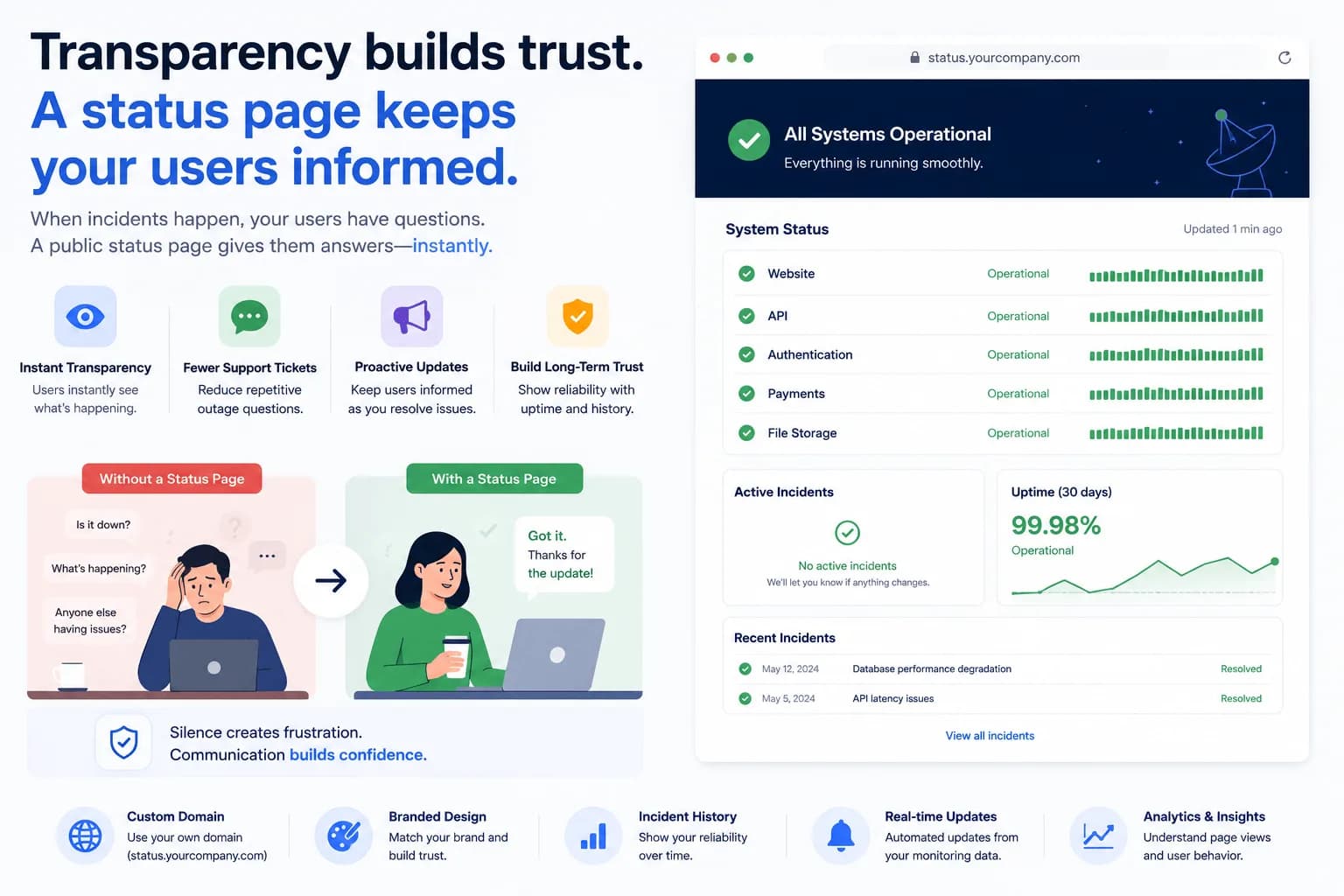
Why Every SaaS Needs a Status Page
SaaS teams need status pages because incidents are communication problems as much as technical ones. This guide explains why they matter before, during, and after outages.
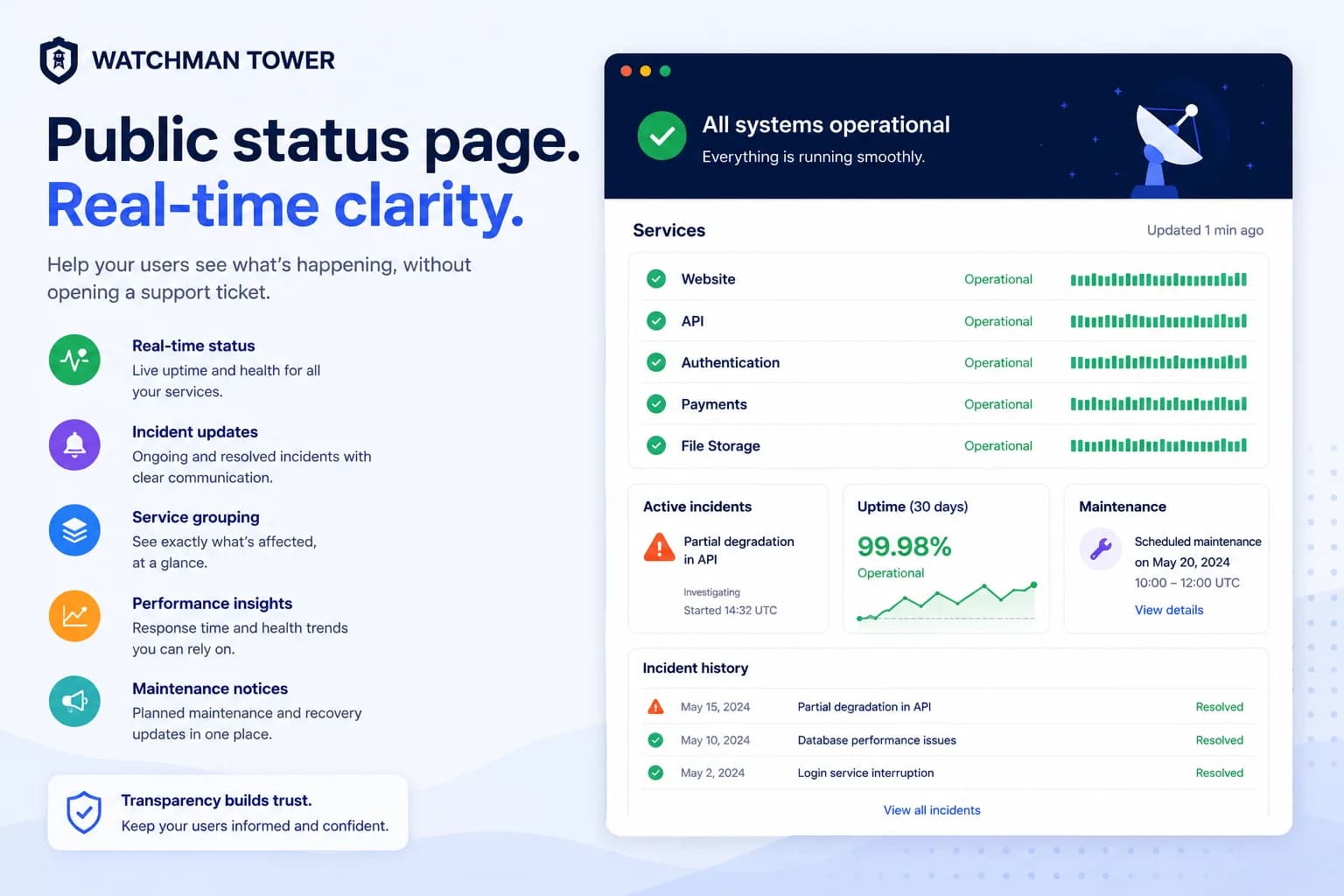
What Is a Public Status Page? Purpose, Benefits, and Best Practices
A public status page is not just a broadcast surface. It is part of how teams communicate reliability, incidents, and trust in a visible way.

Uptime Monitoring Alerts & Escalation: How to Build Alerts Teams Won't Ignore
Alerting and escalation only work when teams trust the signal. This guide explains how to build uptime alerts people act on instead of ignoring.
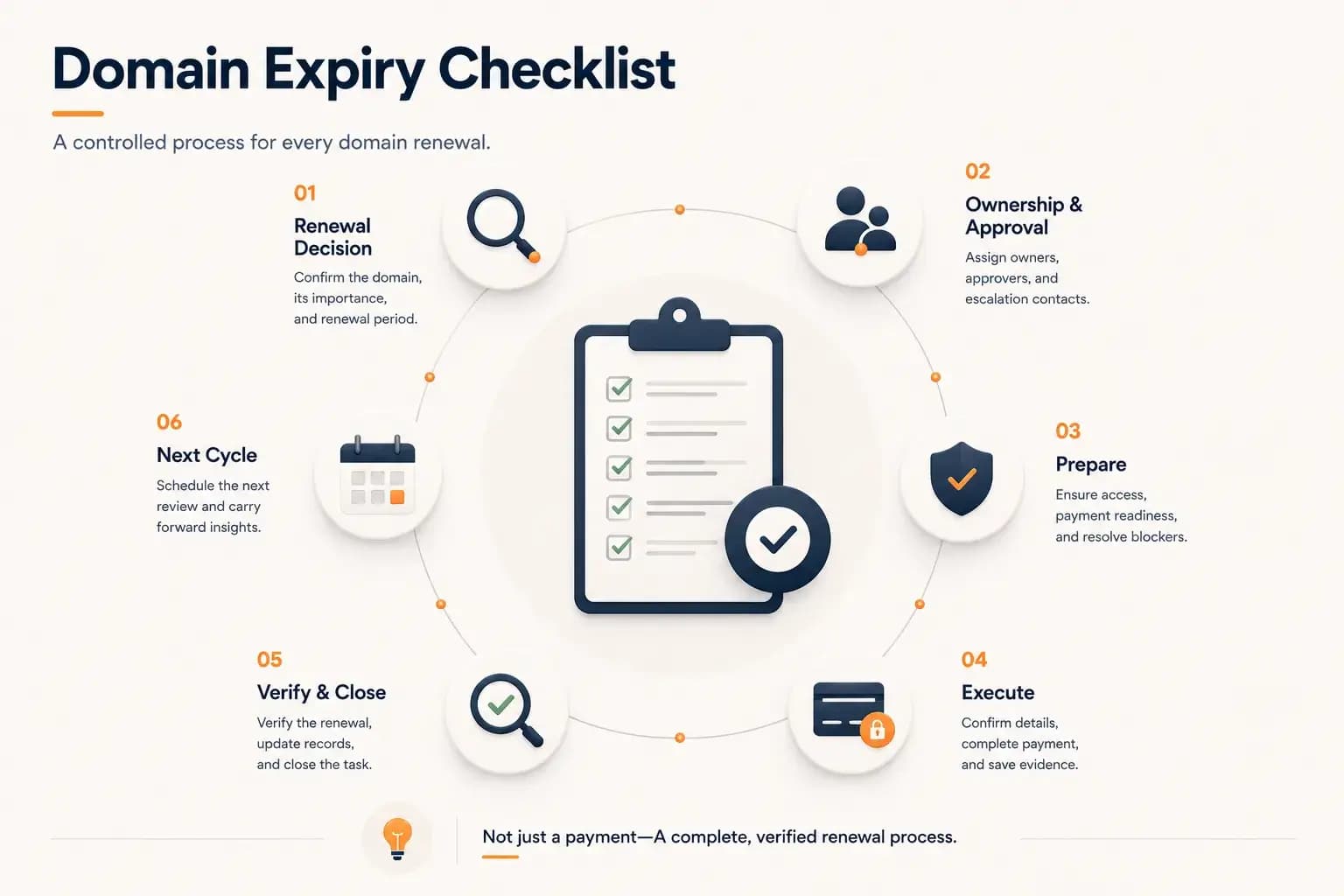
Domain Expiry Checklist: A Complete Renewal Process
Follow a practical domain expiry checklist that standardizes every stage of the renewal process, from planning and ownership to execution, verification, documentation, and preparing the next renewal cycle. Learn how to reduce operational risk with a repeatable renewal workflow.
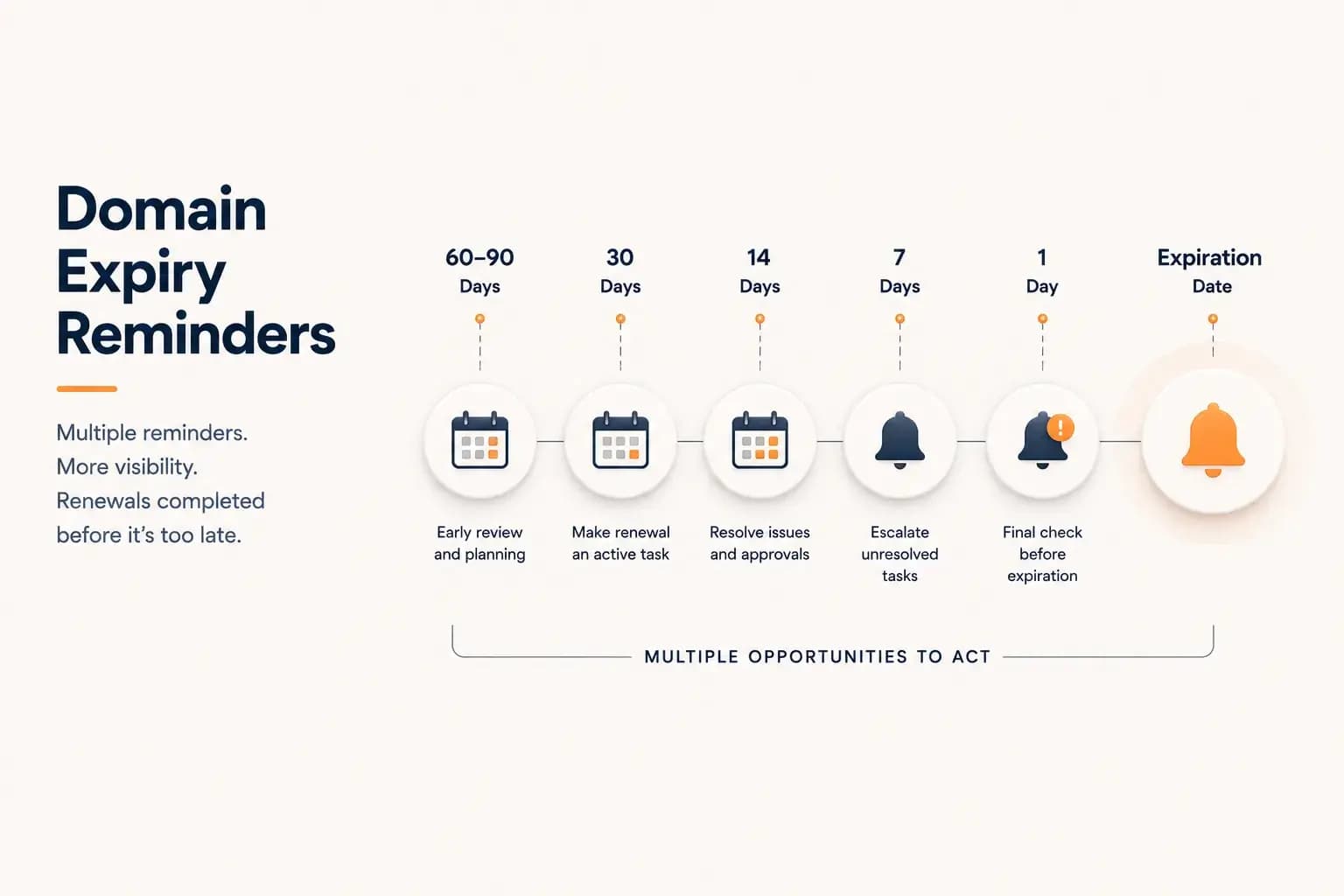
Domain Expiry Reminders: How to Prevent Missed Renewals
Build a reliable domain expiry reminder strategy with the right timing, responsible owners, and escalation steps. This guide explains how organizations can reduce missed renewals by creating reminder workflows that provide visibility before expiration deadlines.

Domain Expiration Warning Signs: How to Identify Renewal Risks Early
Learn how to recognize early domain expiration warning signs before they become renewal incidents. This guide covers unexpected expiry dates, failed auto-renewals, outdated billing information, unclear ownership, missing registrar alerts, and other operational risks that can lead to domain loss.

Domain Expiry Checks: How to Verify a Domain’s Renewal Status
Learn how to perform reliable domain expiry checks by verifying expiration dates, renewal status, registrar information, payment settings, and account ownership. This guide explains where to check domain data, what should be verified, and how regular verification complements continuous domain monitoring.

The Cost of Losing a Domain: Business Risks and Consequences
Learn why losing a domain can create serious operational consequences beyond website downtime. This guide explains the business, SEO, email, security, and recovery risks associated with domain loss and why proactive renewal management matters.

Domain Expiry Monitoring Methods: Free and Automated Options Compared
Free and paid domain monitoring methods solve different levels of risk. This guide explains where free reminders help and where teams need stronger continuity visibility.
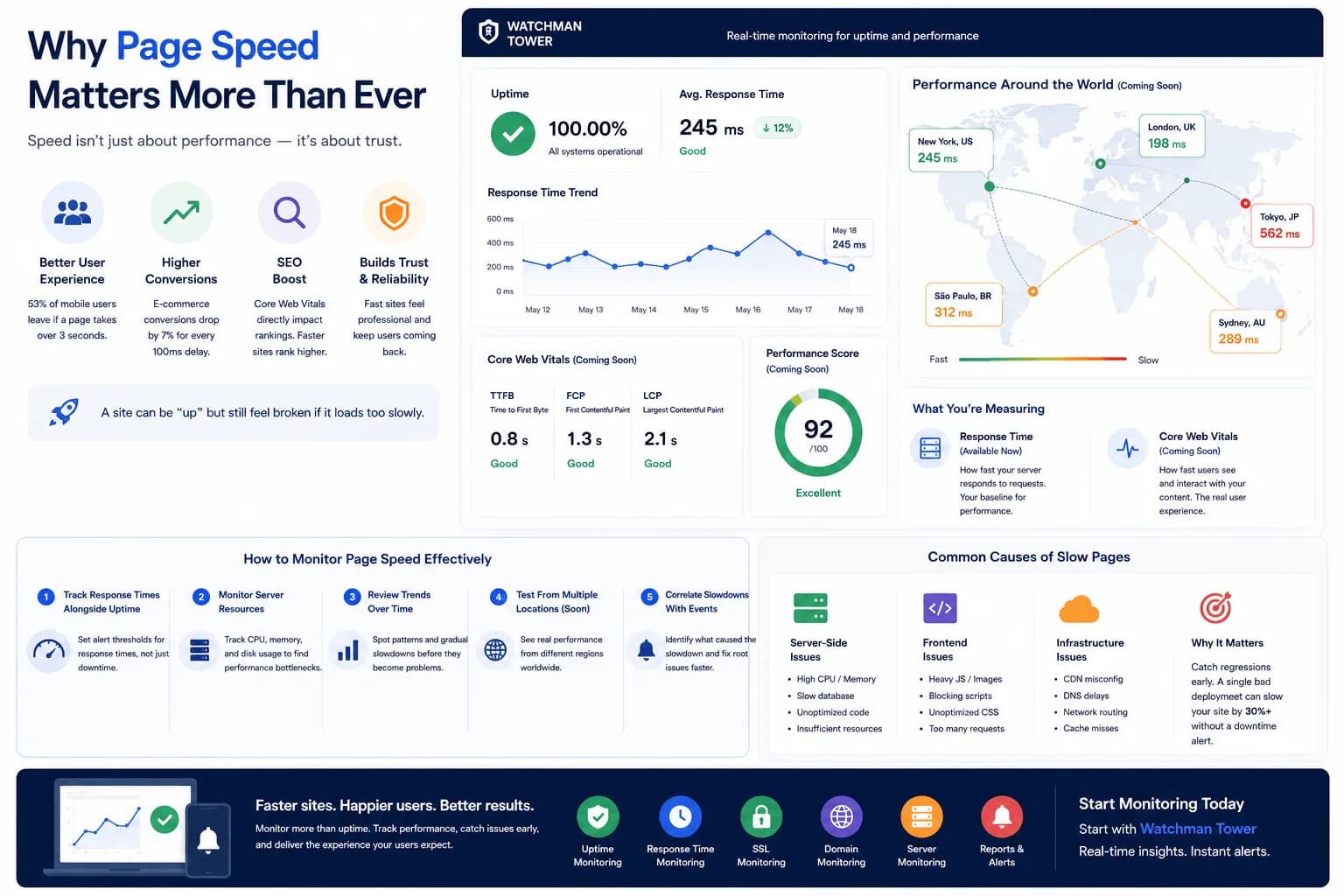
Page Speed Monitoring: Catch Every Millisecond Before It Costs You
Page speed monitoring tracks how fast a site responds over time, so a slowdown shows up as a trend before users describe the site as broken. This guide covers what to measure, what causes slow pages, and how to turn the numbers into fixes.
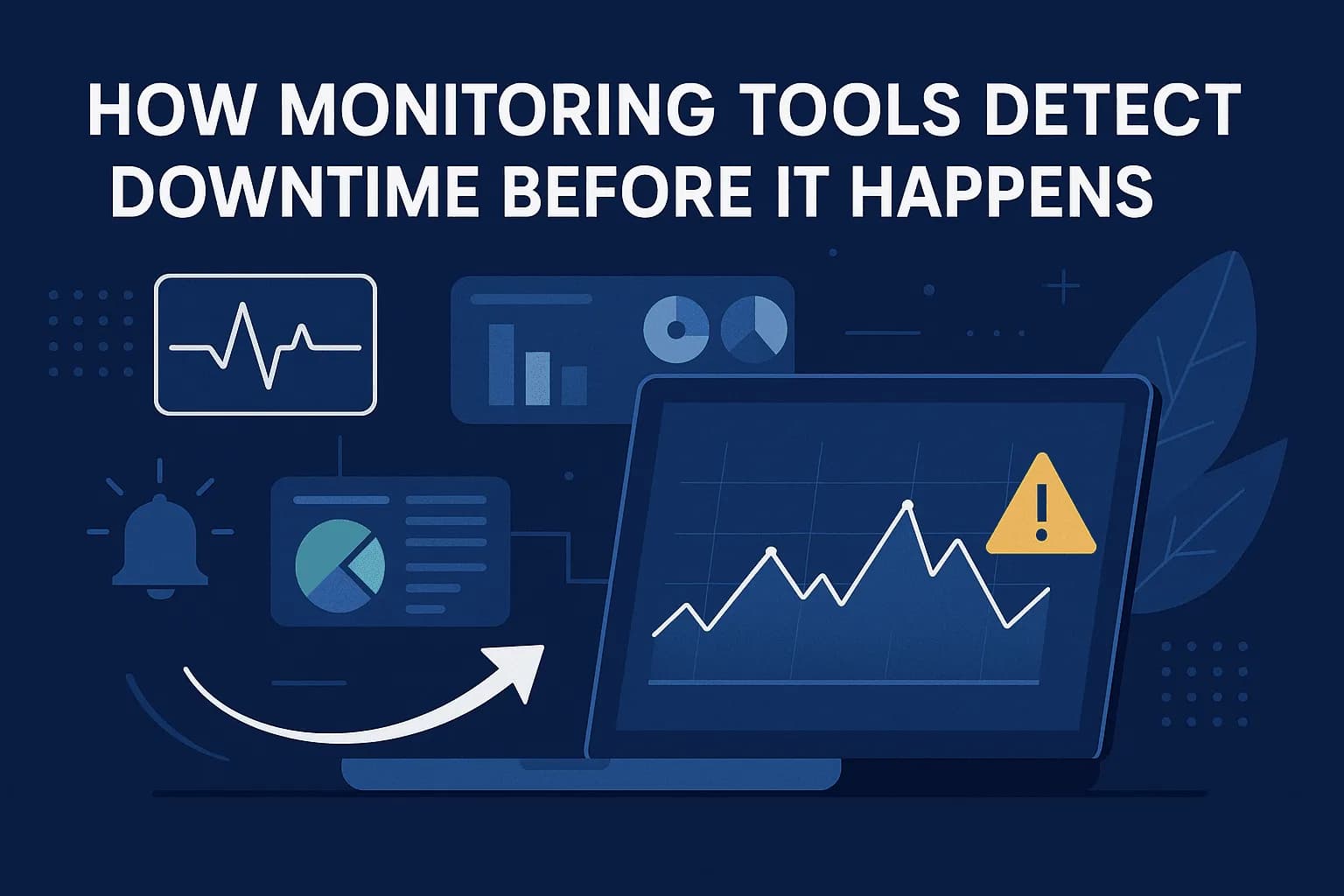
How Monitoring Tools Detect Downtime Before It Happens
Monitoring tools do not predict the future. They surface early signals (slower responses, failing dependencies, regional errors, approaching expiry dates) before users feel the full impact. This guide explains how that detection works.

Downtime is Expensive: The Real Costs No One Talks About
The cost of downtime is more than the minutes a site is offline. This guide covers the direct and hidden costs, why incidents nobody notices are the most expensive, and how to frame the return on monitoring.

Top 5 Reasons Why Uptime Monitoring is Essential in 2026
Uptime monitoring is essential, but its value grows when teams connect availability to incident confidence, alert quality, and broader health visibility. This guide explains why it still matters in 2026.
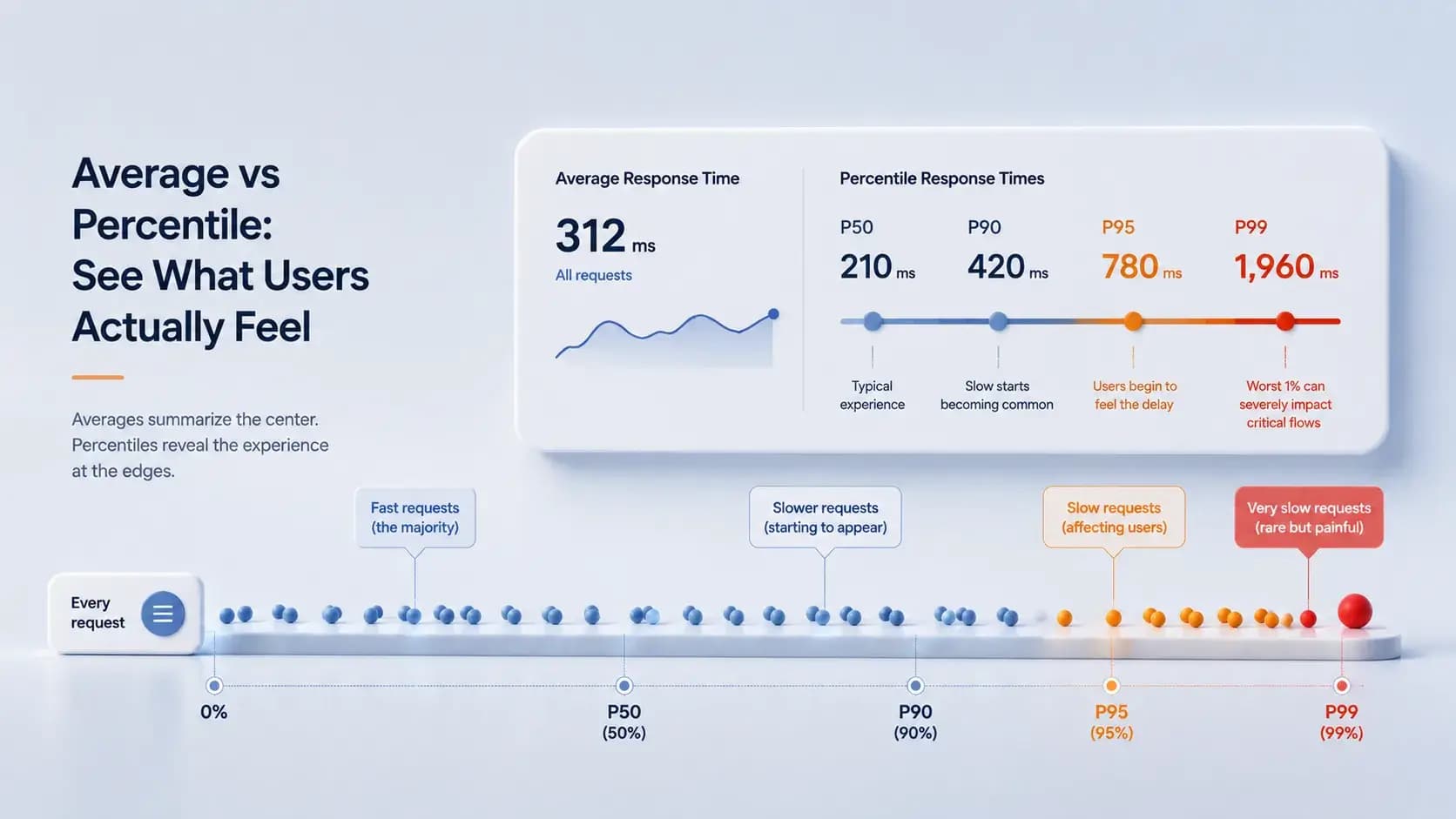
Average Response Time vs Percentile Metrics: Why Averages Hide API Performance Problems
Average response time can hide user pain. This guide explains why percentile metrics are critical when teams want latency visibility that reflects real experience.

API Functional Checks: Why 200 OK Doesn't Always Mean Your API Works
Functional checks matter because availability alone does not prove health. This guide explains how teams catch silent API failures that status codes miss.

How We Monitor APIs: A Real-World Example Using Node.js
This practical Node.js guide shows how API monitoring starts with basic checks, but becomes more useful when teams connect availability, latency, and failure visibility into one workflow.
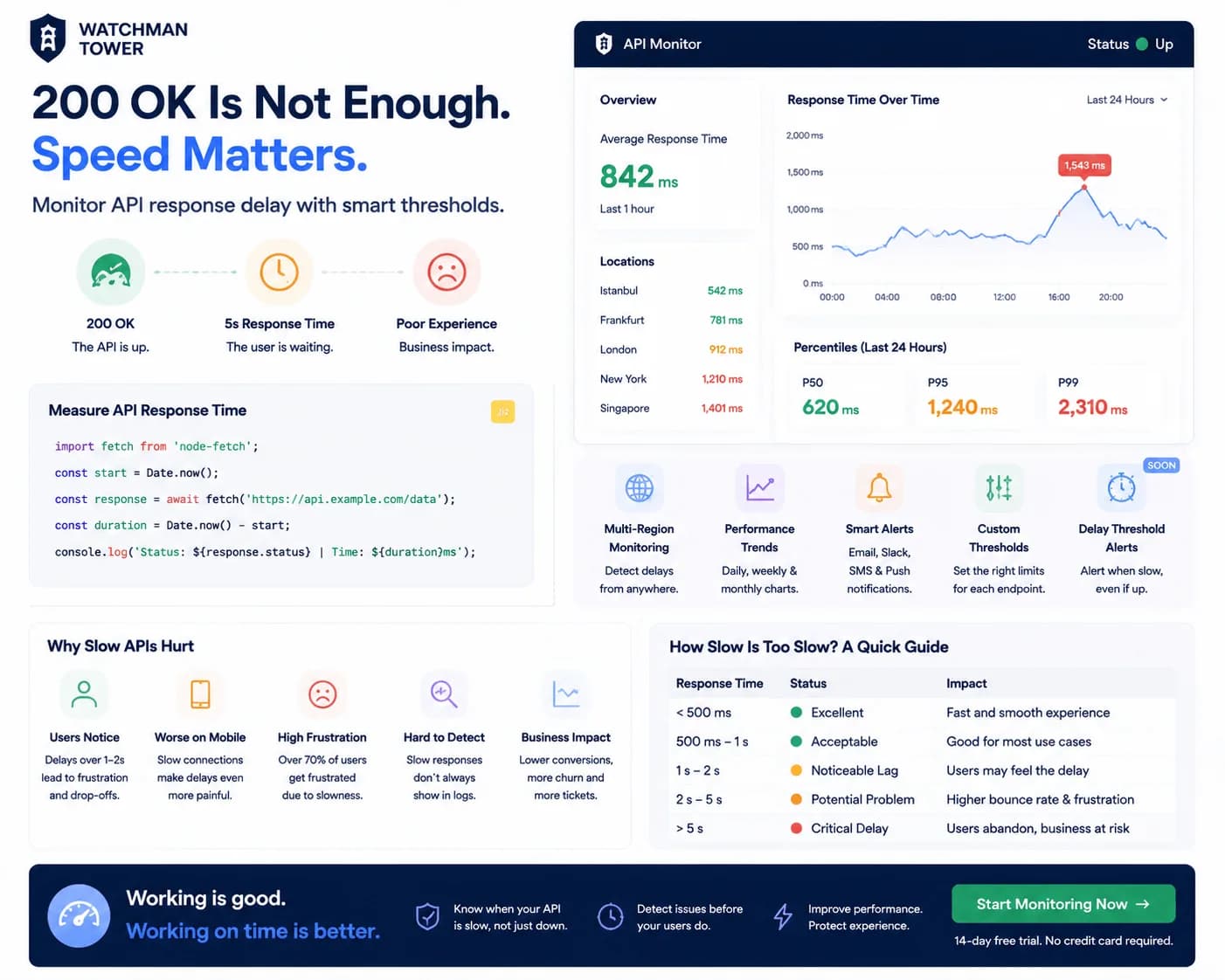
API Response Delay Threshold: Why Fast Responses Matter as Much as Uptime
An API can return 200 OK and still feel broken to users. This guide explains why response delay belongs inside a broader health view, not just uptime reporting.
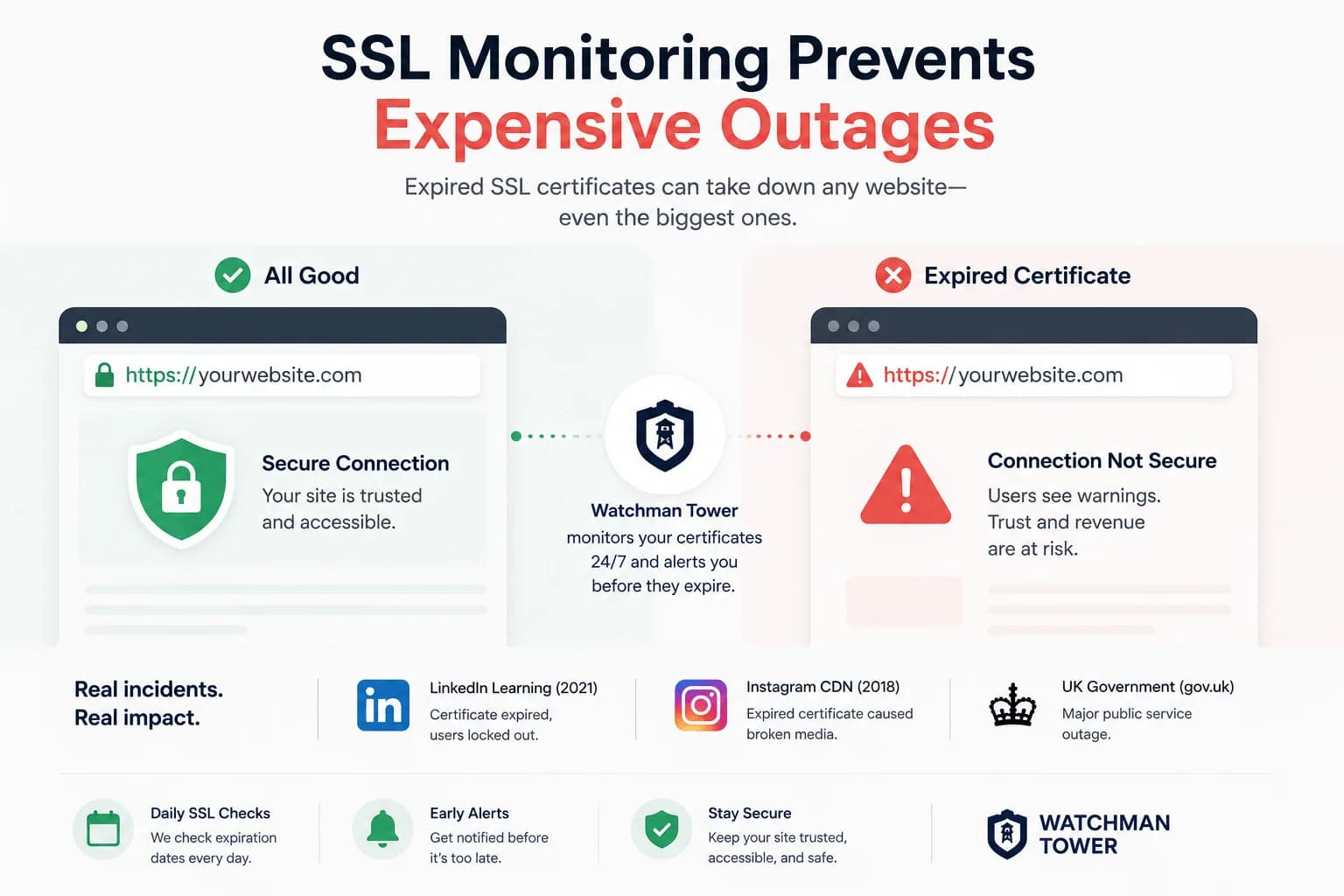
What Happens When SSL Monitoring Fails? Real-World Outage Examples
An expired SSL certificate takes a site offline as effectively as a server failure, and it happens on a date known months in advance. This guide covers real incidents, why reminders fail, and what SSL monitoring should check.

Domain Expiration Protection: How to Prevent Losing Your Domain
Domain expiration protection keeps a domain from lapsing by accident. This guide explains what the term means, how a domain actually expires, why losing one is costly, and how monitoring and renewal management prevent it.