

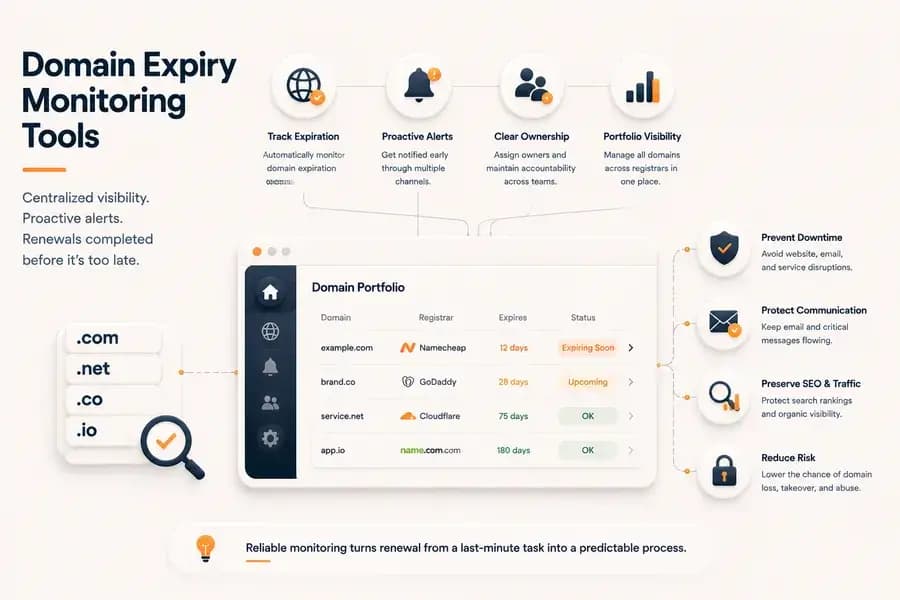
Best Domain Expiry Monitoring Tools: How to Choose the Right Solution
- Watchman Tower Team
- Updated: October 2, 2026
- Category: Domain Monitoring
- Read Time: 11 min
Explore how domain expiry monitoring tools help organizations track renewal risks, manage multiple domains, and choose the right solution based on visibility, automation, and operational needs.
Domain expiry monitoring tools help organizations keep track of domain renewal dates, reduce operational risks, and prevent unexpected service interruptions. As domain portfolios grow, relying only on registrar emails or manual reminders becomes increasingly difficult to manage.
A missed renewal can affect websites, email services, APIs, and other digital assets connected to a domain. The challenge is rarely knowing that domains expire — the challenge is maintaining reliable visibility across domains, registrars, owners, and teams.
The right domain expiry monitoring approach depends on how many domains you manage, how critical they are, and how much operational risk your organization can tolerate. This guide explains the different types of monitoring solutions, their strengths and limitations, and what features matter when choosing a tool.
What Are Domain Expiry Monitoring Tools?
Domain expiry monitoring tools are systems designed to track domain expiration dates and notify responsible teams before renewal deadlines become urgent problems.
Unlike basic registrar notifications, dedicated monitoring solutions provide a centralized view of domain status across different providers and environments. They help teams understand which domains are approaching expiration, who is responsible for renewal, and what action needs to be taken.
A typical domain expiry monitoring solution includes several core capabilities:
- Expiration date tracking: Automatically checking domain registration data and renewal timelines.
- Proactive reminders: Sending alerts before expiration instead of relying on last-minute action.
- Portfolio visibility: Managing multiple domains from a single location.
- Ownership awareness: Making sure renewal responsibilities are clear.
Why Domain Expiry Monitoring Tools Matter
Domain expiration is often treated as a simple administrative task, but the consequences of missing a renewal can extend far beyond losing access to a domain.
Prevent Missed Renewals
Registrar emails are useful, but they depend on someone seeing the message, having access to the correct inbox, and taking action at the right time.
As teams change and responsibilities move between people, renewal processes can become fragile. Automated monitoring creates an additional layer of protection by keeping expiration risks visible before deadlines approach.
Manage Domains Across Multiple Registrars
Many organizations manage domains through multiple registrars because of acquisitions, client projects, historical decisions, or different ownership requirements.
Checking each registrar separately makes it difficult to maintain a complete picture of upcoming expirations. A centralized monitoring approach reduces this fragmentation by bringing domain risks into one place.
Reduce Dependency on Individuals
A domain renewal process that depends on one person creates an unnecessary operational risk. Team changes, unavailable employees, or unclear ownership can cause important reminders to be missed.
Domain expiry monitoring tools help distribute visibility and create a more reliable domain renewal management process.
Protect Business Continuity
Domains often support more than a website. They may be connected to email systems, customer portals, APIs, authentication services, and other business-critical assets.
Preventing expiration is therefore not only a domain management task — it is part of maintaining digital service continuity.
Common Approaches to Domain Expiry Monitoring
Organizations use domain expiry monitoring methods to monitor domain expiration depending on their portfolio size, internal processes, and operational requirements. Some solutions are simple reminders, while others provide centralized visibility and automated workflows.
Understanding the strengths and limitations of each approach helps teams choose a monitoring method that matches their actual risk level.
Registrar-Based Alerts
Registrar notifications are the most common starting point for domain expiry monitoring. Most domain providers send renewal emails before a domain reaches its expiration date.
For individuals or organizations managing only a few domains, these reminders may provide enough protection. They are simple, usually free, and require no additional setup.
However, registrar alerts have important limitations:
- Limited visibility: Each registrar only shows its own domains.
- Single-channel dependency: Important reminders often depend on one email inbox.
- No centralized ownership: Teams may not know who is responsible for renewal.
- Limited reporting: There is usually no complete view of domain risk across providers.
Registrar alerts are a useful baseline, but they become difficult to manage as domain portfolios grow.
Spreadsheet and Calendar Tracking
Some teams manage domain renewals manually using spreadsheets, calendar events, or internal task systems.
This approach provides more control than relying only on registrar emails. Teams can add ownership information, renewal dates, and internal notes in a format that matches their workflow.
The challenge is maintaining accuracy over time.
- Domains may be transferred between registrars.
- Ownership responsibilities may change.
- Manual updates can be forgotten.
- There is usually no automated verification that recorded information is still correct.
Manual tracking can work for small portfolios, but it becomes fragile when domains become part of larger business operations.
Self-Hosted Monitoring Scripts
Engineering teams sometimes build custom solutions that check domain expiration data through WHOIS, RDAP, or registrar APIs and send internal notifications.
A self-hosted approach provides maximum flexibility. Teams can integrate domain monitoring into existing systems and customize alerts according to their requirements.
However, building the system also means taking responsibility for maintaining it.
- Registry changes: Domain data sources and APIs can change over time.
- Technical maintenance: Scripts require monitoring, updates, and troubleshooting.
- Operational ownership: Someone must maintain the system when failures occur.
Self-hosted monitoring can be effective for organizations with engineering resources, but it transfers the operational burden from a vendor to the internal team.
Dedicated Domain Expiry Monitoring Platforms
Dedicated monitoring platforms are designed specifically to solve the visibility and reliability problems that appear when managing multiple domains.
Instead of checking different registrars or maintaining manual records, teams can monitor domain expiration status from a centralized system with automated reminders and ownership workflows.
Typical capabilities include:
- Centralized domain visibility: Track domains across different registrars and environments.
- Automated expiration checks: Keep renewal dates updated without manual tracking.
- Multi-channel notifications: Deliver alerts through channels teams actually monitor.
- Team workflows: Assign ownership and maintain operational accountability.
For teams managing business-critical domains, dedicated monitoring platforms provide a more reliable approach than isolated reminders or manual processes.
Key Features to Evaluate in a Domain Expiry Monitoring Tool
Choosing a domain expiry monitoring tool is not only about receiving an expiration notification. A reliable solution should help teams maintain visibility, assign responsibility, and reduce the operational risks that come with managing domain portfolios.
The right features depend on the size of the portfolio and the importance of the domains being managed. However, several capabilities are essential for any serious monitoring process.
Automated Expiration Tracking
A domain expiry monitoring tool should automatically track expiration dates without requiring teams to maintain manual records.
Manual tracking introduces several risks. Domain transfers, ownership changes, and registration updates can make spreadsheets and calendar entries outdated over time.
Automated tracking helps ensure that teams are working with current information and reduces the effort required to maintain domain inventories.
Multi-Domain Visibility
A monitoring solution should provide a clear overview of all managed domains from a single location.
This becomes increasingly important as organizations grow and accumulate domains across different projects, brands, regions, or customer environments.
A centralized view helps teams answer important operational questions:
- Which domains are approaching expiration?
- Which domains require attention?
- Who is responsible for each renewal?
- Which domains represent the highest operational risk?
Without centralized visibility, domain risk remains distributed across different accounts and individuals.
Multi-Registrar Support
Many organizations manage domains through multiple registrars because of historical decisions, acquisitions, client requirements, or different technical needs.
A useful monitoring solution should not require teams to consolidate every domain into a single registrar before gaining visibility.
Independent monitoring across registrars reduces vendor dependency and provides a more complete picture of the organization's domain portfolio.
Reliable Alerting and Notification Channels
A reminder is only useful if it reaches someone who can take action.
Effective domain expiry monitoring tools provide flexible notification options that match how teams already communicate.
Important considerations include:
- Notification timing and reminder schedules.
- Multiple recipients or responsible owners.
- Backup notification paths.
- Clear escalation when renewal tasks remain unresolved.
The goal is not simply sending more alerts. The goal is making sure important renewal risks are seen and acted upon.
Ownership and Team Management
Domain renewal is an operational responsibility, not just a technical task. A monitoring tool should help organizations understand who owns each domain and who is responsible for taking action.
Useful ownership features include:
- Assigning responsible team members.
- Adding internal notes or metadata.
- Separating ownership from technical administration.
- Maintaining visibility when teams change.
Clear ownership prevents situations where everyone assumes someone else is handling the renewal.
Audit History and Operational Visibility
For important domains, knowing that an alert was sent is not always enough. Teams may also need to understand what happened before, during, and after a renewal event.
Operational visibility can include:
- Previous alerts and notifications.
- Renewal-related activity history.
- Ownership changes.
- Current domain status.
A history of operational events helps teams investigate problems and improve renewal processes over time.
Import and Portfolio Management
Organizations managing many domains need efficient ways to add and organize their portfolio.
Bulk import capabilities, tagging, grouping, and filtering reduce the administrative effort required to maintain visibility across large domain collections.
A tool should make it easier to manage growth rather than becoming another manual system that requires constant maintenance.
Beyond Expiry Dates: Building Broader Domain Reliability
Domain expiry is only one part of maintaining reliable digital assets. Organizations often depend on domains for multiple services, making broader visibility valuable.
Depending on operational needs, teams may also monitor:
- Website availability.
- SSL certificate status.
- DNS configuration.
- Service accessibility.
A mature monitoring approach does not only answer "when does this domain expire?" It helps teams understand whether critical digital assets remain healthy and under control.
Free vs Paid Domain Expiry Monitoring Tools
Not every organization needs the same level of domain expiry monitoring. The right approach depends on the number of domains managed, the importance of those domains, and the operational risk created by a missed renewal.
Free and manual approaches can work well for simple scenarios, while paid monitoring solutions become more valuable when teams need automation, centralized visibility, and reliable ownership workflows.
Free Approaches: When They Are Enough
Free options such as registrar notifications, spreadsheets, and calendar reminders can be effective for individuals or organizations managing a small number of low-risk domains.
These approaches may be sufficient when:
- Only a few domains need to be tracked.
- One person clearly owns the renewal process.
- Domain-related downtime would have limited impact.
- Manual maintenance is easy to manage.
The main advantage of free approaches is simplicity. They require little setup and can provide basic protection against accidental expiration.
Limitations of Free Approaches
As domain portfolios grow, manual and free approaches become harder to maintain reliably.
Common challenges include:
- No centralized view across multiple registrars.
- Dependence on individual memory and attention.
- Limited ownership tracking.
- Manual updates after domain changes.
- No consistent escalation process.
The problem is not that free methods do not work. The problem is that their reliability depends heavily on people maintaining the process correctly over time.
Paid Domain Expiry Monitoring Tools: When They Make Sense
Paid monitoring solutions are designed for situations where domain expiration creates meaningful operational risk.
They become more valuable when organizations need:
- Automated monitoring without manual tracking.
- Visibility across many domains.
- Support for multiple teams or owners.
- Reliable notification workflows.
- Operational history and accountability.
For businesses where domains support websites, email systems, customer platforms, or critical services, automation reduces the chance that a simple renewal issue becomes a larger incident.
Choosing Based on Risk, Not Domain Count Alone
The decision between free and paid monitoring should not depend only on the number of domains. The importance of those domains matters just as much.
A single critical domain may require stronger controls than dozens of low-impact domains.
Consider these questions:
- How much would downtime affect customers or revenue?
- How many people are involved in renewal decisions?
- Are domains managed across multiple registrars?
- Would losing a domain create security or reputation risks?
- Can the renewal process depend on one person?
The right monitoring approach matches the level of protection required by the business impact of failure.
How to Choose the Right Domain Expiry Monitoring Tool
Choosing a domain expiry monitoring tool starts with understanding your operational requirements rather than comparing feature lists alone.
Different organizations have different needs:
Small Portfolios
Organizations managing a small number of non-critical domains may only need basic reminders and clear ownership.
The priority is maintaining accurate records and ensuring someone is responsible for renewal.
Growing Teams and Agencies
Teams managing multiple client domains, brands, or projects usually need more centralized visibility.
Important capabilities include:
- Portfolio management.
- Ownership assignment.
- Reliable alerts.
- Reduced dependence on manual tracking.
Business-Critical Domains
Organizations that depend on domains for customer-facing services, communication, or revenue should prioritize reliability over convenience.
These environments typically benefit from:
- Automated monitoring.
- Multiple notification paths.
- Operational visibility.
- Clear accountability.
- Independent monitoring outside the registrar.
Conclusion
Choosing the right domain expiry monitoring tool depends on more than the ability to send a renewal reminder. The right solution should match the way your organization manages domains, assigns responsibility, and handles operational risk.
For small portfolios, simple reminders and manual processes may provide enough visibility. As domain portfolios grow, multiple registrars, changing ownership, and business-critical services make centralized monitoring increasingly valuable.
A reliable domain expiry monitoring approach combines accurate expiration tracking, proactive notifications, clear ownership, and a process that ensures important renewal tasks are completed before they become incidents.
The goal is not simply knowing when a domain expires. The goal is maintaining continuous visibility and control over digital assets that your organization depends on.
If you need a deeper understanding of renewal workflows, explore our guides on domain expiry checklists and how the domain expiration lifecycle works.
For organizations that need centralized domain expiry visibility across multiple domains and registrars, explore domain expiry monitoring tool.
Free plan available. No credit card needed.
Want a Dedicated Expiry Monitoring Tool?
Don’t rely only on registrar emails. Watchman Tower gives you automatic expiry alerts across all registrars, with reminders at 30, 14, 7, 3, and 1 day before expiry.
Learn more about Domain Expiry Monitoring →FAQ
What is the best domain expiry monitoring tool for teams managing multiple registrars in 2026?v
What are the limitations of relying solely on registrar alerts for domain expiry monitoring?v
How does the Spreadsheet + Calendar Reminders method work for domain expiry monitoring?v
What are the pros and cons of using self-hosted scripts for domain expiry monitoring?v
What key features does Watchman Tower offer for domain expiry monitoring?v
Blog Posts
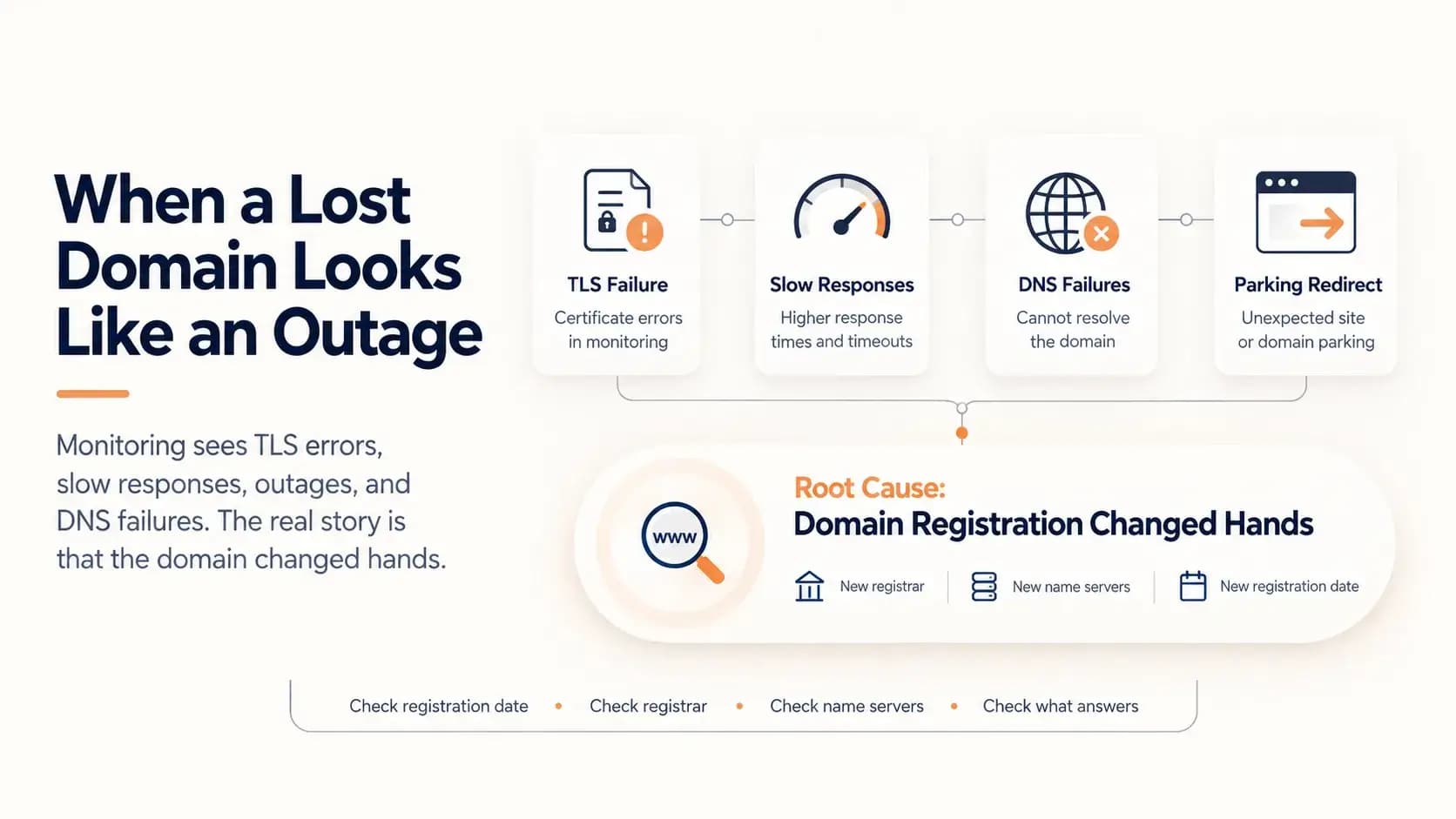
What Happens When a Domain Expires and Someone Else Registers It...
A domain that lapses and is registered by someone else does not look like a lost domain. It looks like a certificate error, slow responses, an outage and DNS failures. This case follows one such domain through five weeks of accurate but misleading alerts, and shows how to tell the difference.
Learn more about What Happens When a Domain Expires and Someone Else Registers It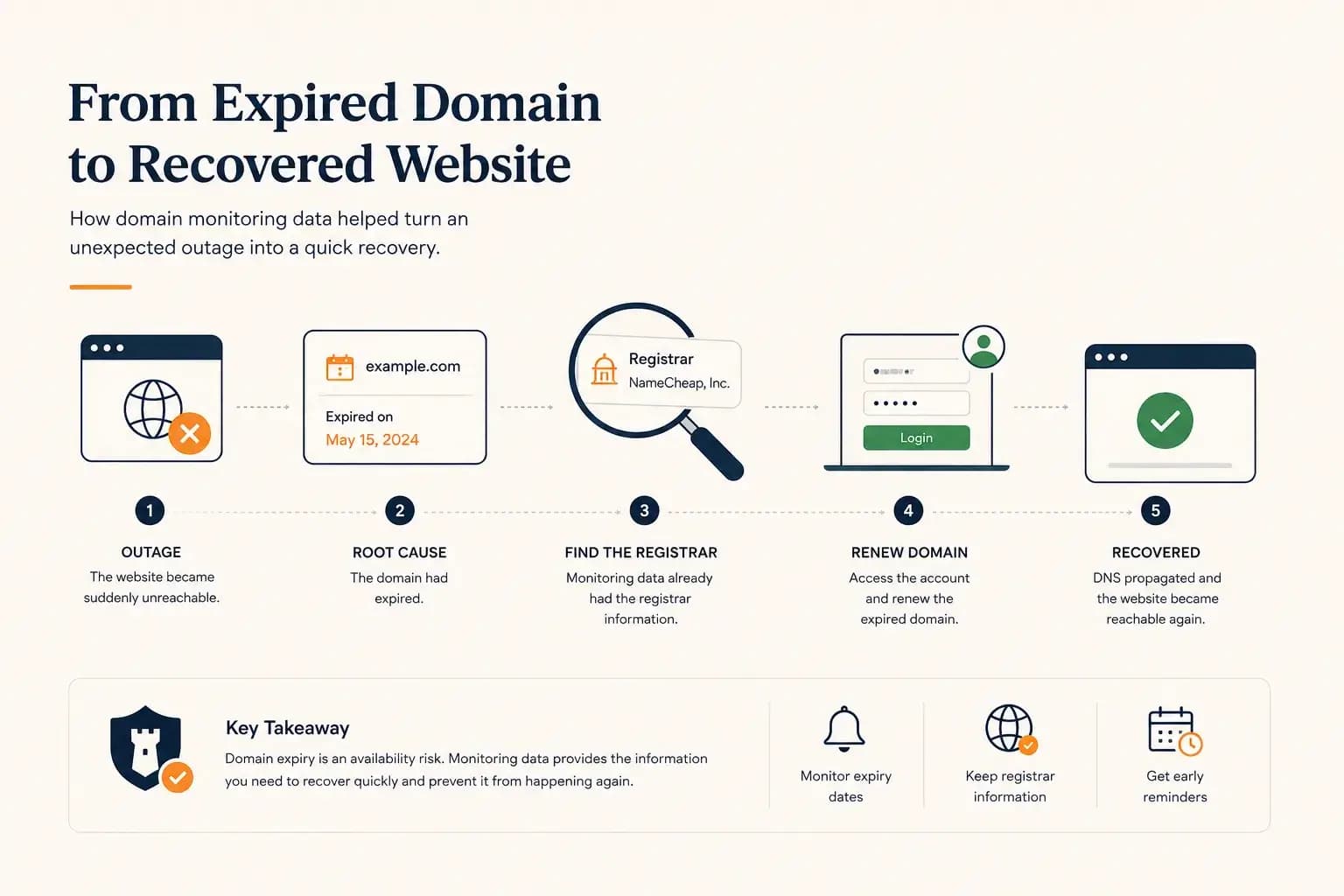
The Website Went Down — and the Owner Didn’t Know Where the Domain Was Registered...
A real-world expired domain recovery case: how a website went offline, how we identified the registrar from monitoring data, and how the domain was renewed before it was lost.
Learn more about The Website Went Down — and the Owner Didn’t Know Where the Domain Was Registered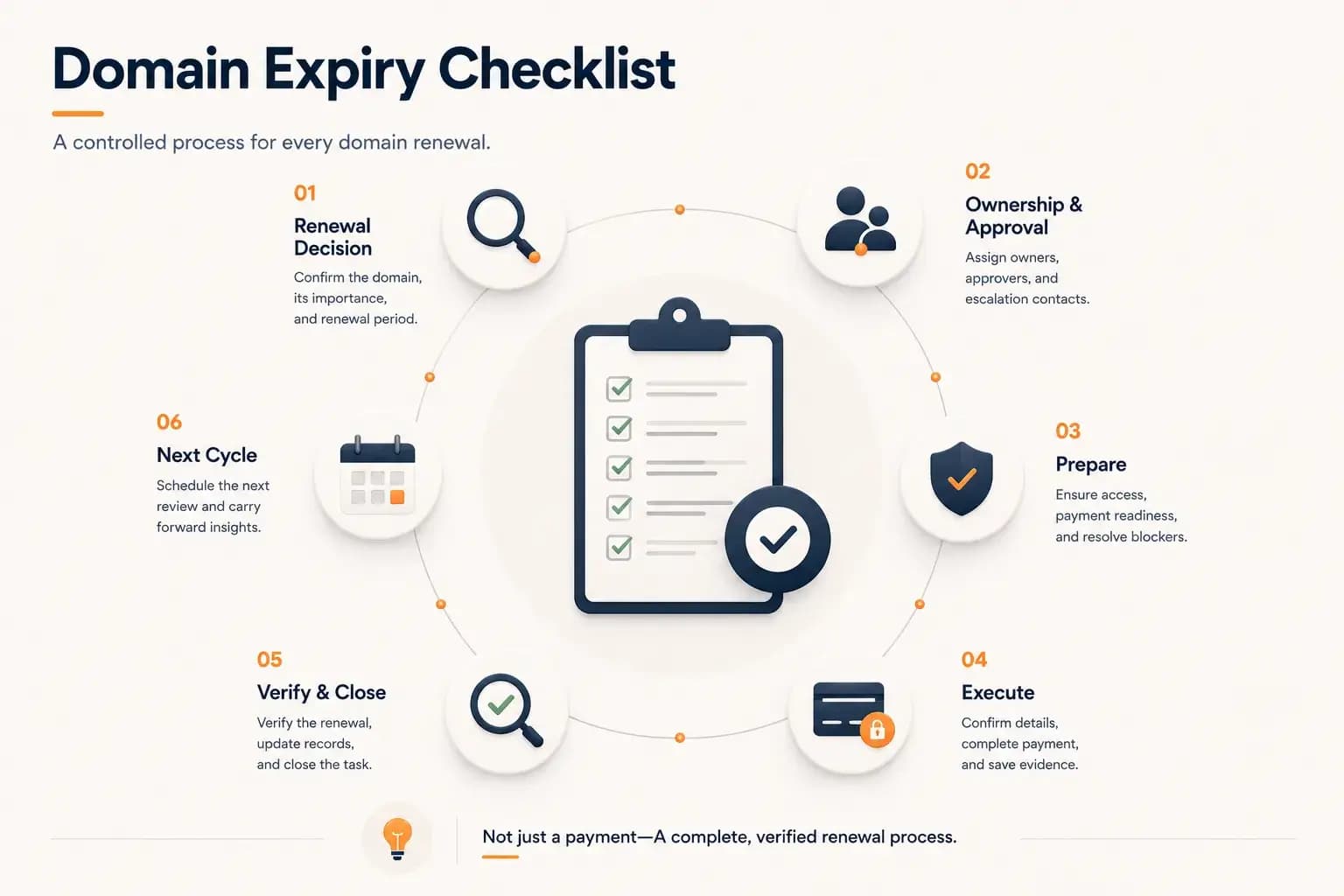
Domain Expiry Checklist: A Complete Renewal Process...
Follow a practical domain expiry checklist that standardizes every stage of the renewal process, from planning and ownership to execution, verification, documentation, and preparing the next renewal cycle. Learn how to reduce operational risk with a repeatable renewal workflow.
Learn more about Domain Expiry Checklist: A Complete Renewal Process