

Free vs Paid Domain Expiry Reminders: When to Upgrade
- Watchman Tower Team
- Updated: July 27, 2026
- Category: Domain Monitoring
- Read Time: 8 min
Understand the differences between free and paid domain expiry reminders. Learn when basic alerts are enough and when automated monitoring provides better reliability, visibility, and control.
Domain expiry reminders are one of the simplest ways to reduce the risk of accidental domain loss. For some organizations, basic free reminders are enough. For others, the lack of automation and visibility can create unnecessary operational risk.
The difference between free and paid domain expiry reminder approaches is not only about the number of notifications you receive. It is about reliability, ownership, visibility, and how confidently your organization can manage renewal responsibilities.
The right choice depends on the importance of your domains, the size of your portfolio, and how much operational risk a missed renewal would create.
What Are Free Domain Expiry Reminders?
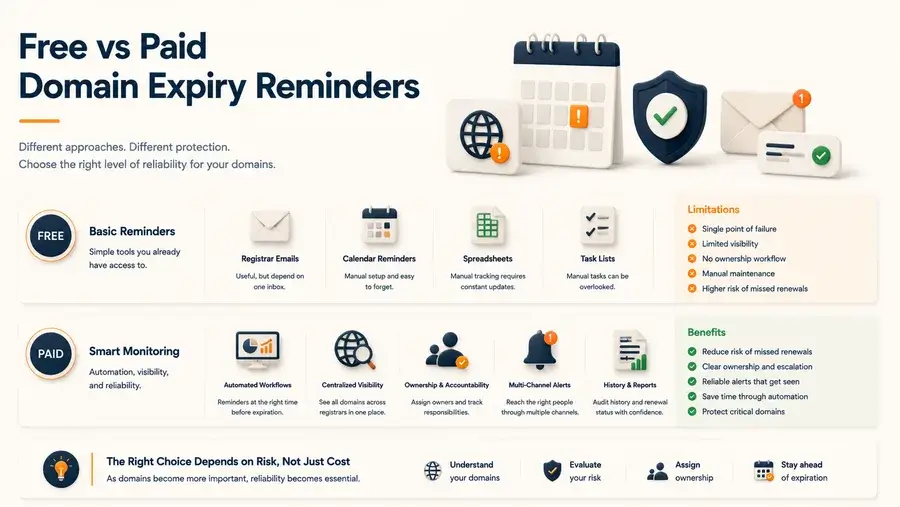
Free domain expiry reminders usually rely on tools and processes that organizations already have access to, such as registrar emails, calendar events, spreadsheets, or task management systems.
These approaches can provide basic protection by creating awareness before a domain reaches expiration.
Common examples include:
- Registrar renewal emails.
- Calendar notifications based on expiration dates.
- Spreadsheet-based domain inventories.
- Manual task reminders.
For simple domain portfolios, these methods may be practical and cost-effective.
Registrar Email Reminders
Registrar emails are the most common free reminder method. Most domain providers send renewal notifications before expiration dates.
They are useful because they require little setup and come directly from the organization managing the registration.
However, they depend heavily on email visibility and account management.
Potential problems include:
- The notification reaches an outdated email address.
- The message is filtered or ignored.
- Only one person receives the reminder.
- The organization manages domains across multiple registrars.
Calendar and Spreadsheet Tracking
Some teams create their own renewal tracking process using spreadsheets and calendar reminders.
This provides more control than relying only on registrar emails. Teams can record domain owners, renewal dates, and internal notes.
However, manual systems require continuous maintenance.
- Domain transfers must be updated manually.
- Ownership changes may not be reflected.
- Incorrect dates can create false confidence.
- The process depends on people remembering to maintain it.
The Limitations of Free Reminder Approaches
Free domain expiry reminder methods can work well when the renewal process is simple. However, their reliability decreases as the number of domains, teams, and dependencies increases.
The main limitation is not the lack of notifications. The challenge is ensuring that the right information reaches the right person at the right time.
Single Point of Failure
Many free reminder approaches depend on one person, one inbox, or one manually maintained record.
This creates a single point of failure. If the responsible person leaves the organization, changes roles, misses the email, or loses access to the account, the renewal process can be interrupted.
A reminder system is only reliable when responsibility does not depend on one individual remembering every renewal date.
Limited Visibility Across Domains
Free reminder methods often work well for individual domains, but they become harder to manage when organizations own multiple domains across different registrars.
Without a centralized view, teams may struggle to answer basic operational questions:
- Which domains are approaching expiration?
- Which domains require action?
- Who owns each renewal task?
- Which domains represent the highest risk?
The lack of visibility turns domain renewal into a reactive process instead of a controlled workflow.
No Ownership and Escalation Workflow
A reminder alone does not guarantee that someone will complete the renewal process.
Organizations need clear answers to questions such as:
- Who receives the first reminder?
- Who follows up if the task is not completed?
- Who takes responsibility when the primary owner is unavailable?
Free reminder methods usually provide notifications but not structured ownership workflows.
Manual Maintenance Over Time
Manual systems require continuous updates to remain accurate.
Changes such as registrar migrations, ownership changes, new domains, or expired projects can make existing records outdated.
The more domains an organization manages, the more effort is required to keep manual reminder systems reliable.
What Paid Domain Expiry Reminder Solutions Add
Paid domain expiry reminder solutions focus on reducing the operational effort required to manage renewals. Their value comes from automation, visibility, and reliability rather than simply sending more notifications.
For organizations managing important domains, these capabilities help transform renewal from a manual task into a predictable process.
Automated Reminder Workflows
Paid solutions can automatically track expiration dates and trigger reminders according to predefined schedules.
This reduces dependence on manual calendar entries and ensures that renewal tasks begin before deadlines become urgent.
A structured reminder process may include multiple checkpoints, allowing teams enough time to resolve access, payment, or approval issues.
Centralized Domain Visibility
Instead of checking different registrar accounts separately, organizations can use a domain expiry monitoring tool to manage domain expiration information from a single location.
Centralized visibility is especially valuable for:
- Agencies managing client domains.
- Companies with multiple brands.
- Teams managing domains across different registrars.
- Organizations with shared renewal responsibilities.
Multiple Notification Channels
Reliable renewal processes should not depend on a single communication channel.
Paid monitoring solutions may provide additional notification options that match how teams already work, such as email, push notifications, collaboration tools, or other operational channels.
The goal is not creating more alerts. The goal is increasing the chance that important renewal risks are seen and acted upon.
Team Accountability and Ownership
For organizations, knowing a domain is expiring is only the first step. Someone must also be responsible for completing the renewal.
Paid solutions often provide ownership features that help teams assign responsibility, track progress, and maintain visibility when responsibilities change.
Free vs Paid: Which Approach Fits Your Situation?
The right domain expiry reminder approach depends on the role your domains play in your organization. A personal domain, a small business website, and a customer-facing platform do not carry the same level of renewal risk.
Instead of choosing based only on cost, organizations should consider the impact of a missed renewal and how much reliability their process requires.
Personal Domains and Small Projects
For personal websites, hobby projects, or domains with limited business impact, free reminder methods may be enough.
Registrar notifications combined with a calendar reminder can provide reasonable protection when:
- The number of domains is very small.
- One person manages the entire process.
- A temporary interruption would not create significant damage.
- Ownership is unlikely to change.
In these situations, simplicity may be more valuable than additional automation.
Small Businesses
Small businesses often reach a point where domain renewal becomes more important than it first appears.
Even a single domain may support:
- The company website.
- Business email addresses.
- Customer communication.
- Marketing campaigns.
At this stage, the main question is not only "how many domains do we have?" but also "what happens if this domain becomes unavailable?"
Organizations that depend on their domain for daily operations may benefit from moving beyond individual reminders toward a more structured monitoring process.
Agencies and Teams Managing Multiple Domains
Agencies, development teams, and organizations managing multiple client or project domains often face a different challenge: visibility.
The problem is usually not that renewals are impossible to complete. The problem is knowing:
- Which domains are approaching expiration.
- Who owns each renewal responsibility.
- Which registrar manages each domain.
- Whether important reminders have been seen.
For these environments, centralized monitoring becomes increasingly valuable because domain management becomes a shared operational process rather than an individual task.
Business-Critical Domains
Organizations that rely on domains for revenue, customer access, communication, or core services should treat domain expiry as an operational risk.
For these domains, relying only on free reminders may create unnecessary exposure.
A stronger process usually includes:
- Independent expiration monitoring.
- Multiple notification paths.
- Clear ownership.
- Early warning before deadlines.
- A documented renewal workflow.
The more important a domain is, the less acceptable it becomes to depend on a single reminder or individual memory.
When Should You Upgrade to a Paid Domain Expiry Reminder Solution?
There is no universal point where every organization must move from free reminders to paid monitoring. The decision depends on risk, complexity, and operational requirements.
Consider upgrading when one or more of these situations apply:
- You manage domains across multiple registrars.
- Several people are involved in renewal decisions.
- Your business depends heavily on domain availability.
- You have experienced missed reminders or renewal confusion before.
- Manual tracking requires increasing effort.
- You need visibility into domain status across a portfolio.
A paid solution is not valuable because it replaces a calendar reminder. It is valuable because it creates a more reliable operational system around domain ownership and renewal.
Conclusion
Free domain expiry reminders can provide effective protection for simple situations, especially when only a few domains are involved and ownership is clear.
However, as domain portfolios grow, the limitations of manual processes become more visible. Multiple registrars, changing responsibilities, and business-critical services require stronger visibility and more reliable workflows.
The right choice between free and paid domain expiry reminders depends on the level of risk your organization needs to manage. The goal is not simply receiving a notification before expiration — it is ensuring that important domains remain under your control.
For a deeper look at domain monitoring approaches, explore our guide on Domain Expiry Monitoring Tools.
If you need automated domain expiry visibility across your portfolio, explore Domain Expiry Monitoring.
Free plan available. No credit card needed.
Want a Dedicated Expiry Monitoring Tool?
Don’t rely only on registrar emails. Watchman Tower gives you automatic expiry alerts across all registrars, with reminders at 30, 14, 7, and 1 day before expiry.
Learn more about Domain Expiry Monitoring →FAQ
What are the limitations of free domain expiry reminders?v
What additional alert channels do paid domain monitoring tools offer?v
How do paid monitoring tools handle reminder timing?v
Which option is better for managing multiple domains across registrars?v
What risks come with missing a domain renewal?v
Blog Posts
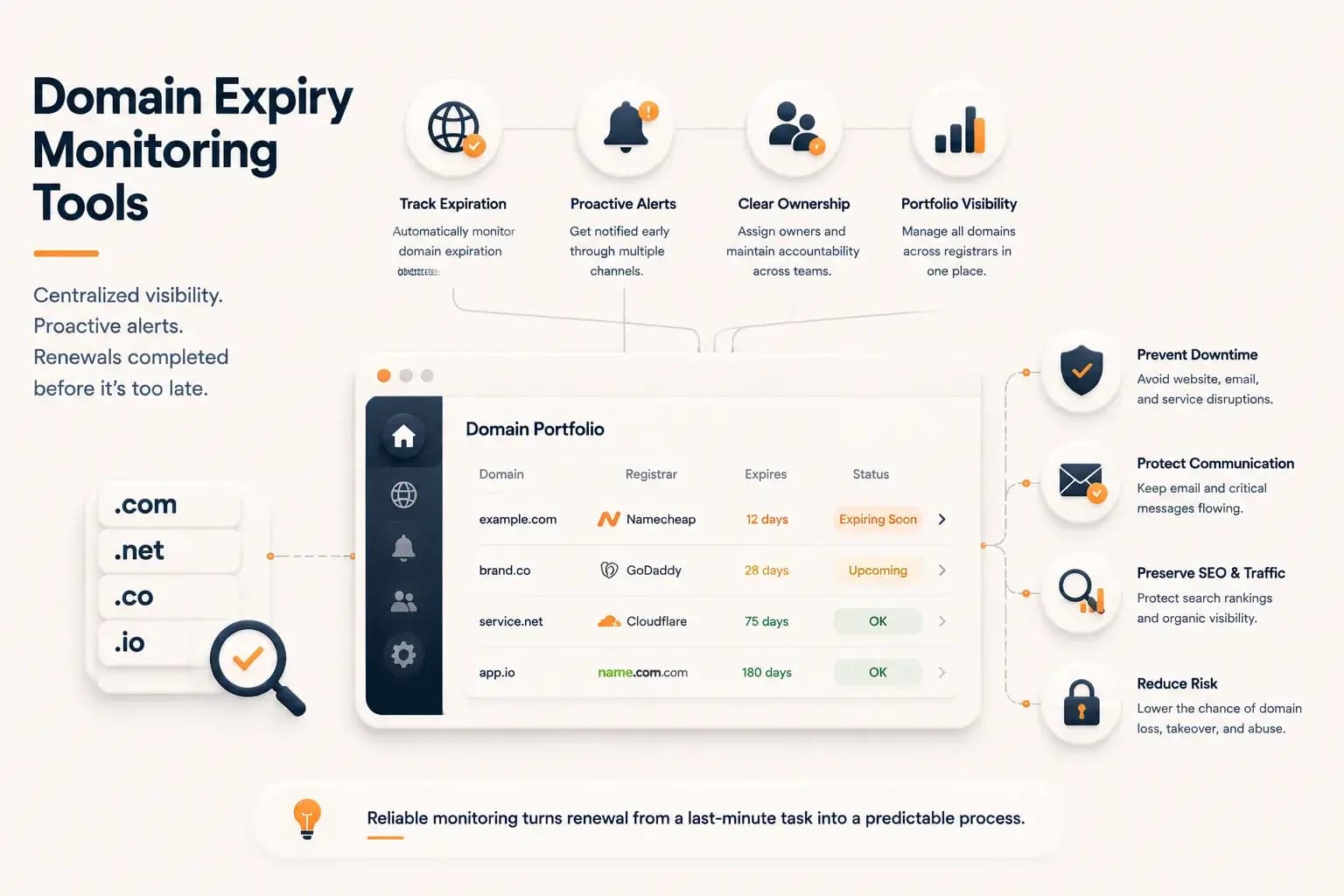
Domain Expiry Monitoring Tools: How to Choose the Right Solution...
Explore how domain expiry monitoring tools help organizations track renewal risks, manage multiple domains, and choose the right solution based on visibility, automation, and operational needs.
Learn more about Domain Expiry Monitoring Tools: How to Choose the Right Solution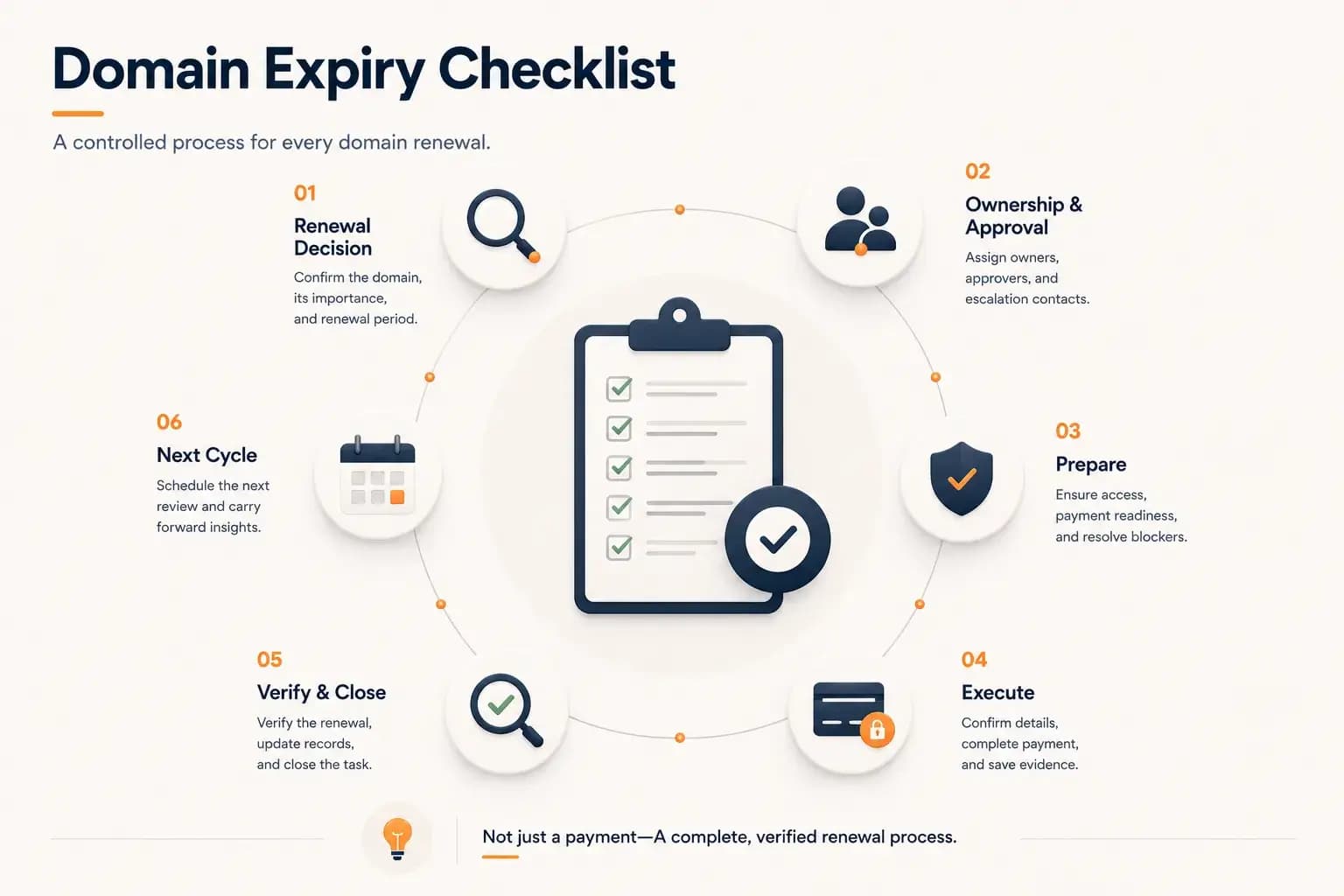
Domain Expiry Checklist: A Complete Renewal Process...
Follow a practical domain expiry checklist that standardizes every stage of the renewal process, from planning and ownership to execution, verification, documentation, and preparing the next renewal cycle. Learn how to reduce operational risk with a repeatable renewal workflow.
Learn more about Domain Expiry Checklist: A Complete Renewal Process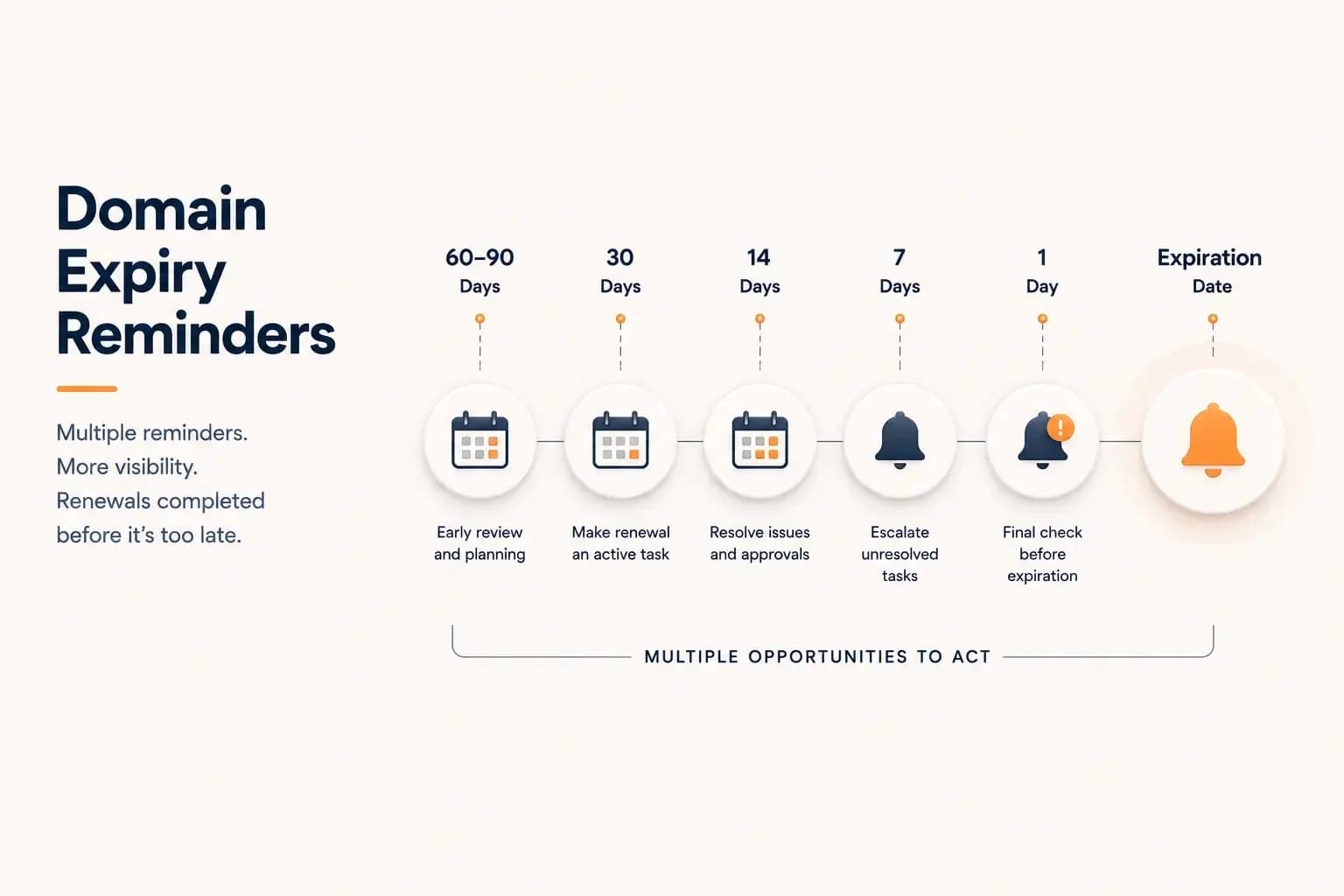
Domain Expiry Reminders: How to Prevent Missed Renewals...
Build a reliable domain expiry reminder strategy with the right timing, responsible owners, and escalation steps. This guide explains how organizations can reduce missed renewals by creating reminder workflows that provide visibility before expiration deadlines.
Learn more about Domain Expiry Reminders: How to Prevent Missed Renewals