

Status page guides for incident communication and transparency
A status page gives users a clear place to understand incidents, downtime, maintenance, and service recovery. This hub covers public status pages, SaaS communication, status page examples, custom domains, and transparency best practices.
Use these guides to communicate incidents clearly when reliability matters most.
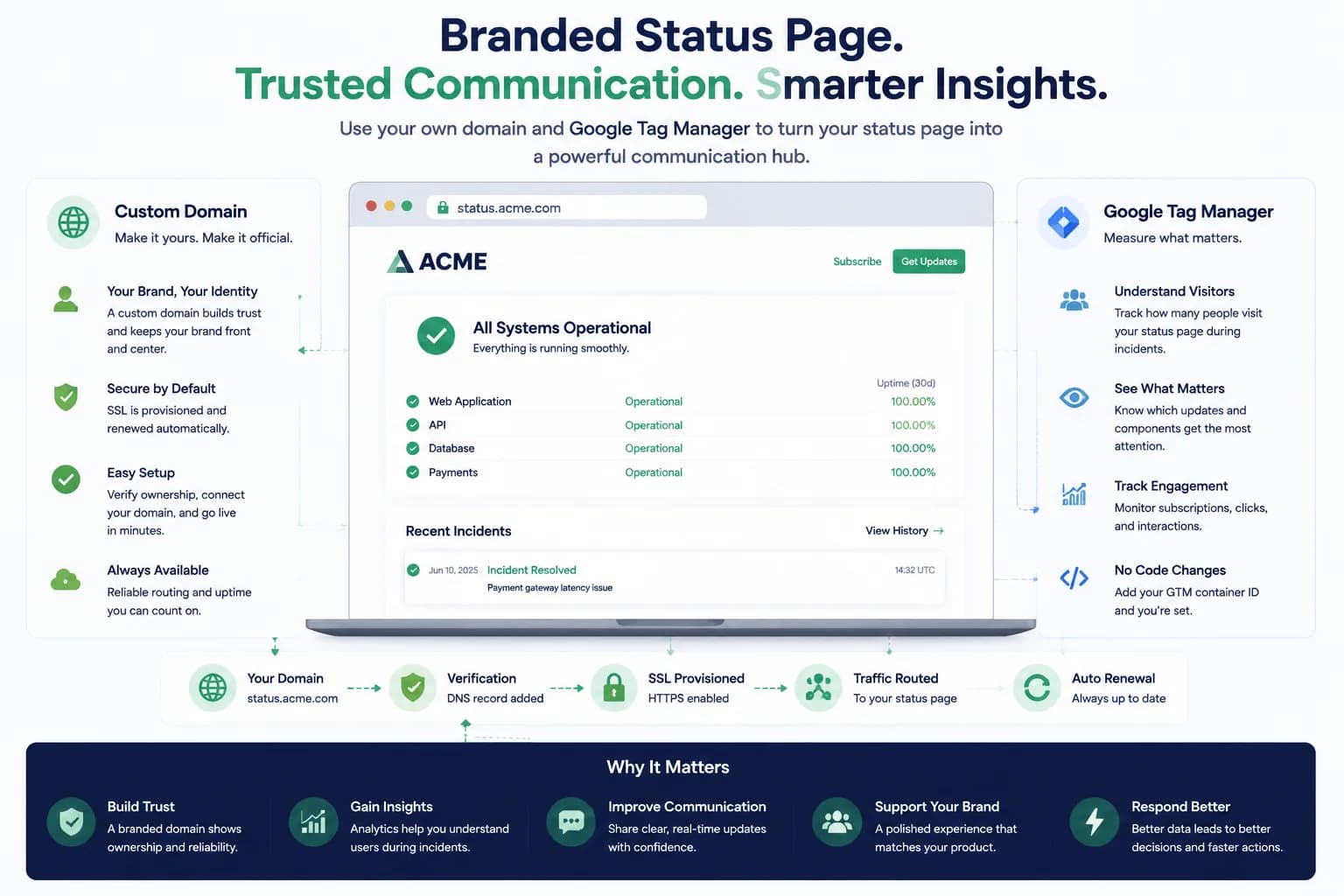
Custom Domains and Google Tag Manager Integration for Your Status Page
Custom domains and analytics make status pages feel like a real product surface instead of a generic incident page. This guide explains why that matters.
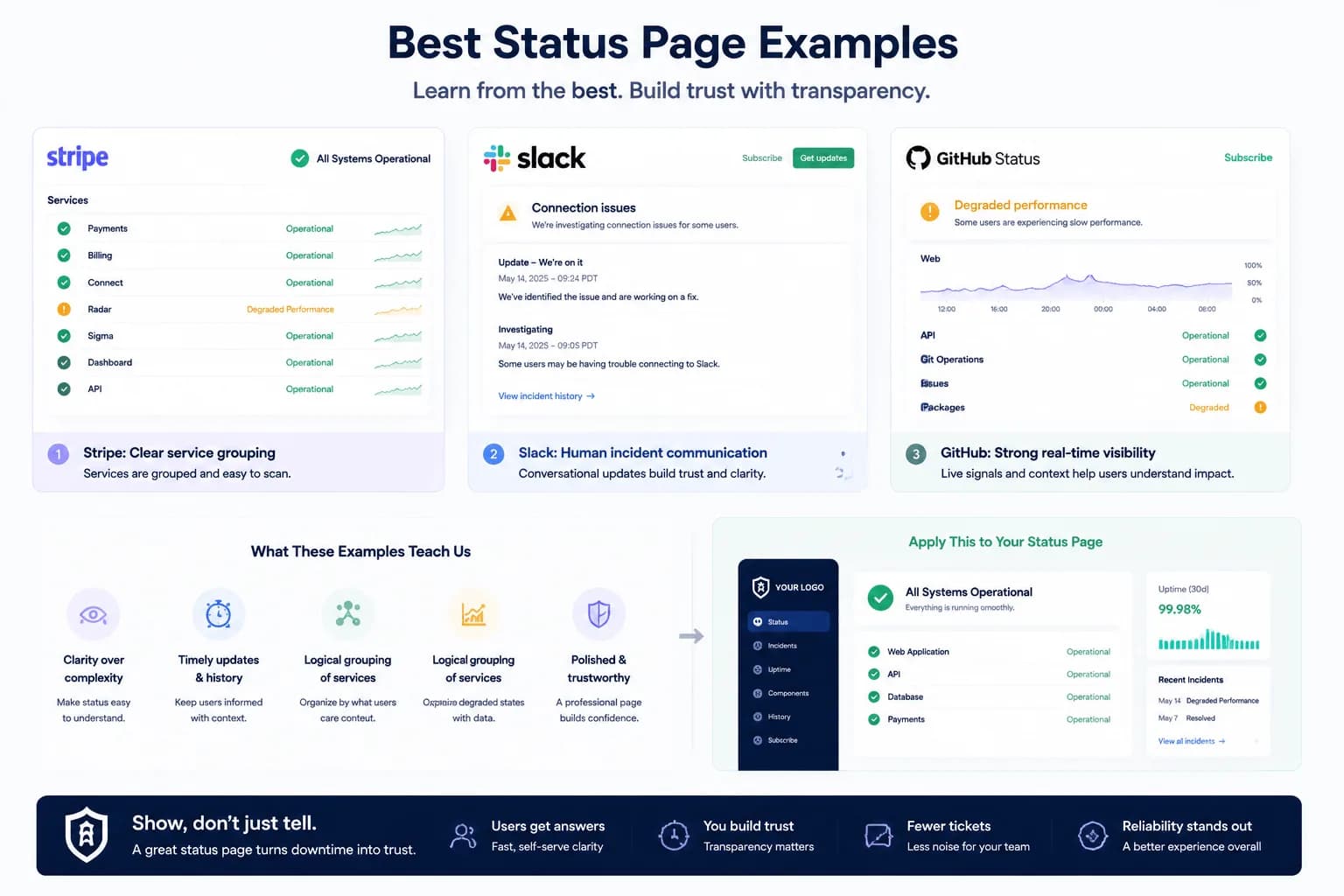
Status Page Examples That Do It Right
Strong status page examples show more than design taste. They show how teams communicate reliability clearly when customers need answers.
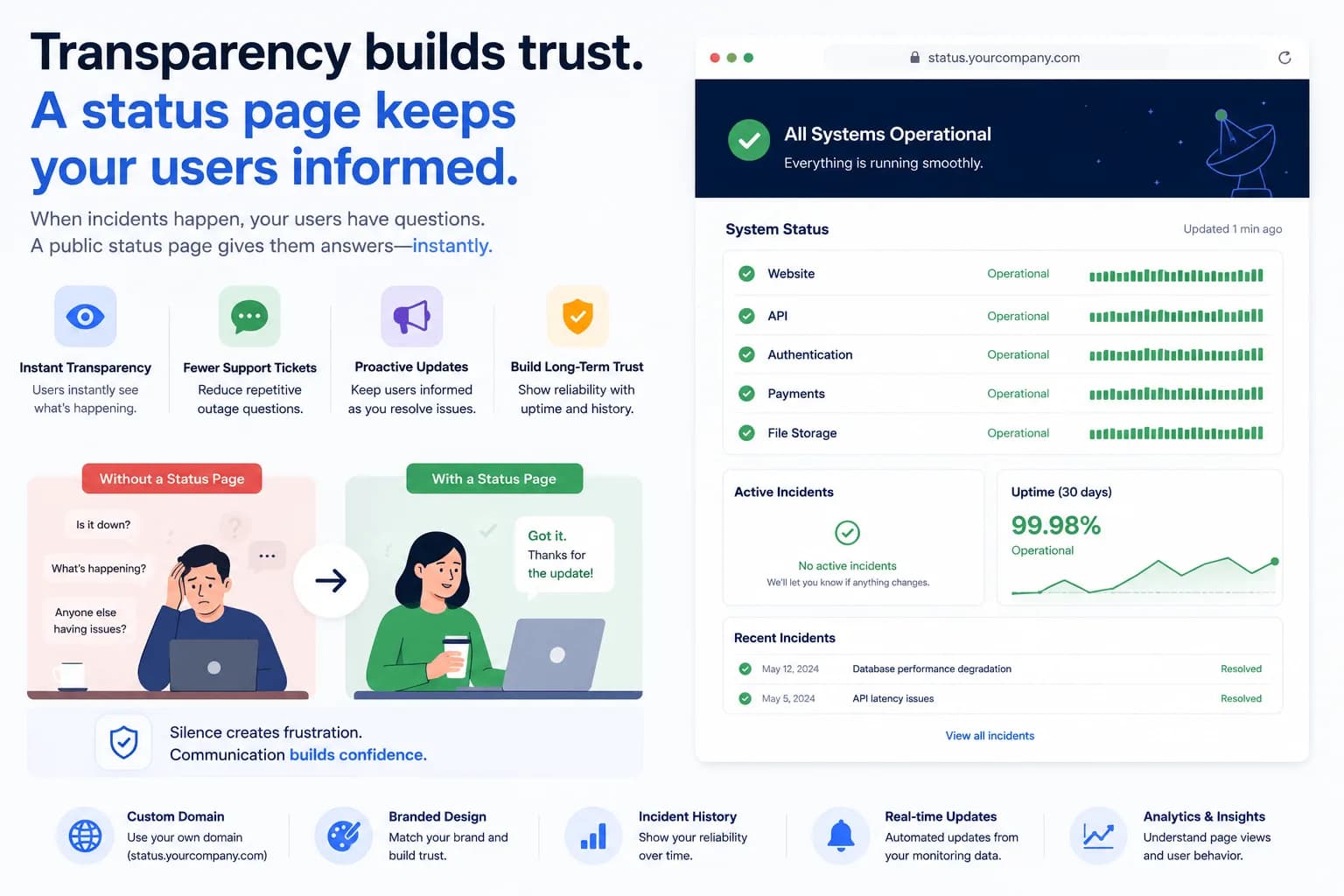
Why Every SaaS Needs a Status Page
SaaS teams need status pages because incidents are communication problems as much as technical ones. This guide explains why they matter before, during, and after outages.
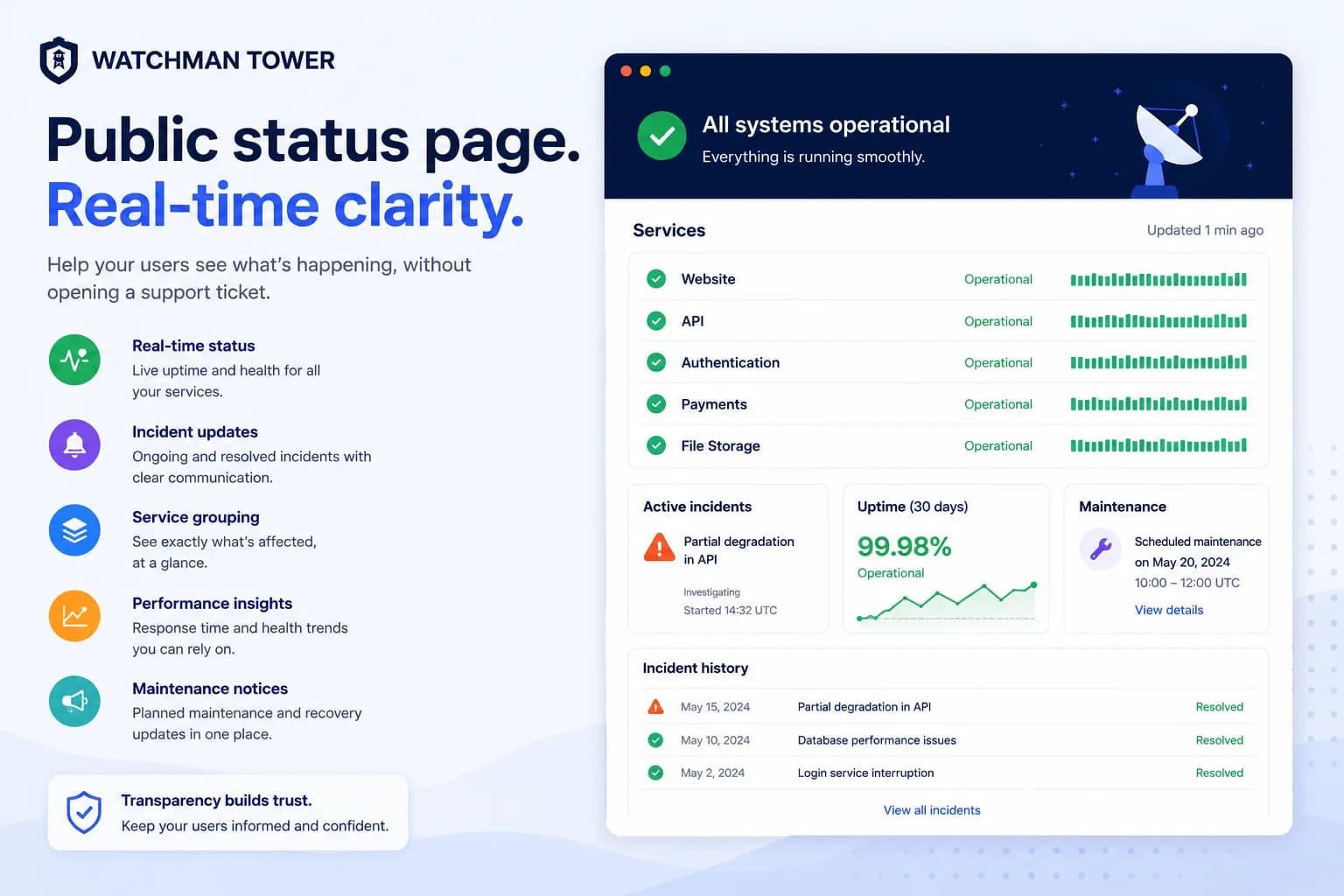
What Is a Public Status Page? Purpose, Benefits, and Best Practices
A public status page is not just a broadcast surface. It is part of how teams communicate reliability, incidents, and trust in a visible way.