

DevSecOps: Integrating Security Into Your Uptime Strategy
- Watchman Tower Team
- Updated: July 21, 2026
- Category: Security Monitoring
- Read Time: 3 min
DevSecOps becomes more useful when security joins uptime and reliability as part of one visibility workflow. This guide explores that connection.
Understanding DevSecOps and Its Importance
In today's digital landscape, security is not just an afterthought but a core component of the software development lifecycle. As cyber threats continue to grow in sophistication, organizations must shift their approach to incorporate security at every stage of development. This is where DevSecOps comes into play.
DevSecOps emphasizes collaboration between development, security, and operations teams, aiming to integrate security practices directly into the DevOps pipeline. By adopting this mindset, businesses can enhance their uptime strategy while effectively mitigating risks associated with security breaches.
What is DevSecOps?
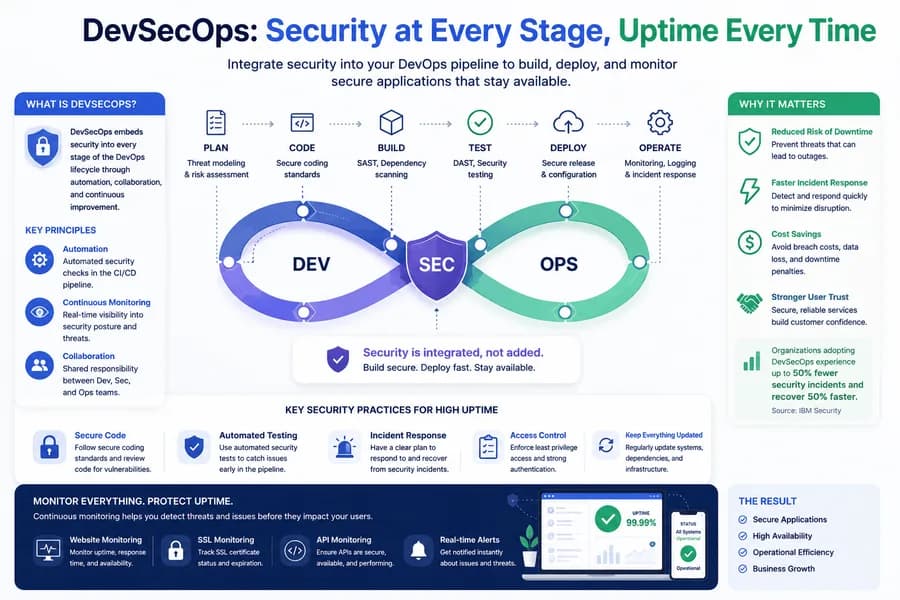
DevSecOps is the practice of embedding security into the DevOps process. Instead of treating security as a separate stage after development, DevSecOps promotes a culture of shared responsibility for security. Key principles include:
- Automation: Implementing automated security checks throughout the CI/CD pipeline.
- Continuous Monitoring: Keeping a constant watch on the security posture of applications and infrastructure.
- Collaboration: Encouraging open communication between development, security, and operations teams.
The Convergence of Uptime and Security
Uptime is paramount for any digital service, as even brief downtimes can lead to significant revenue loss and damage to user trust. Integrating security practices within your uptime strategy ensures that not only is your service available, but also secure against threats that can lead to downtimes, such as cyber attacks.
Key Security Practices to Enhance Uptime
Here are some essential security practices that can be integrated into your DevOps processes to enhance uptime:
- Secure Coding Standards: Educate your development team on secure coding best practices to prevent vulnerabilities from the start.
- Automated Security Testing: Incorporate tools that allow for automated security testing within your CI/CD pipeline. This will catch vulnerabilities early.
- Incident Response Plans: Prepare for potential security breaches by having a robust incident response plan that outlines steps to take when a vulnerability is exploited.
Monitoring Tools and Practices
An effective uptime strategy is one that includes robust monitoring to catch potential security threats before they lead to service interruptions. Consider implementing the following tools:
- Website Monitoring: Tools like Watchman Tower provide comprehensive uptime monitoring services that alert you to downtime, response times, and potential security incidents in real-time.
- SSL Monitoring: Regularly check the status of your SSL certificates to prevent service disruptions due to SSL expiration.
- API Monitoring: Use proper monitoring to ensure your APIs respond correctly and securely, as they are often targets for attacks.
Real-World Benefits of Integrating Security into DevOps
Integrating security into your DevOps is more than just a preventive measure; it also enhances operational efficiency. Here’s how:
- Reduced Risk of Downtime: By proactively managing security, organizations can lower their risk of outages.
- Faster Incident Response: With better collaboration tools and defined processes, security incidents can be resolved more quickly, minimizing operational disruptions.
- Cost Savings: Preventing breaches before they happen can save organizations significant costs associated with recovery and data loss.
Statistics on the ROI of Security Investments
"Organizations that adopt a DevSecOps approach experience up to 50% fewer security incidents and can recover from them 50% faster than traditional models."
This data highlights not only the importance of integrating security but also the tangible benefits that arise from this integration.
Conclusion: Building a Resilient Future
As you move forward with your development practices, consider the long-term advantages of integrating security into your uptime strategy. By adopting DevSecOps, you take proactive steps to ensure your applications are not only operational but also safe from evolving threats.
To further enhance your knowledge, explore more about how security monitoring can protect your website, or learn how Watchman Tower helps streamline your monitoring processes. Together, these practices will build a more resilient strategy against downtime and security incidents.
Free plan available. No credit card needed.
FAQ
What is DevSecOps?v
Why is integrating security important for uptime?v
What security practices enhance uptime?v
What monitoring tools help maintain uptime and security?v
What are the benefits of integrating security into DevOps?v
What is the ROI of adopting DevSecOps?v
Blog Posts
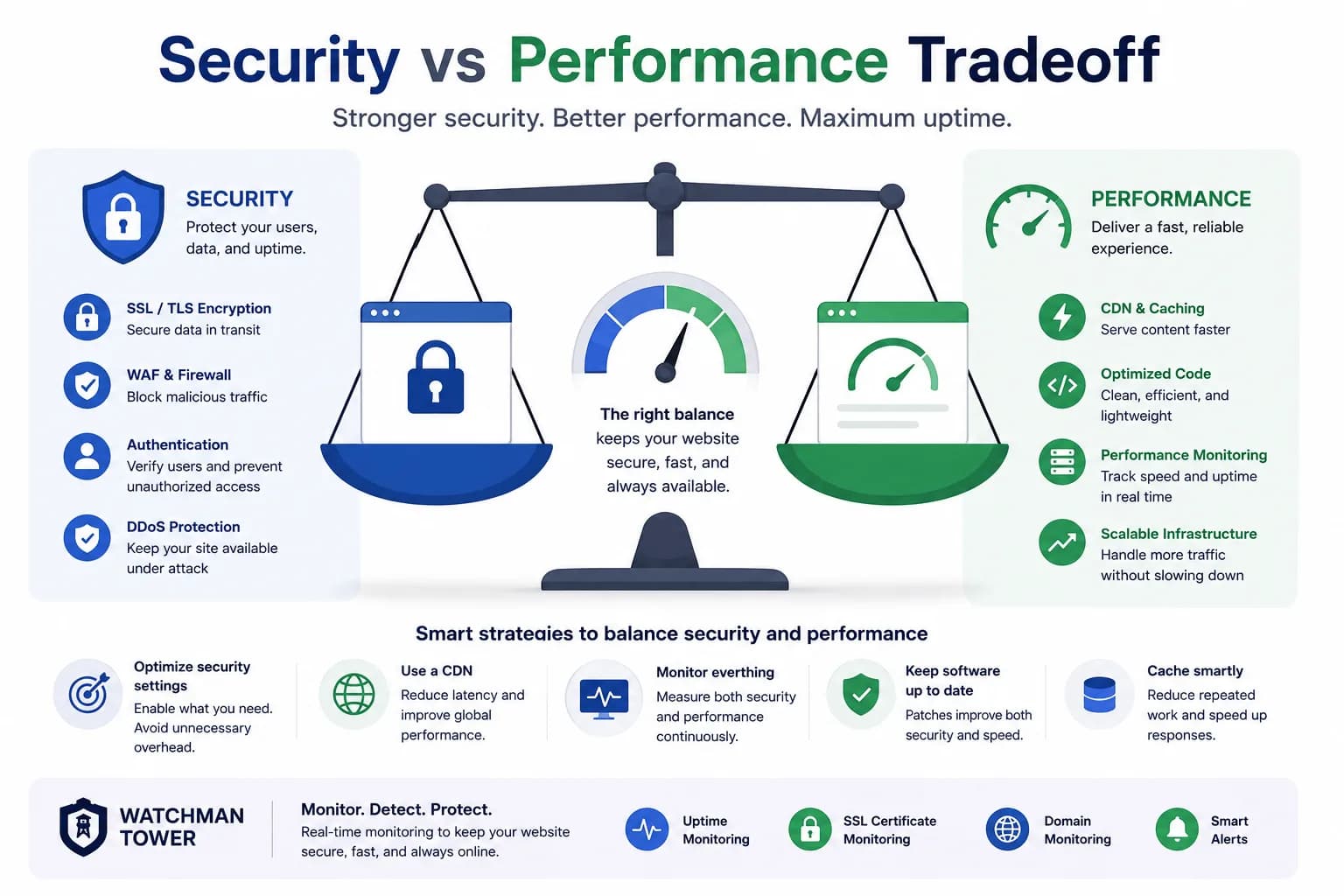
Security vs Performance Tradeoff: How to Improve Security Without Slowing Down Your Website...
Security and performance often feel like opposing forces, but monitoring helps teams see where that tradeoff is real and where it is simply unmanaged visibility.
Learn more about Security vs Performance Tradeoff: How to Improve Security Without Slowing Down Your Website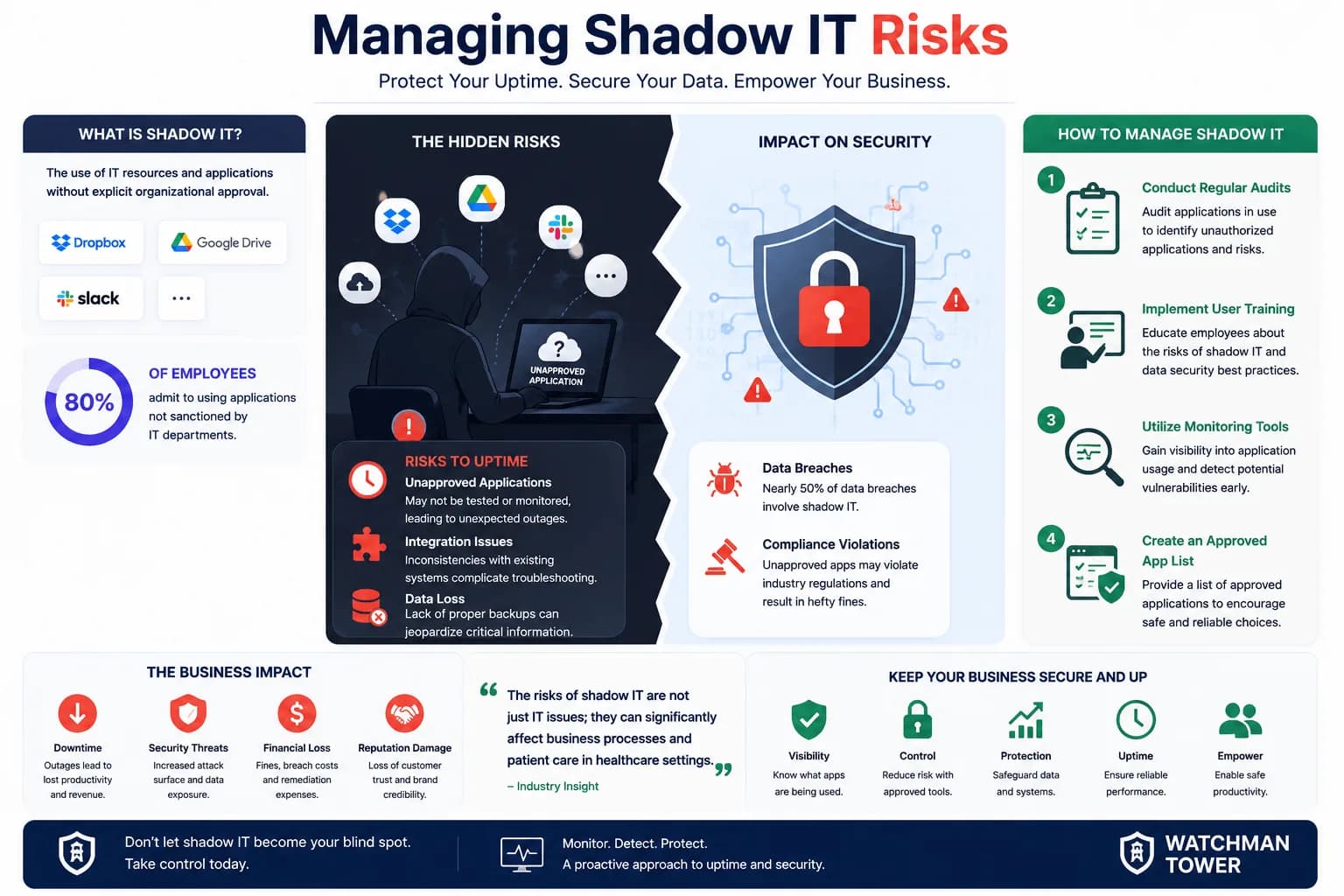
The Impact of Shadow IT on Uptime and Security: What You Need to Know...
Shadow IT creates uptime and security risk because it breaks visibility. This guide explains why operational health depends on seeing more of the real system surface.
Learn more about The Impact of Shadow IT on Uptime and Security: What You Need to Know
Security Monitoring for Websites: What to Watch and How to React...
Security monitoring is really about earlier risk visibility. This guide explains what teams should watch and how security-related signals fit into broader operational monitoring.
Learn more about Security Monitoring for Websites: What to Watch and How to React