

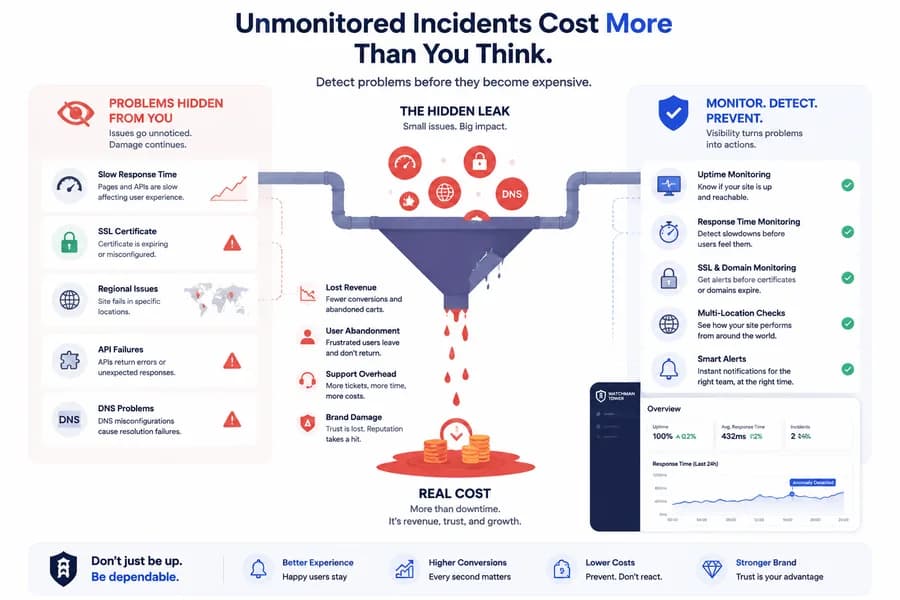
The Cost of Unmonitored Incidents: The Problems You Don't See Are the Most Expensive
- Watchman Tower Team
- Updated: July 24, 2026
- Category: Incident Management
- Read Time: 3 min
Unmonitored incidents create more than downtime. This guide explains how silent failures affect trust, revenue, and operational confidence long before teams realize the full impact.
Most teams think of incidents as obvious failures.
A website goes down. An alert fires. Engineers respond.
But the most expensive incidents are often the ones nobody notices immediately.
A slow checkout flow.
A degraded API response.
An expired SSL certificate.
A regional availability problem.
These issues rarely create instant alarms. Instead, they quietly damage revenue, user experience, and trust over time.
That is the real cost of unmonitored incidents.
What Are Unmonitored Incidents?
An unmonitored incident is any reliability problem that exists without proper detection, alerting, or visibility.
Unlike a complete outage, these problems can remain invisible for hours or even days.
Examples include:
- Slow response times affecting only certain users
- API latency increasing gradually
- SSL certificates approaching expiration
- DNS configuration problems
- Regional connectivity failures
- Broken user flows that return technically valid responses
The system may appear "online" while users are already experiencing problems.
Why Unmonitored Incidents Cost More Than Downtime
Downtime is visible.
Silent degradation is not.
A complete outage usually triggers action quickly. But hidden reliability issues often continue causing damage before anyone realizes something is wrong.
The costs appear in several areas.
Lost Revenue From Broken Experiences
Users rarely report slow websites or unreliable experiences.
They simply leave.
A slow checkout page can reduce conversions.
A failing API can break important workflows.
A degraded landing page can waste paid advertising spend.
The biggest cost is often not the moment a system fails — it is the users who never return.
Customer Trust Erosion
Reliability is part of your brand.
Users expect digital products to work consistently. When they encounter:
- Slow pages
- Failed requests
- Security warnings
- Interrupted workflows
they do not see an infrastructure problem.
They see an unreliable product.
Trust is built through consistent experiences and damaged through repeated friction.
Increased Support and Engineering Costs
Without monitoring, teams often discover problems through:
- Customer complaints
- Support tickets
- Social media reports
- Internal escalation
By that point, engineers are already reacting under pressure.
Good monitoring changes the workflow:
Instead of:
Customer reports → Team investigates → Fix begins
You get:
System detects → Team investigates → Users are protected
How Incidents Go Unnoticed
Many monitoring setups create blind spots because they only check basic availability.
Common gaps include:
Monitoring Only "Up or Down"
A server can respond successfully while the actual experience is degraded.
A 200 response does not guarantee:
- Fast performance
- Correct data
- Successful user flows
Checking From Only One Location
A website may work in one region and fail in another.
Without regional visibility, teams may miss:
- CDN issues
- DNS propagation problems
- Network routing failures
Missing Expiration and Configuration Risks
Some failures are predictable.
Examples:
- SSL certificates expiring
- Domain renewals missed
- Incorrect DNS changes
These problems should be detected before they affect users.
No Performance Baseline
A website that becomes 3x slower is technically still online.
Without response time monitoring, gradual degradation can continue unnoticed.
Smart Monitoring Reduces Incident Impact
Modern monitoring is not only about detecting outages.
It is about detecting changes before they become expensive incidents.
A strong monitoring strategy includes:
- Uptime monitoring
- Response time tracking
- SSL certificate monitoring
- Domain expiry monitoring
- Multi-location checks
- Incident history
- Actionable alerts
The goal is simple:
Know about problems before your customers do.
How Watchman Tower Helps
Watchman Tower helps teams detect reliability problems before they become customer-facing incidents.
It monitors critical signals such as:
- Website availability
- Response time changes
- SSL certificate health
- Domain expiration risks
- Incident history
- Performance trends
Instead of only asking:
"Is my website down?"
teams can answer:
"Is my website healthy, reliable, and performing as expected?"
The Real Cost of Doing Nothing
The cost of unmonitored incidents is rarely a single dramatic outage.
It is the accumulation of small failures:
- Lost conversions
- Frustrated users
- More support tickets
- Engineering interruptions
- Damaged reputation
The most dangerous problems are often the ones nobody sees.
Final Thoughts
Monitoring is not just an infrastructure practice.
It is a business protection strategy.
Reliable teams do not wait for customers to discover problems. They build visibility before issues become expensive.
Because the cost of an incident is not only the time your system is unavailable.
It is everything that happens while nobody knows there is a problem.
Free plan available. No credit card needed.
FAQ
What is an unmonitored incident?v
Why do unmonitored incidents cost more than downtime?v
What types of problems commonly go unnoticed?v
How do unmonitored incidents impact businesses?v
How can teams prevent unmonitored incidents?v
Blog Posts
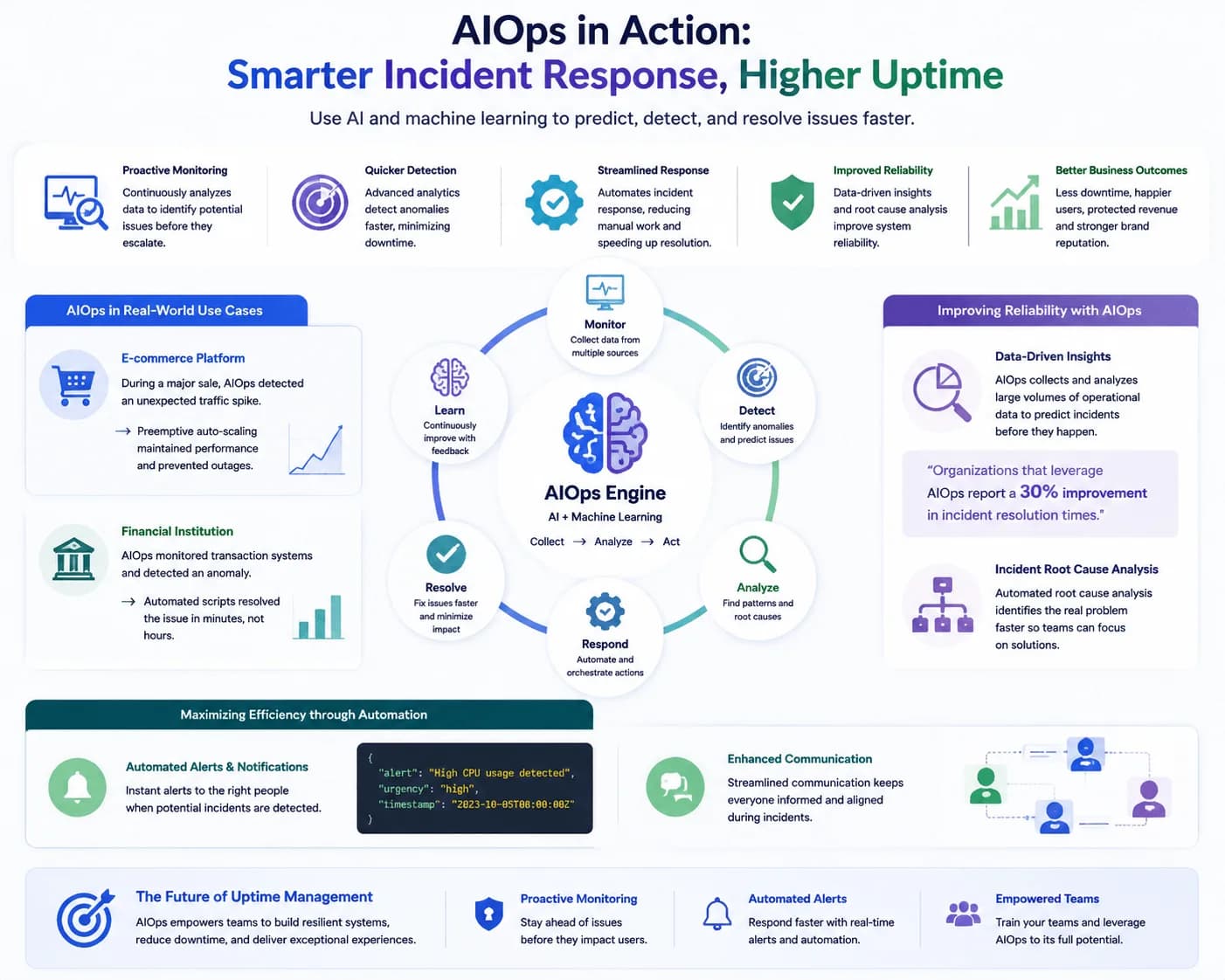
The Role of AIOps in Uptime Management: Revolutionizing Incident Response...
AIOps gets interesting when it helps teams interpret signals better, not just automate more dashboards. This guide looks at that potential through incident response.
Learn more about The Role of AIOps in Uptime Management: Revolutionizing Incident Response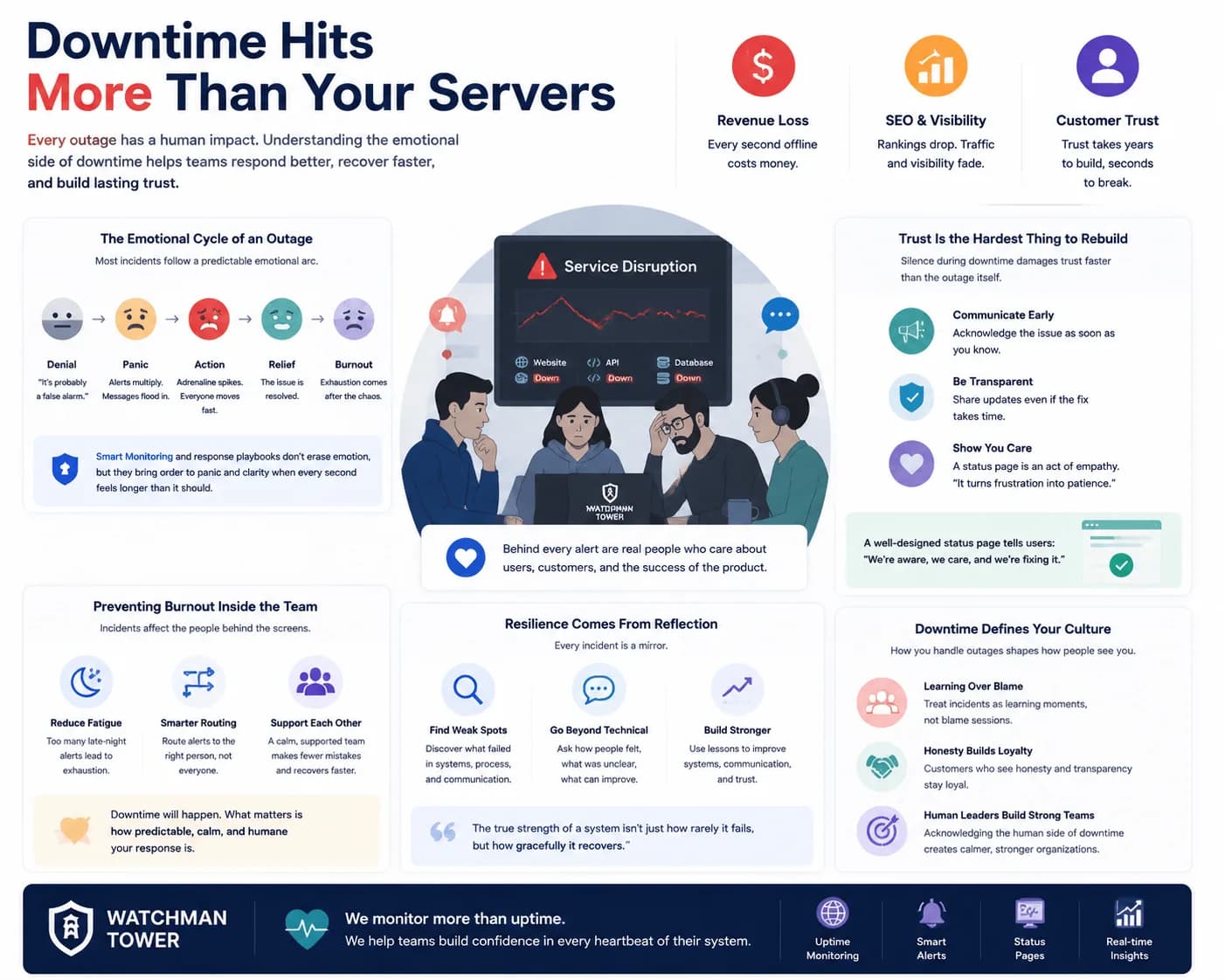
When Every Minute Hurts: The Psychology of Downtime...
Downtime affects people as much as systems. This guide explores the human side of outages and why clearer monitoring and communication help teams stay steadier under pressure.
Learn more about When Every Minute Hurts: The Psychology of Downtime