

The Impact of Shadow IT on Uptime and Security: What You Need to Know
- Watchman Tower Team
- Updated: July 21, 2026
- Category: Security Monitoring
- Read Time: 3 min
Shadow IT creates uptime and security risk because it breaks visibility. This guide explains why operational health depends on seeing more of the real system surface.
Introduction
In the fast-paced world of modern business, shadow IT has emerged as a double-edged sword. While unauthorized applications can enhance productivity and foster innovation, they also introduce significant risks to operational uptime and data security. As organizations increasingly adopt a cloud-first strategy, the presence of shadow IT becomes a pressing concern for IT leaders. Knowing how to manage these risks is crucial for maintaining both uptime and security.
Understanding Shadow IT
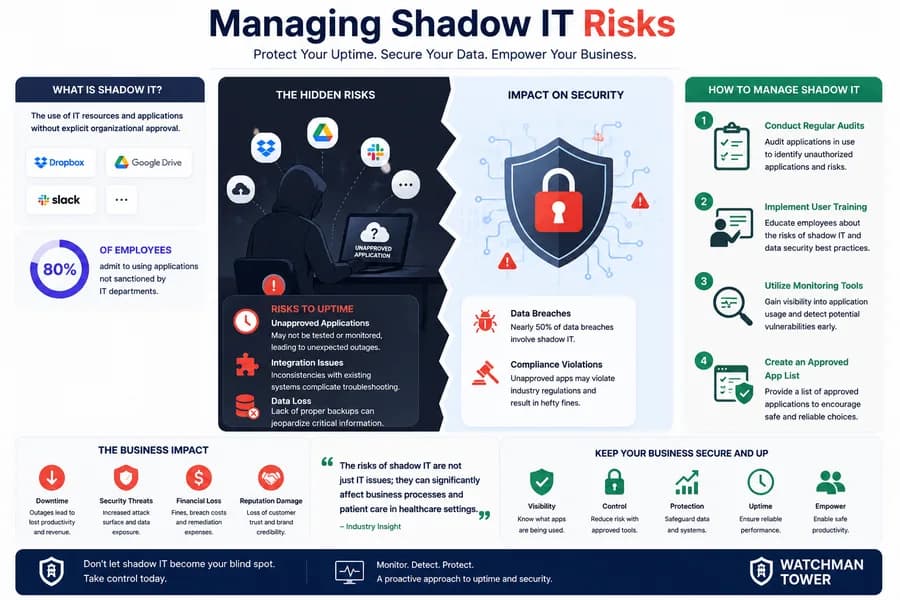
By definition, shadow IT refers to the use of IT resources (such as software or services) without explicit organizational approval. This can include cloud applications, file-sharing services, and other platforms that employees utilize for ease and convenience.
The Prevalence of Shadow IT
According to recent studies, over 80% of employees admit to using applications that are not sanctioned by their IT departments. This demonstrates a clear gap between user needs and IT policies.
Risks to Uptime
One of the most immediate risks posed by shadow IT is its impact on operational uptime:
- Unapproved Applications: They may not be subject to the same rigorous testing and monitoring, leading to unexpected outages.
- Integration Issues: Shadow IT can create inconsistencies and incompatibilities with existing systems, complicating troubleshooting processes.
- Data Loss: Unauthorized apps may lack proper data backups, jeopardizing critical business information.
Impact on Security
Alongside uptime, security is a paramount concern when it comes to shadow IT. The use of unauthorized apps raises several alarms:
Data Breaches
Unauthorized applications may not comply with the organization’s data protection policies, making them vulnerable to breaches. Statistics reveal that nearly 50% of data breaches involve shadow IT.
Compliance Violations
Many industries have strict regulations governing data usage. The use of unapproved applications could lead to unintentional violations, resulting in hefty fines.
Actionable Strategies to Manage Shadow IT
Identifying and securing unauthorized applications is essential for safeguarding uptime and security. Here are some effective strategies:
1. Conduct Regular Audits
Establish a routine of auditing applications in use throughout the organization. These audits can reveal unauthorized applications and highlight areas of concern.
2. Implement User Training
Empower users with knowledge about the risks associated with shadow IT. Training sessions on data security best practices can significantly reduce risky behavior.
3. Utilize Monitoring Tools
Employ monitoring tools that provide visibility into the applications being used across your network. Tools such as website monitoring solutions can help identify potential vulnerabilities associated with unauthorized apps.
4. Create an Approved App List
Providing employees with a list of approved applications can guide them in choosing safer options, reducing the reliance on unauthorized software.
Conclusion
As organizations navigate a landscape filled with technological advancements, managing shadow IT is critical for both uptime and security. By conducting regular audits, implementing monitoring tools, and educating employees, businesses can mitigate the risks associated with unauthorized applications. Prioritizing these strategies will not only protect your organization but will also foster a more secure and efficient work environment.
"The risks of shadow IT are not just IT issues; they can significantly affect business processes and patient care in healthcare settings."
Take charge of your organization's IT landscape and safeguard your uptime and security. For more insights, check out Beyond Uptime: How to Detect Slowdowns and learn how to keep your systems healthy.
Free plan available. No credit card needed.
FAQ
What is shadow IT?v
How common is shadow IT in organizations?v
How does shadow IT impact operational uptime?v
What security risks does shadow IT pose?v
What strategies can help manage shadow IT risks?v
Blog Posts
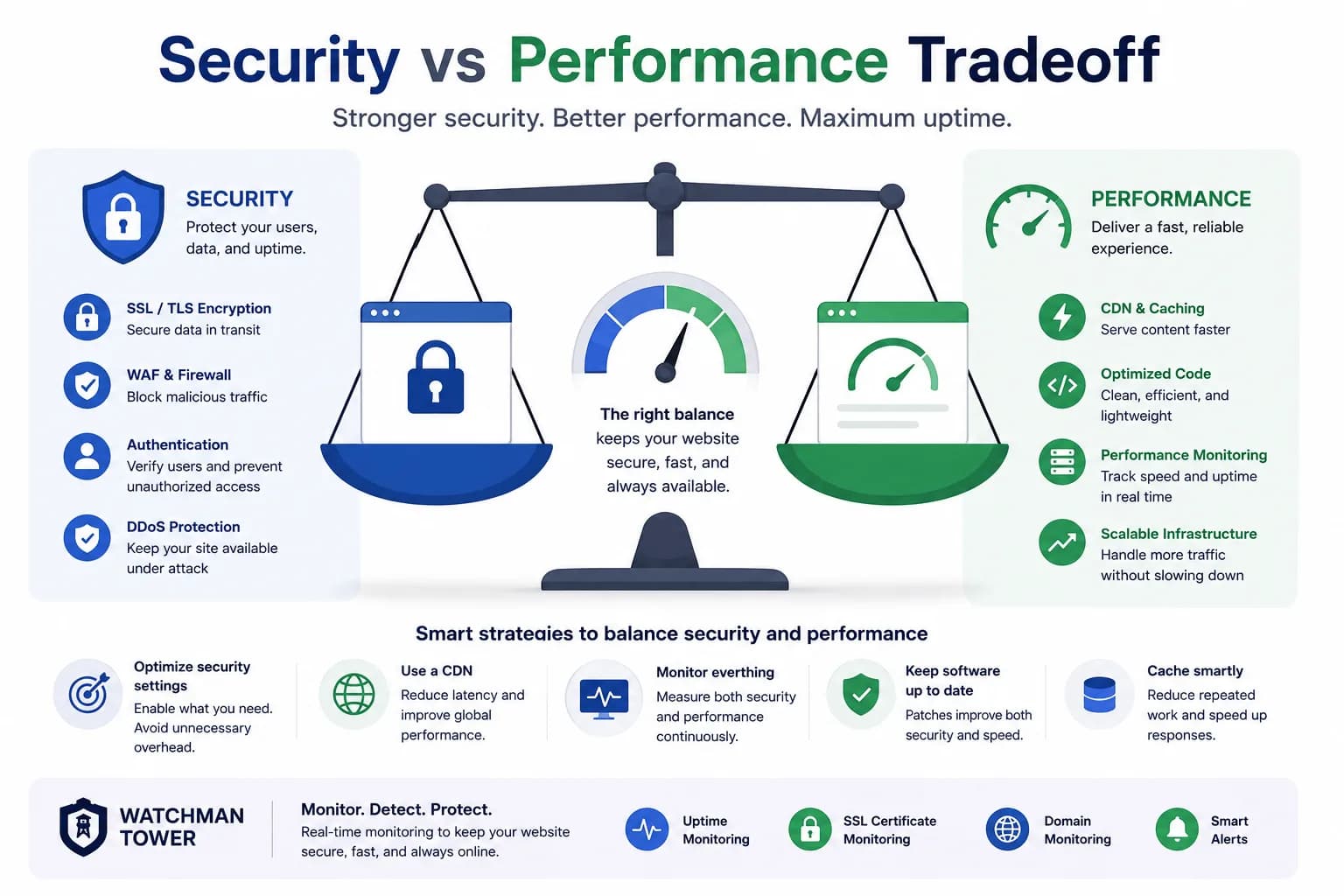
Security vs Performance Tradeoff: How to Improve Security Without Slowing Down Your Website...
Security and performance often feel like opposing forces, but monitoring helps teams see where that tradeoff is real and where it is simply unmanaged visibility.
Learn more about Security vs Performance Tradeoff: How to Improve Security Without Slowing Down Your Website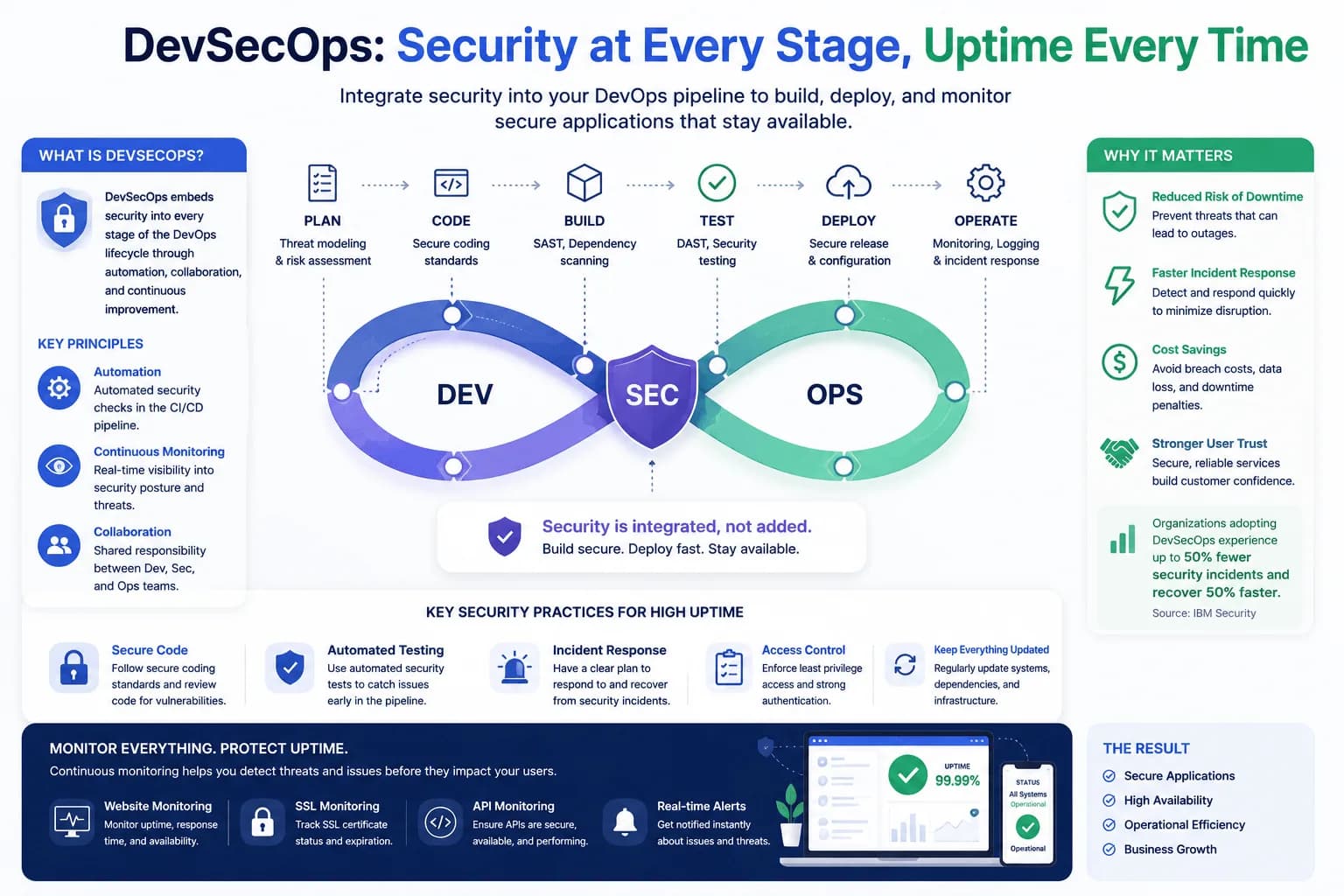
DevSecOps: Integrating Security Into Your Uptime Strategy...
DevSecOps becomes more useful when security joins uptime and reliability as part of one visibility workflow. This guide explores that connection.
Learn more about DevSecOps: Integrating Security Into Your Uptime Strategy
Security Monitoring for Websites: What to Watch and How to React...
Security monitoring is really about earlier risk visibility. This guide explains what teams should watch and how security-related signals fit into broader operational monitoring.
Learn more about Security Monitoring for Websites: What to Watch and How to React