

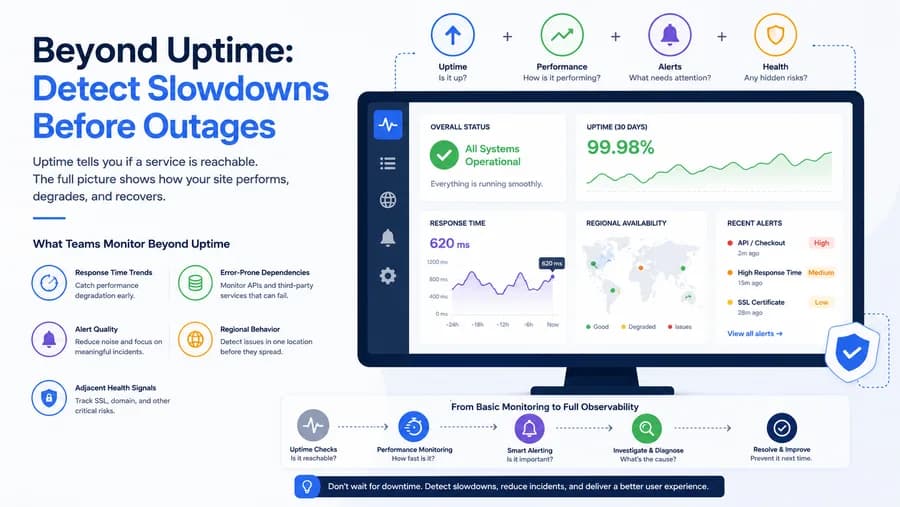
Beyond Uptime: How to Detect Slowdowns Before They Become Incidents
- Watchman Tower Team
- Updated: July 19, 2026
- Category: Website Monitoring
- Read Time: 2 min
Uptime alone does not show the whole problem. This guide explores how teams detect slowdowns, degradations, and early incident signals before systems are fully down.
Many teams discover the limits of basic uptime monitoring only after a site stays technically online while the user experience quietly degrades. Pages become slow, APIs lag, or key workflows start failing without triggering a clean down alert.
That is why mature teams eventually move beyond uptime alone. Uptime remains foundational, but it works best when paired with response-time visibility, better alert logic, and a broader monitoring workflow.
Why uptime is necessary but not sufficient
Uptime tells you whether a service is reachable. That is important, but it does not tell you whether a site is healthy enough to feel usable. A page can return a response while still being too slow, too unstable, or too dependent on a failing backend to deliver a good experience.
If your monitoring only answers "is it up?" you still have blind spots. The next layer is understanding how the service behaves before it crosses into a full outage.
What teams start watching after uptime
- Response time trends to catch degradation early
- Error-prone dependencies such as APIs or third-party services
- Alert quality so temporary noise is not treated like a confirmed incident
- Regional behavior when one location is affected before others
- Adjacent health signals such as SSL or domain risks
These layers create operational context. They help teams understand whether a problem is isolated, getting worse, or likely to become visible to users soon.
How to detect slowdowns earlier
The most practical shift is to stop treating monitoring as an up/down binary. Add response-time tracking, historical trend review, and cleaner escalation rules. This helps teams spot the difference between a short spike, a gradual slowdown, and a real incident that needs action now.
If your alerts are noisy, teams stop trusting them. If your monitoring only checks one signal, teams react too late. Reliable detection usually comes from combining layers, not from adding more noise.
Where alerting fits in
Going beyond uptime is not just about collecting more data. It is also about making alerts more useful. A healthy setup routes confirmed or meaningful problems differently from low-priority warnings, so teams can react with more confidence and less fatigue.
For that operational layer, see uptime monitoring alerts and escalation.
How this fits into a broader website monitoring workflow
Uptime is the baseline layer. Website monitoring is the broader operating model built around that baseline. It combines availability checks with performance visibility, alert quality, and adjacent health coverage.
If you want the bigger framework, start with what website monitoring is and how it differs from uptime monitoring.
Recommended next steps
To make this more practical, review the metrics that matter most, use the uptime monitoring checklist, revisit the full uptime monitoring guide, or explore uptime monitoring as the product layer.
Free plan available. No credit card needed.
FAQ
Why is uptime monitoring alone insufficient for ensuring a good user experience?v
What additional metrics should teams monitor beyond uptime?v
How can teams detect slowdowns before they become full incidents?v
Why is combining monitoring layers more effective than single-signal checks?v
How does website monitoring differ from basic uptime monitoring?v
Blog Posts
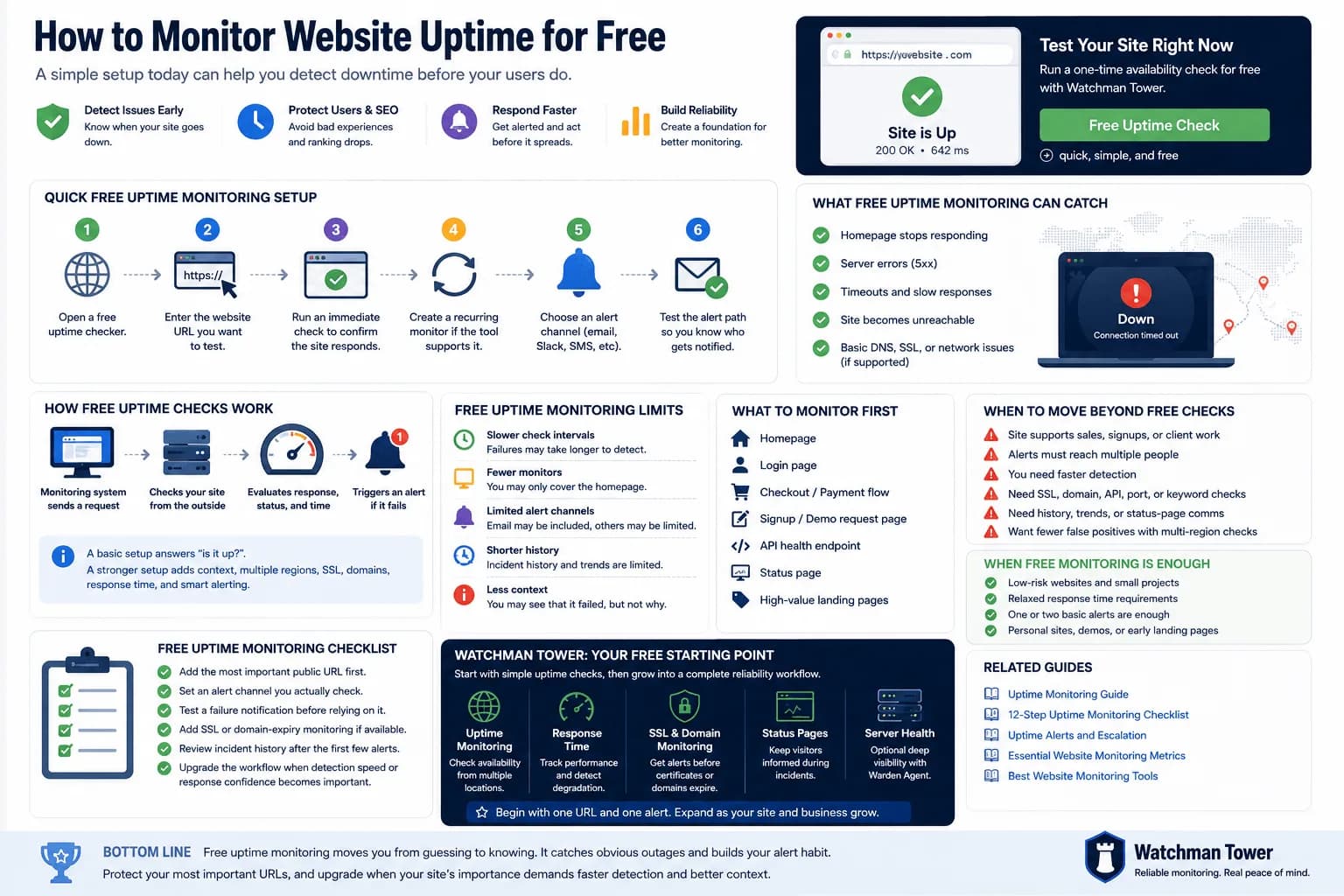
Monitor Website Uptime for Free: Setup, Limits, and Next Steps...
You can monitor website uptime for free by adding your URL to a basic checker, choosing an interval, and enabling alerts. This guide explains the fastest setup, what free checks can catch, and where free monitoring starts to fall short.
Learn more about Monitor Website Uptime for Free: Setup, Limits, and Next Steps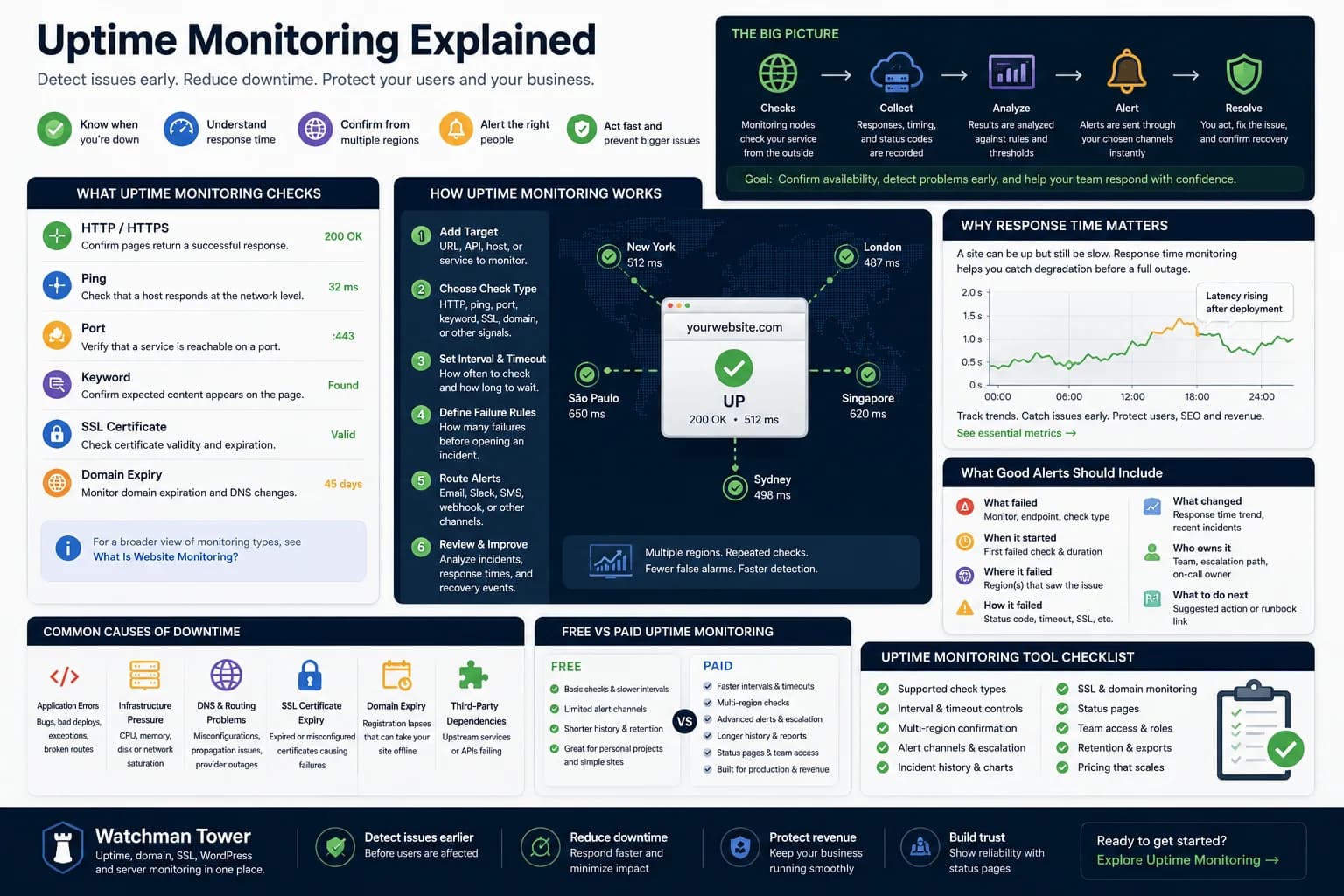
Uptime Monitoring Guide: How to Detect Downtime and Alert Faster...
Uptime monitoring helps you detect when a website, app, or service becomes unavailable. This guide explains how checks work, which signals matter, how alerts should be routed, and how to turn basic uptime checks into a practical response workflow.
Learn more about Uptime Monitoring Guide: How to Detect Downtime and Alert Faster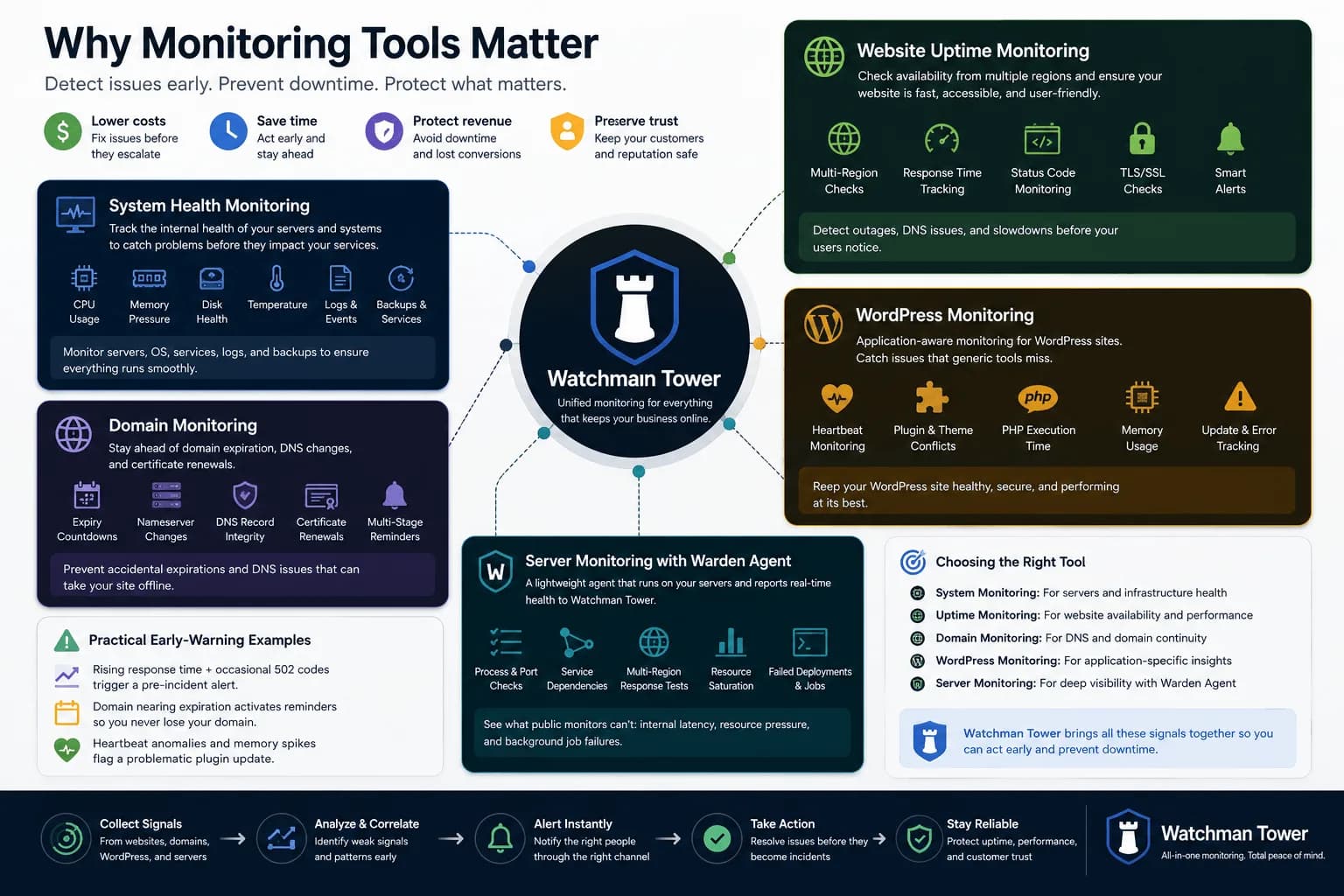
Different Types of Monitoring Tools: From System Health to Website Uptime...
Monitoring tools have expanded far beyond one-dimensional checks. This guide explains the main tool categories and where broader health visibility starts to matter.
Learn more about Different Types of Monitoring Tools: From System Health to Website Uptime