

Website Monitoring vs Uptime Monitoring: What Each One Actually Tells You
- Watchman Tower Team
- Updated: July 21, 2026
- Category: Website Monitoring
- Read Time: 4 min
Website monitoring and uptime monitoring overlap, but they are not the same. This guide explains what each one tells teams and where broader health visibility begins.
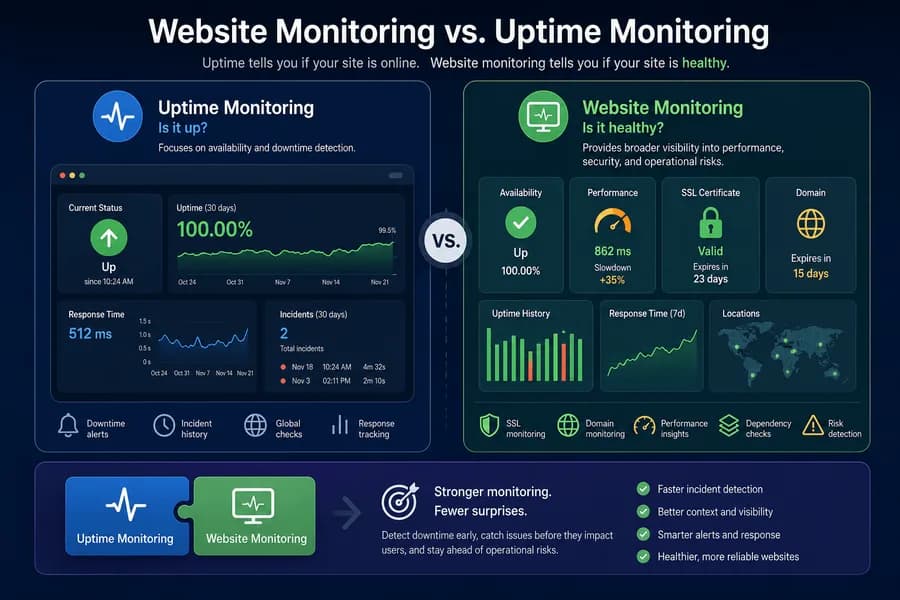
Website monitoring and uptime monitoring are closely related, but they are not the same thing. Uptime monitoring focuses on availability. Website monitoring gives you broader context around performance, response behavior, certificate health, domain risk, and other signals that help teams understand whether a site is truly healthy.
The difference matters because a site can be technically online while still being slow, partially broken, or close to a preventable operational failure. That is why mature teams usually treat uptime monitoring as a foundation, not the whole monitoring picture.
What Uptime Monitoring Is
Uptime monitoring is the practice of checking whether a website, API, or service is reachable and responding as expected. It is the fastest way to detect downtime, failed requests, and obvious availability incidents.
Good uptime monitoring also includes alerting, incident history, and response time tracking, because an availability signal becomes more useful when teams can see when the failure started, how long it lasted, and whether the response was degrading before the incident.
Related reading: Uptime Monitoring and Uptime Monitoring Guide.
What Website Monitoring Is
Website monitoring is the broader operational layer around a site. It can include uptime monitoring, but it does not stop there. It also looks at the adjacent signals that help teams understand whether a site is healthy, stable, and safe for users.
- Availability: Is the site reachable right now?
- Response behavior: Is it slower than usual, timing out, or degrading?
- SSL health: Is the certificate valid and close to expiry?
- Domain risk: Is the domain approaching expiration or DNS-related failure?
- Operational context: Do teams have enough visibility to tell whether an issue is broad, isolated, or preventable?
In other words, uptime monitoring answers Is it up? Website monitoring answers Is it healthy, reliable, and at risk of failing in other ways?
Why the Difference Matters
A simple up or down check is useful, but it leaves blind spots. A site may still return a response while users are experiencing severe latency, broken flows, certificate warnings, or an upcoming domain expiry problem that could take everything offline later.
This is where broader website monitoring becomes valuable. It adds the context that helps teams move from basic detection to more reliable operations.
Where Basic Uptime Checks Fall Short
Basic uptime checks are often the first step, especially for smaller teams or free setups. But by themselves, they can miss problems such as:
- Response degradation: the site is technically online, but much slower than normal.
- Alert quality issues: teams get a failure signal without enough context to respond confidently.
- Silent operational risks: domain and certificate issues that are not visible in a single availability check.
- Partial incidents: parts of the website or supporting infrastructure are failing while the homepage still responds.
This does not make uptime monitoring weak. It simply means uptime monitoring works best when it is part of a broader monitoring workflow.
Why Website Monitoring Should Not Replace Uptime Monitoring
Website monitoring is broader, but it should not replace uptime monitoring. Availability detection is still the first and most important monitoring layer because it tells you whether a service is reachable at all.
The strongest setups start with reliable uptime monitoring and then add the surrounding health signals that help teams reduce blind spots and make better decisions during incidents.
How Mature Teams Use Both
Mature teams usually treat uptime monitoring and website monitoring as complementary layers:
- Uptime monitoring for fast availability detection, incident confirmation, and alerting.
- Website monitoring for the broader health context around performance, SSL, domains, and operational reliability.
This approach gives teams more than a binary status check. It gives them better incident confidence.
To go deeper, read Beyond Uptime, Essential Website Monitoring Metrics, and Uptime Monitoring Alerts and Escalation.
How Watchman Tower Brings Them Together
Watchman Tower combines uptime monitoring with the broader signals that matter in website operations. That means teams can detect downtime early, track response behavior, improve alert quality, and stay ahead of adjacent risks such as certificate expiry and domain-related issues.
Explore the product side here: Uptime Monitoring, Domain Expiry Monitoring, and SSL Certificate Monitoring.
Which One Do You Need?
If you only want the simplest answer, start with uptime monitoring. But if the site matters to revenue, user trust, campaigns, SEO, or customer operations, broader website monitoring becomes just as important.
The better question is not website monitoring or uptime monitoring? It is how much context do you need around availability to operate with confidence?
Free plan available. No credit card needed.
FAQ
What is uptime monitoring?v
What is website monitoring?v
Why does the difference between website monitoring and uptime monitoring matter?v
What problems can basic uptime monitoring miss?v
Should website monitoring replace uptime monitoring?v
How do mature teams use both uptime and website monitoring?v
Blog Posts
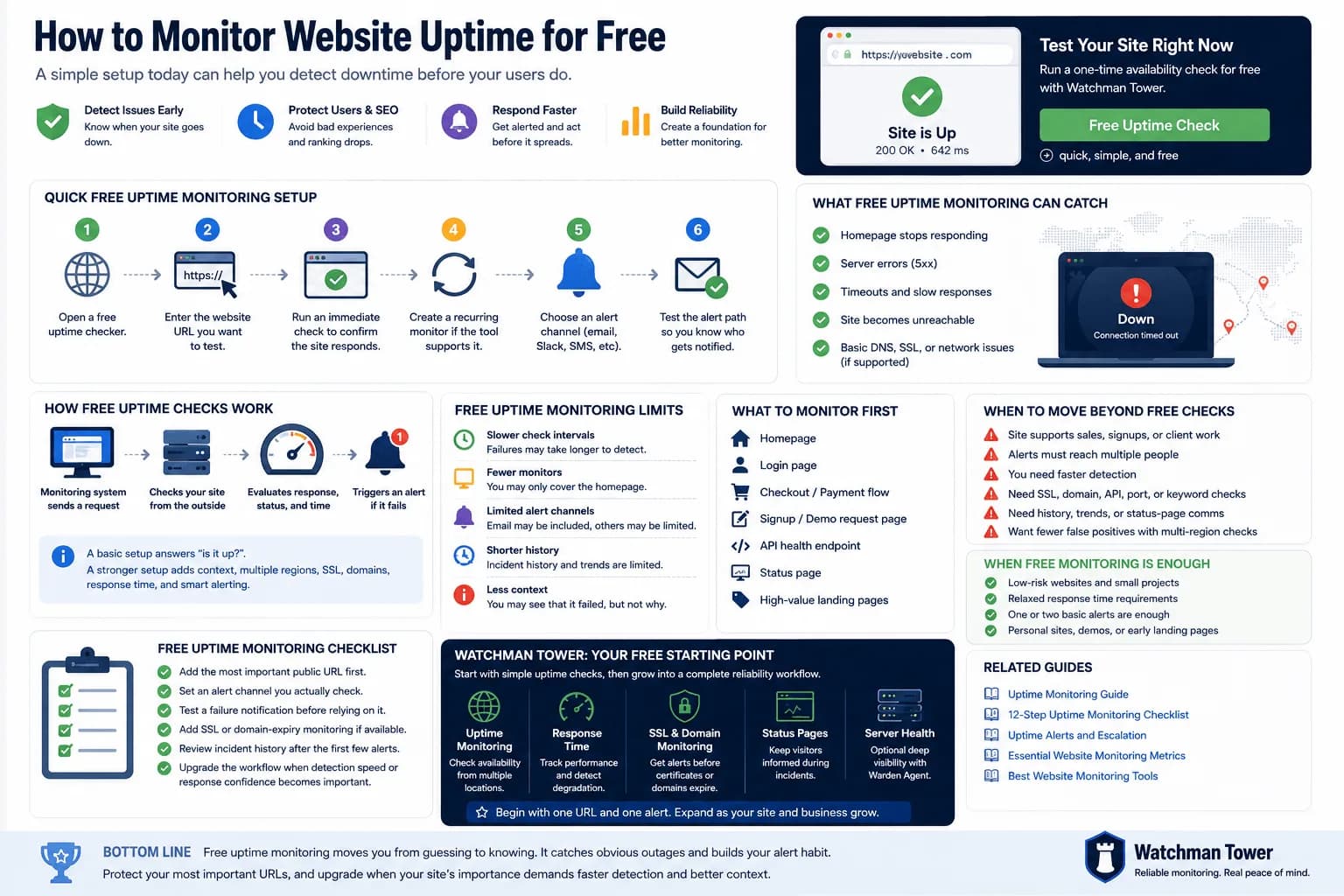
Monitor Website Uptime for Free: Setup, Limits, and Next Steps...
You can monitor website uptime for free by adding your URL to a basic checker, choosing an interval, and enabling alerts. This guide explains the fastest setup, what free checks can catch, and where free monitoring starts to fall short.
Learn more about Monitor Website Uptime for Free: Setup, Limits, and Next Steps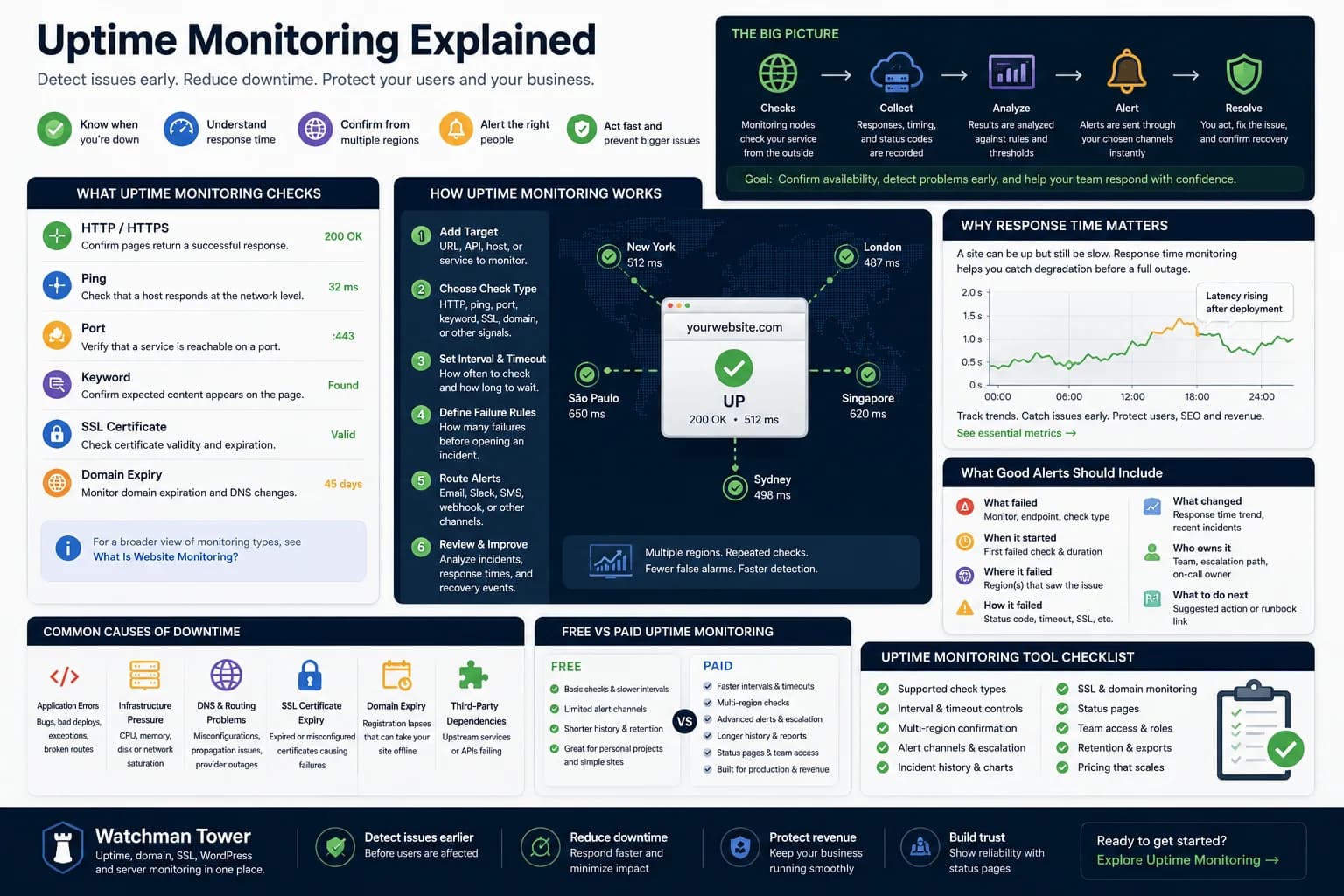
Uptime Monitoring Guide: How to Detect Downtime and Alert Faster...
Uptime monitoring helps you detect when a website, app, or service becomes unavailable. This guide explains how checks work, which signals matter, how alerts should be routed, and how to turn basic uptime checks into a practical response workflow.
Learn more about Uptime Monitoring Guide: How to Detect Downtime and Alert Faster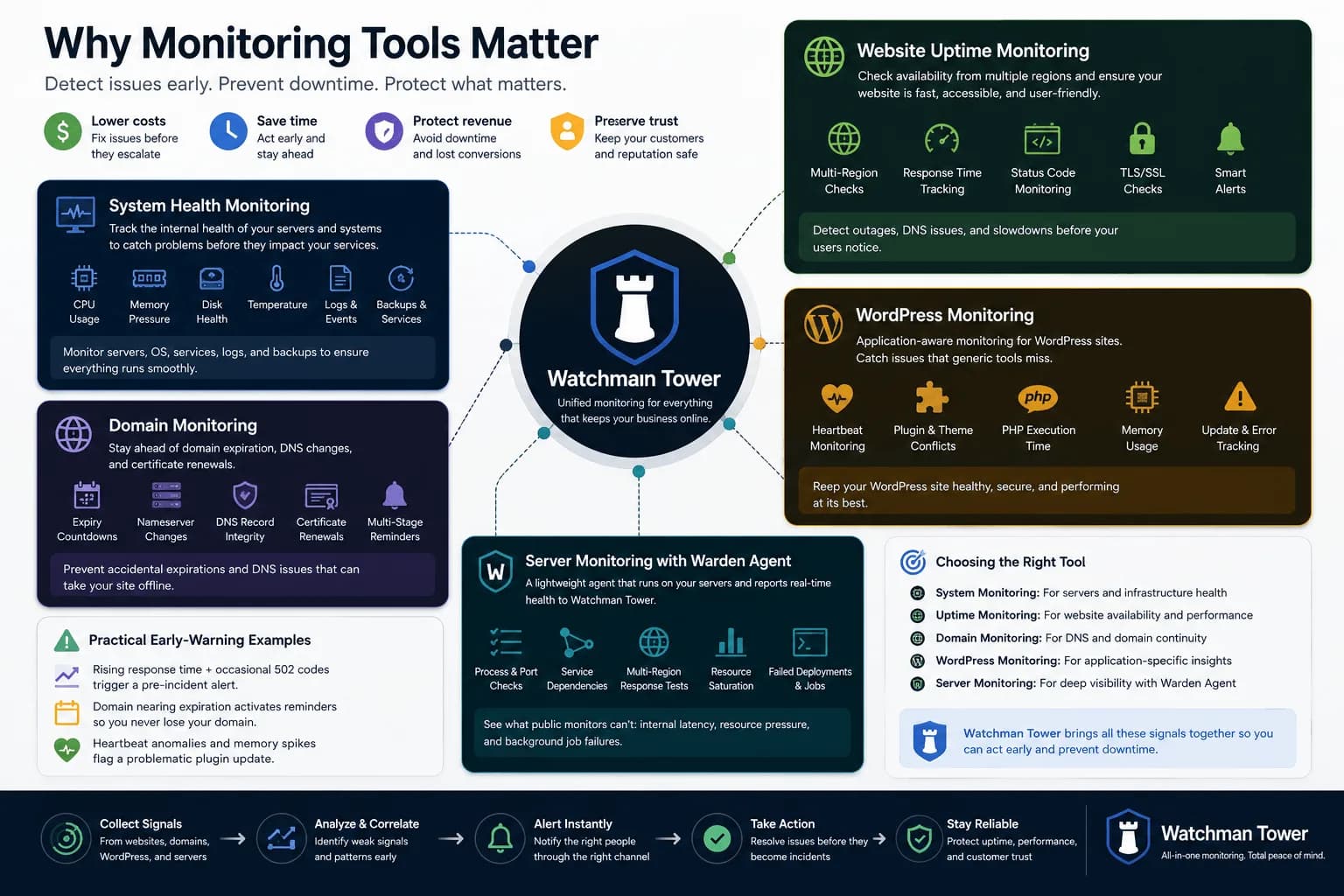
Different Types of Monitoring Tools: From System Health to Website Uptime...
Monitoring tools have expanded far beyond one-dimensional checks. This guide explains the main tool categories and where broader health visibility starts to matter.
Learn more about Different Types of Monitoring Tools: From System Health to Website Uptime