

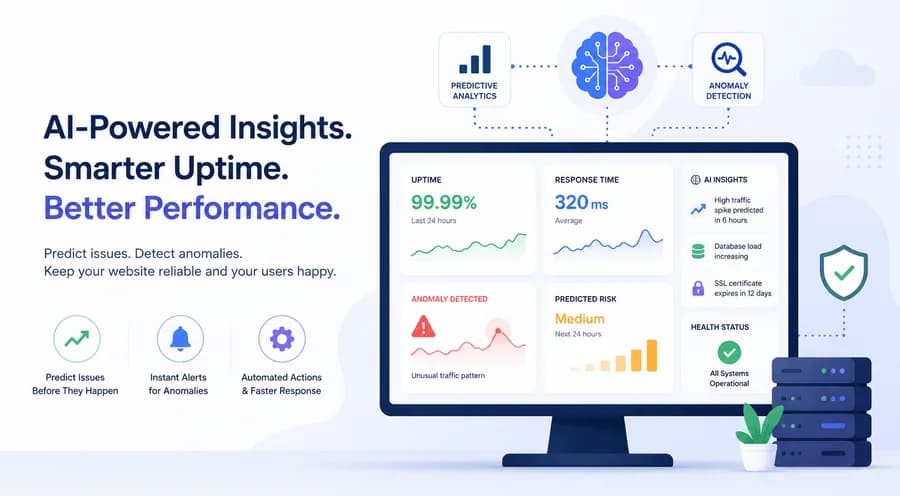
The Future of Monitoring: AI-Powered Insights for Smarter Uptime Management
- Watchman Tower Team
- Updated: July 21, 2026
- Category: Website Monitoring
- Read Time: 2 min
The future of monitoring is not just more automation. It is better interpretation, lower-noise workflows, and clearer health visibility. This guide explores that shift.
Introduction
In today's fast-paced digital landscape, ensuring website reliability is more important than ever. Traditional monitoring methods often fall short in a world of increasing complexity and user expectations. That's where AI-powered insights revolutionize uptime management.
How AI is Transforming Uptime Monitoring
Artificial Intelligence (AI) and Machine Learning (ML) are changing the face of uptime monitoring. These technologies enable predictive analytics and anomaly detection, allowing you to anticipate issues before they escalate.
Predictive Analytics in Uptime Monitoring
Predictive analytics uses historical data and machine learning algorithms to forecast potential downtime. By analyzing patterns, AI can identify when your site is more likely to experience issues.
- Data-Driven Decisions: Leverage data from past downtimes to make informed predictions.
- Resource Allocation: Optimize your resources based on predicted need.
- Proactive Actions: Automate responses to detected anomalies, minimizing downtime.
Anomaly Detection for Instant Alerts
Anomaly detection involves identifying behaviors that deviate from the norm. These tools alert you to unusual traffic patterns, which can signify potential threats or performance issues.
“Detecting anomalies early allows for quicker interventions, ultimately preserving user trust.”
Elevating Monitoring Capabilities with AI
Integrating AI into your monitoring toolkit doesn't just enhance insights; it streamlines processes. Here’s how:
Automated Incident Management
AI-driven tools can automatically categorize and prioritize incidents based on their potential impact, ensuring that your team focuses on the most pressing issues first.
Improving Incident Response Times
With AI, response times can dramatically improve as alerts can be routed based on prior incidents, context, and learnt behavior patterns.
Real-World Impacts of AI in Uptime Monitoring
Organizations implementing AI-based monitoring report tangible benefits:
Increased Reliability
Fewer downtimes mean enhanced reliability. AI helps in catching problems before they affect users, improving overall website performance.
Cost Efficiency
Predictive maintenance reduces operational costs by allowing for timely interventions rather than reactive repairs.
Enhanced User Experience
The interplay between uptime and user satisfaction is undeniable. Fewer issues mean happier customers.
Conclusion
The future of uptime management lies in intelligent monitoring powered by AI. By incorporating predictive analytics and anomaly detection into your strategy, you can not only mitigate downtime but enhance overall website reliability. It's time to embrace these tools and transform the way you ensure a seamless experience for your users.
For more insights on managing your site’s uptime, check out our article on Beyond Uptime: How to Detect Slowdowns and Intervene Before It's Too Late and discover how proactive monitoring can benefit your organization.
Free plan available. No credit card needed.
FAQ
How is artificial intelligence transforming uptime monitoring?v
What is predictive analytics in uptime monitoring?v
How does anomaly detection contribute to uptime reliability?v
How does AI improve incident management and response times?v
What are the key benefits of using AI for uptime monitoring?v
How does AI improve uptime monitoring?v
What are the benefits of predictive analytics in monitoring?v
How does anomaly detection work in uptime management?v
Can AI-powered monitoring reduce operational costs?v
Blog Posts
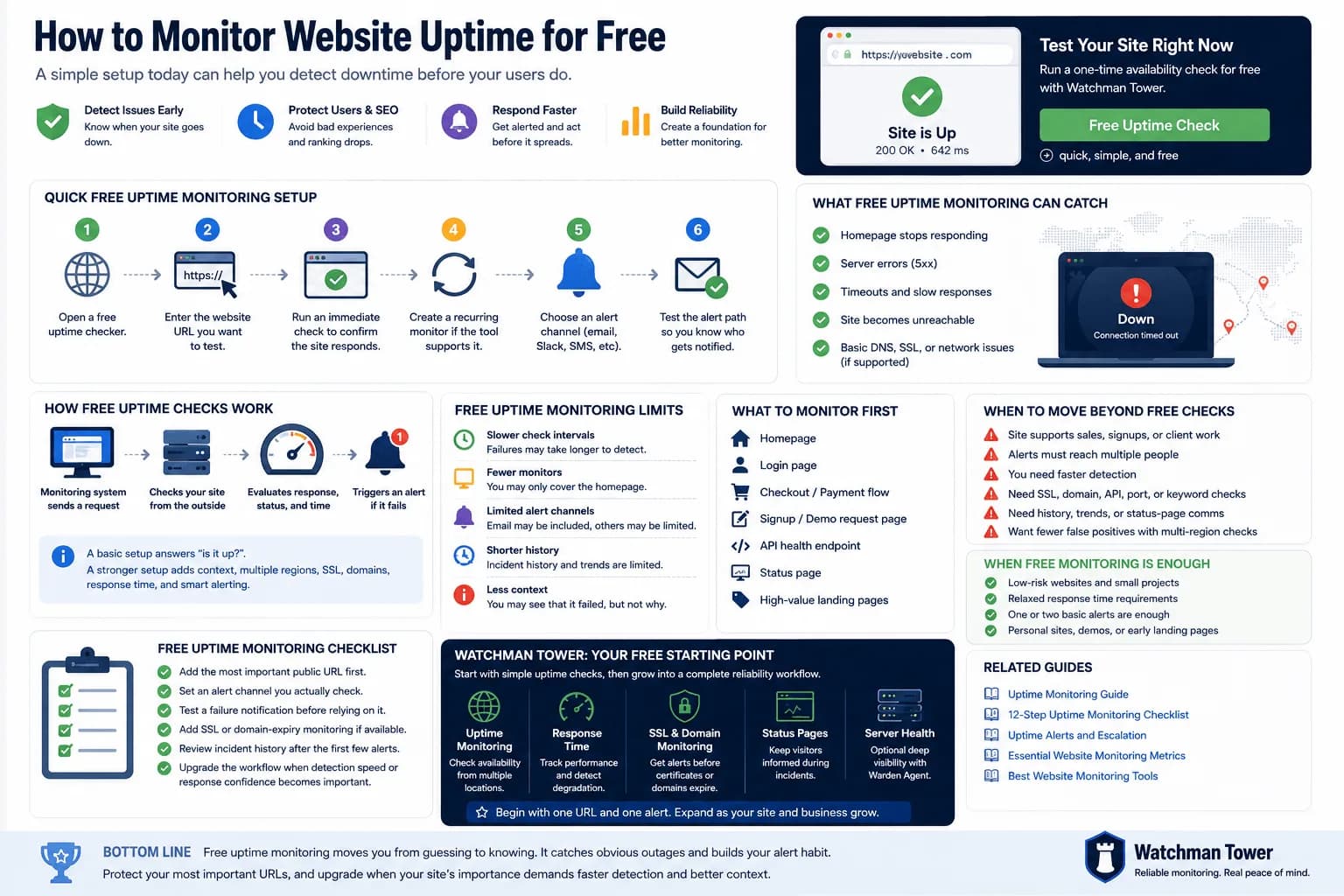
Monitor Website Uptime for Free: Setup, Limits, and Next Steps...
You can monitor website uptime for free by adding your URL to a basic checker, choosing an interval, and enabling alerts. This guide explains the fastest setup, what free checks can catch, and where free monitoring starts to fall short.
Learn more about Monitor Website Uptime for Free: Setup, Limits, and Next Steps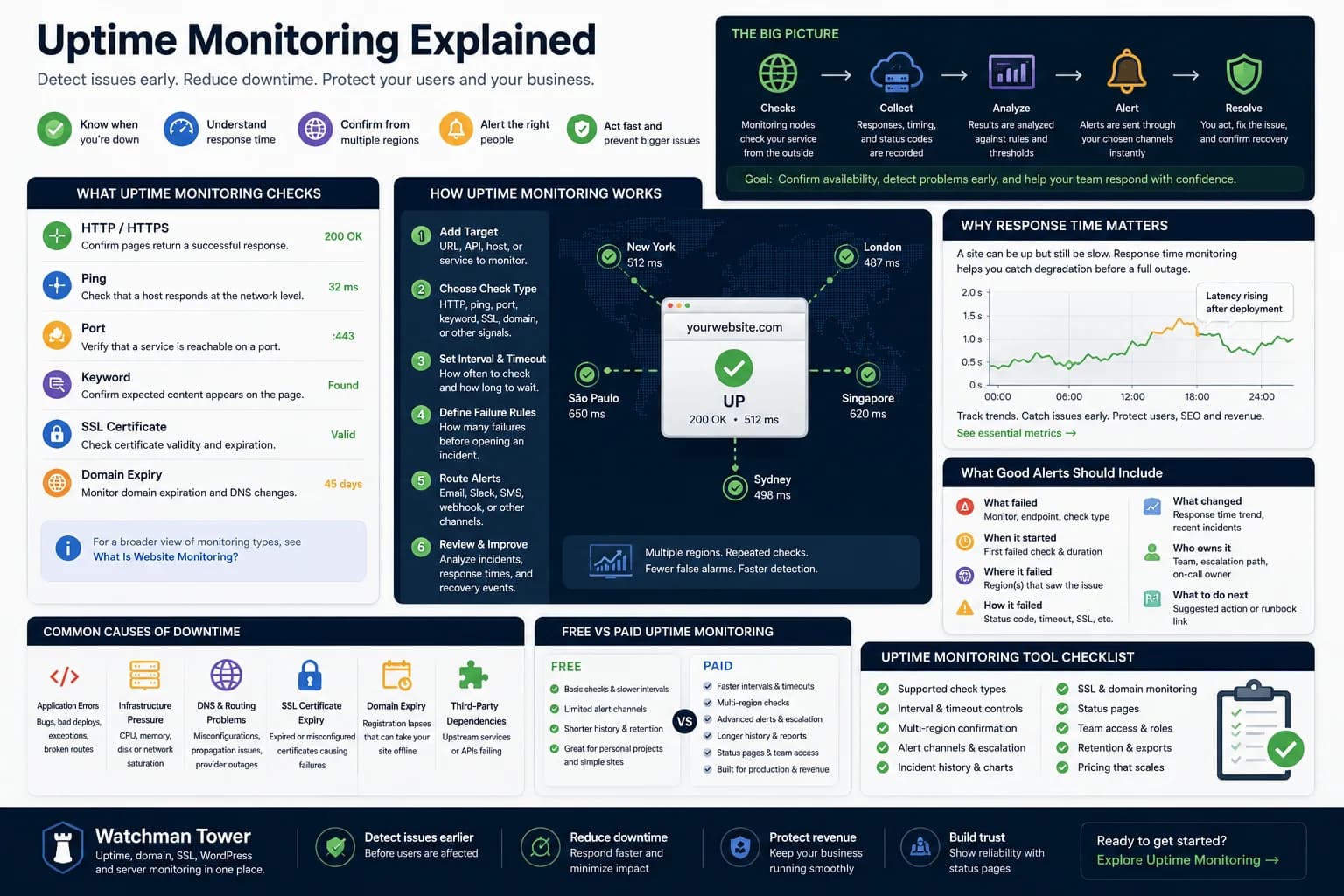
Uptime Monitoring Guide: How to Detect Downtime and Alert Faster...
Uptime monitoring helps you detect when a website, app, or service becomes unavailable. This guide explains how checks work, which signals matter, how alerts should be routed, and how to turn basic uptime checks into a practical response workflow.
Learn more about Uptime Monitoring Guide: How to Detect Downtime and Alert Faster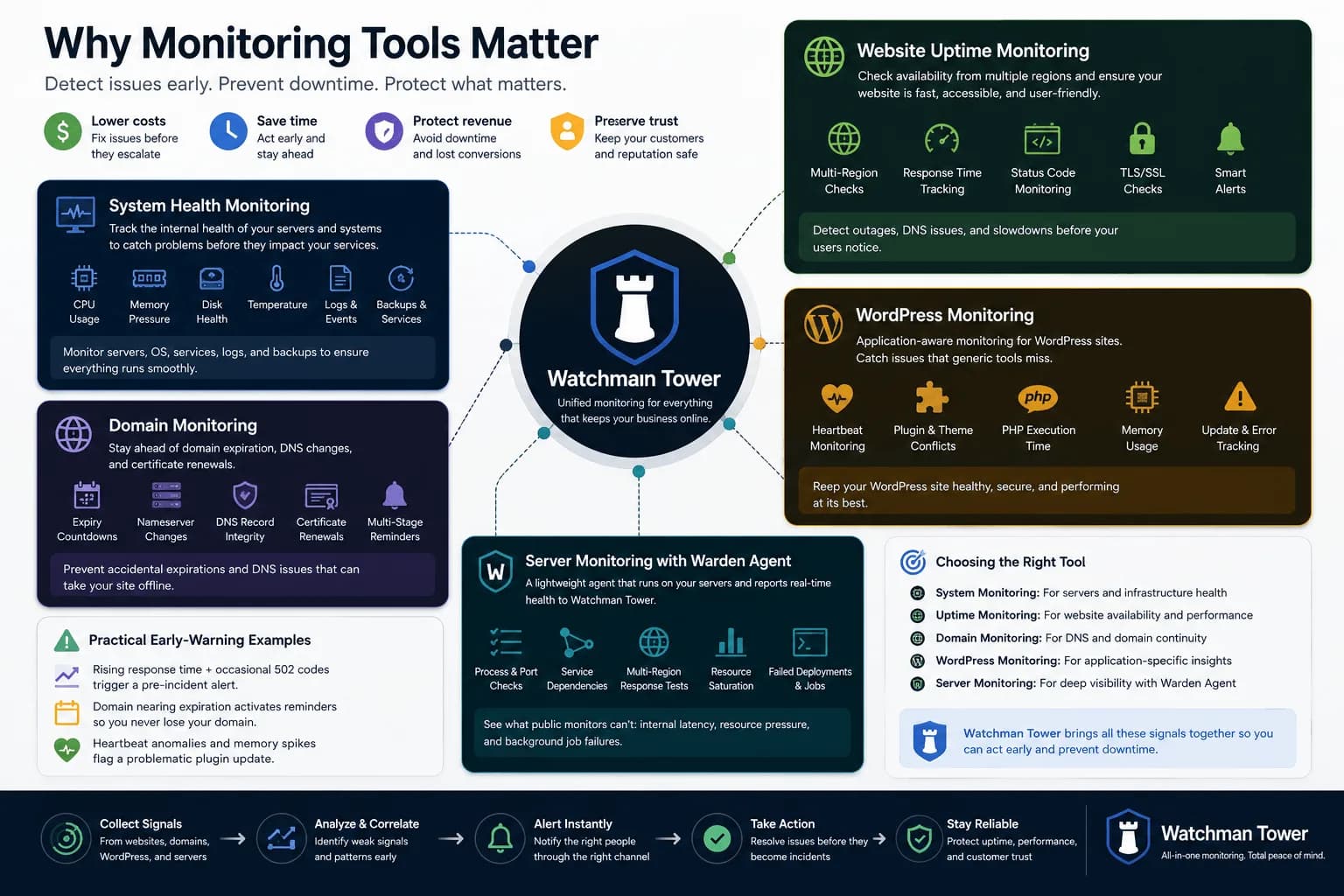
Different Types of Monitoring Tools: From System Health to Website Uptime...
Monitoring tools have expanded far beyond one-dimensional checks. This guide explains the main tool categories and where broader health visibility starts to matter.
Learn more about Different Types of Monitoring Tools: From System Health to Website Uptime