

The Role of AIOps in Uptime Management: Revolutionizing Incident Response
- Watchman Tower Team
- Updated: July 22, 2026
- Category: Incident Management
- Read Time: 3 min
AIOps gets interesting when it helps teams interpret signals better, not just automate more dashboards. This guide looks at that potential through incident response.
Introduction: The Need for Intelligent Uptime Management
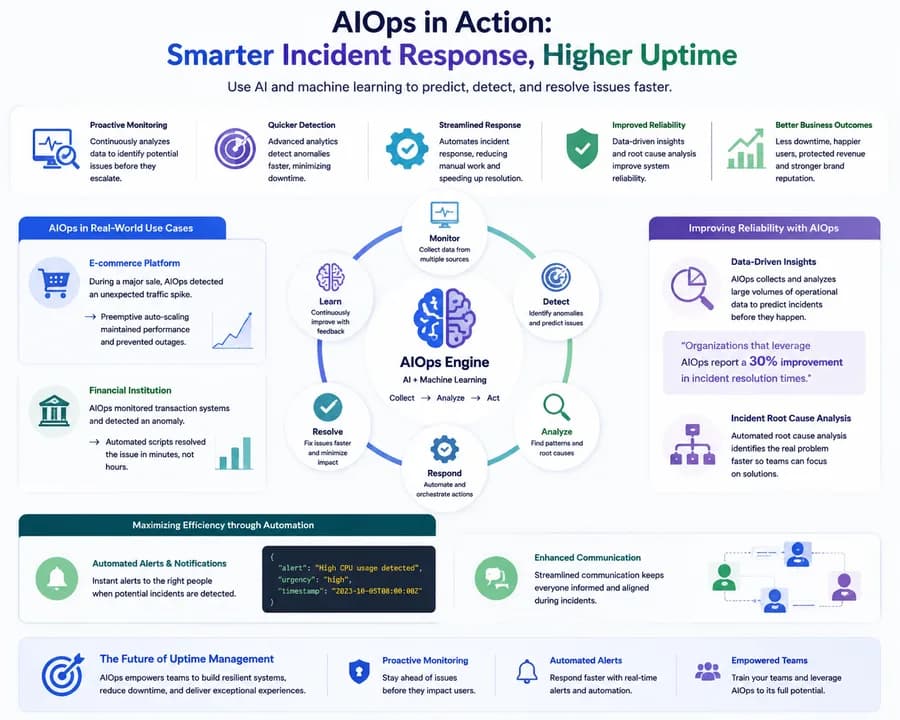
In today's digital landscape, maintaining uptime is paramount. Users expect services to be constantly available, and any downtime can result in lost revenue, disappointed customers, and tarnished brand reputation. AIOps, or Artificial Intelligence for IT Operations, is emerging as a game-changer in incident response and uptime management. By leveraging machine learning and advanced algorithms, AIOps helps organizations predict, identify, and resolve issues faster than ever.
The Advantages of AIOps in Incident Response
AIOps is transforming how DevOps teams handle incident management. Here are some key advantages:
- Proactive Monitoring: AIOps tools continuously analyze data from multiple sources to identify potential issues before they escalate.
- Quicker Detection: Using advanced analytics, AIOps solutions can detect anomalies faster, minimizing downtime.
- Streamlined Response: Automating incident response procedures through AIOps reduces manual workload and speeds up resolution.
Real-World Use Cases of AIOps in Action
Several organizations have effectively integrated AIOps into their incident management frameworks, yielding impressive results.
- Case Study: E-commerce Platforms - During a major sale event, an e-commerce platform employed AIOps to monitor user activity. The system detected an unexpected spike in traffic that could overwhelm their servers. Preemptive scaling was implemented, maintaining site performance and avoiding potential outages.
- Case Study: Financial Institutions - A financial institution adopted AIOps to monitor transaction processing systems. When an anomaly was detected, alerts triggered automated scripts to rectify the issue without human intervention, significantly lowering response time from hours to minutes.
Improving Reliability with AIOps
Reliability is not just about preventing downtime; it's about creating a responsive system that can effectively manage incidents.
Data-Driven Insights
AIOps enables the collection and analysis of vast amounts of operational data. By employing machine learning algorithms, patterns are identified that help predict incidents.
“Organizations that leverage AIOps report a 30% improvement in incident resolution times.”
Incident Root Cause Analysis
Finding the root cause of incidents can often be complex. AIOps solutions provide automated root cause analysis, allowing teams to focus on solutions rather than delving into data.
Maximizing Efficiency through Automation
One of the significant advantages of AIOps is its ability to automate repetitive tasks associated with incident response.
Automated Alerts and Notifications
AIOps platforms can be configured to send instant alerts to relevant stakeholders when potential incidents are detected. This quick notification reduces the response time and helps teams address issues proactively.
{
  "alert": "High CPU usage detected",
  "urgency": "high",
  "timestamp": "2023-10-05T08:00:00Z"
}
Enhanced Communication
AIOps tools also streamline communication among team members during incidents, ensuring everyone is on the same page and reducing the chances of misinformation.
Conclusion: The Future of Uptime Management
The integration of AIOps into uptime management strategies represents a significant step forward in ensuring systems remain reliable and resilient. As we move deeper into the digital age, businesses must embrace these intelligent solutions.
- Implement AIOps for proactive monitoring and reduced downtime.
- Utilize automated alerts to enhance incident response efficiency.
- Invest in training for your teams to maximize the benefits of AIOps tools.
For more insights on enhancing your incident management processes, check out How Slow Is Too Slow? or How Watchman Tower Uses Real Response Time Monitoring.
Free plan available. No credit card needed.
FAQ
What are the key advantages of using AIOps in incident response?v
How does AIOps improve uptime reliability?v
Can you provide real-world examples of AIOps in action?v
How does AIOps assist in incident root cause analysis?v
What role does automation play in AIOps for incident response?v
What improvements can organizations expect from implementing AIOps?v
Blog Posts
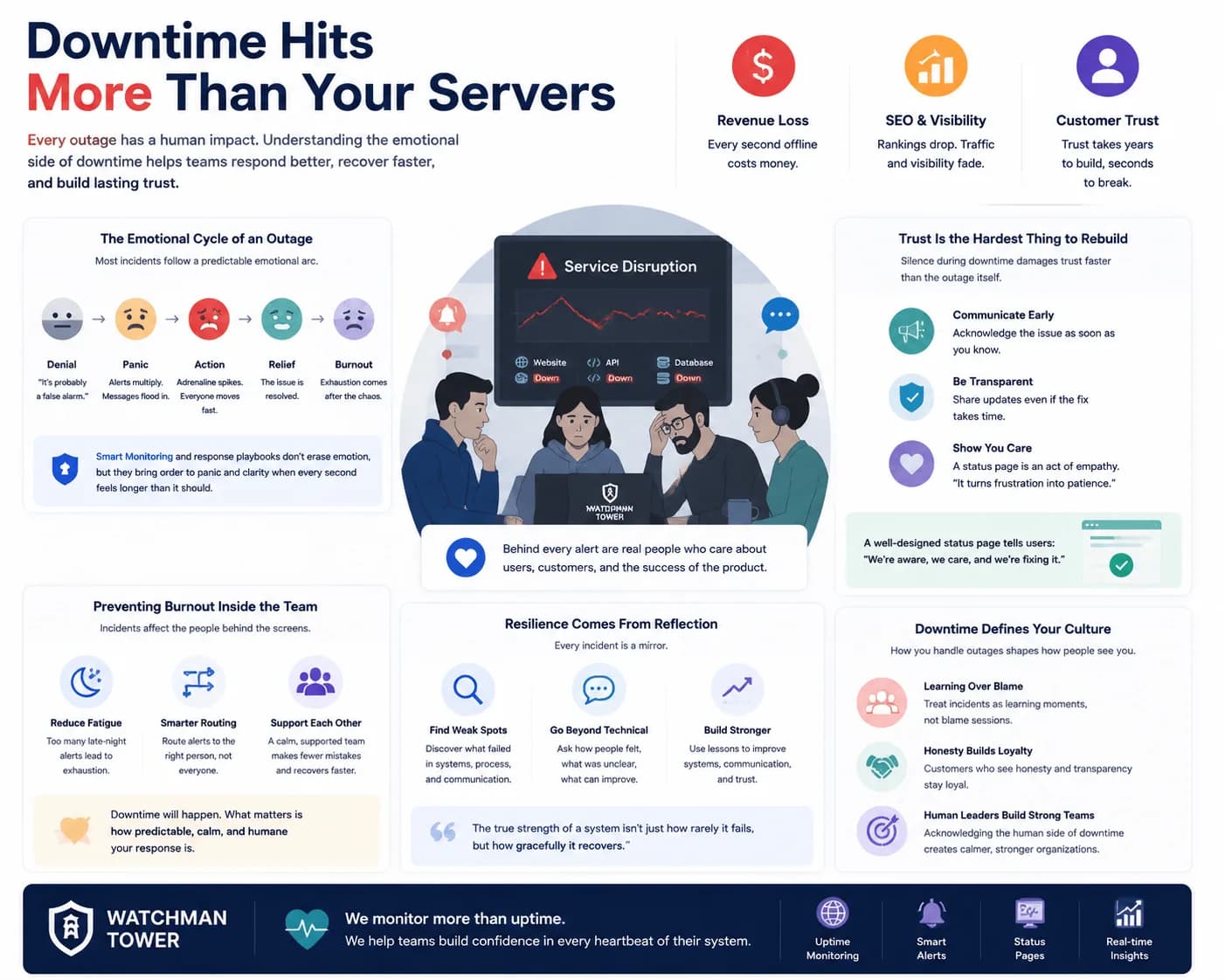
When Every Minute Hurts: The Psychology of Downtime...
Downtime affects people as much as systems. This guide explores the human side of outages and why clearer monitoring and communication help teams stay steadier under pressure.
Learn more about When Every Minute Hurts: The Psychology of Downtime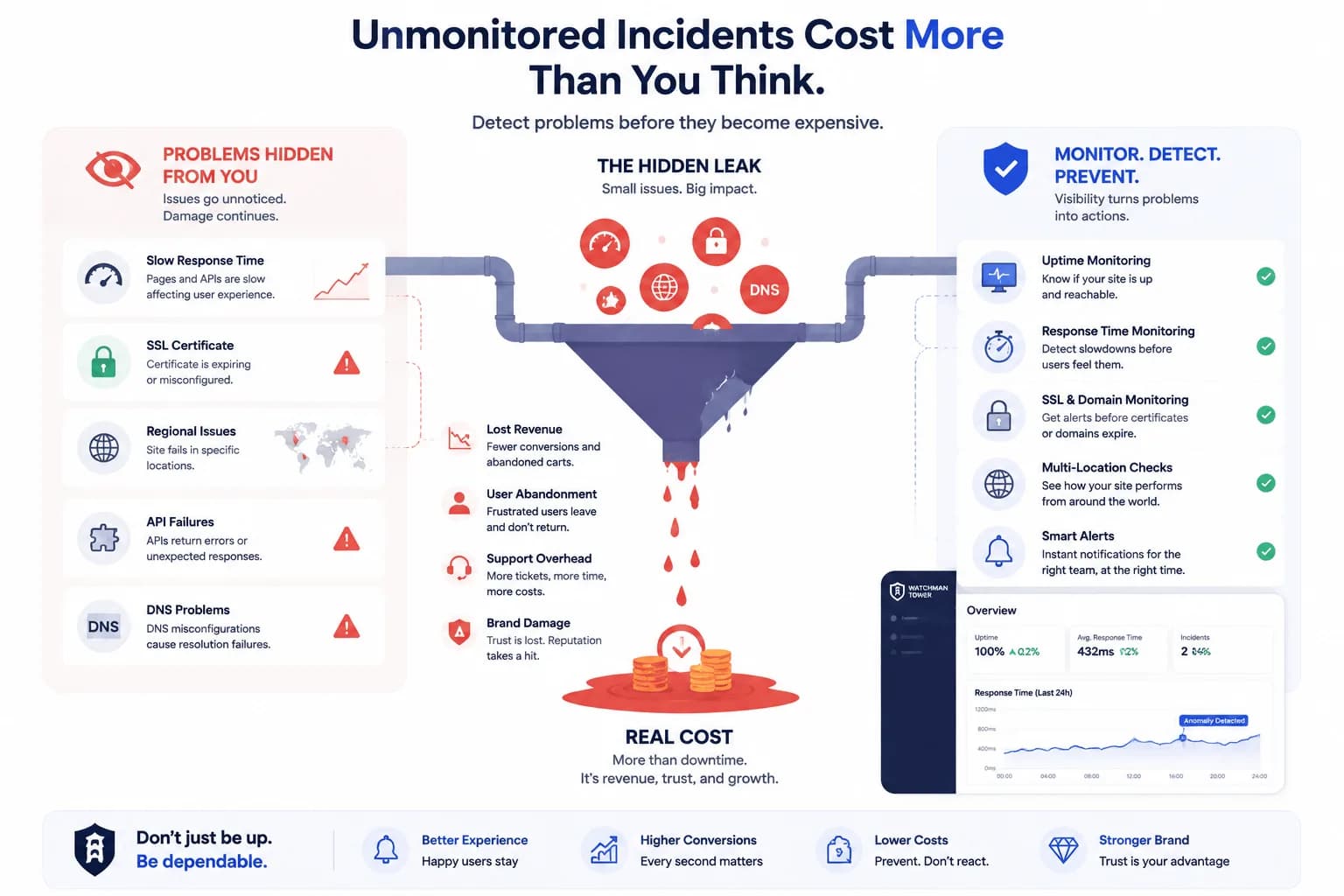
The Cost of Unmonitored Incidents: The Problems You Don't See Are the Most Expensive...
Unmonitored incidents create more than downtime. This guide explains how silent failures affect trust, revenue, and operational confidence long before teams realize the full impact.
Learn more about The Cost of Unmonitored Incidents: The Problems You Don't See Are the Most Expensive