

The Hidden ROI of Website Uptime
- Watchman Tower Team
- Updated: July 21, 2026
- Category: Performance
- Read Time: 3 min
Website uptime has financial value, but its real ROI becomes clearer when teams connect reliability to trust, incident reduction, and stronger operational awareness.
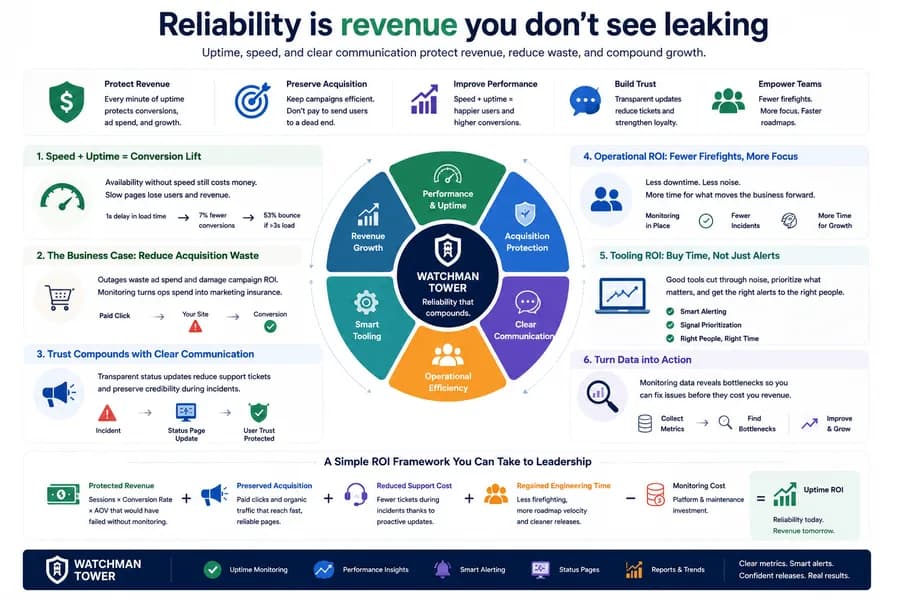
Reliability is revenue you don’t see leaking
Many teams only notice uptime when it disappears. But every silent minute of stability protects ad spend, preserves organic traffic, and keeps funnels flowing. If you want the long view of risk, start with the real cost of unmonitored incidents — then flip that cost into a return by preventing them.
Speed + uptime = conversion lift
Availability without speed still costs money. Users don’t quit because a page is “down”; they quit because it’s slow. That’s why ROI appears where performance and reliability meet. Use monitoring data to find bottlenecks and reinvest in speed. Our guide on turning metrics into action is a good start: optimize site speed with monitoring metrics.
Not all performance numbers tell the truth equally. If you track only averages, you’re missing the worst experiences that kill conversions. Learn why percentiles expose revenue risk better than means in average response time vs percentile metrics.
The business case: uptime reduces acquisition waste
Every campaign assumes your site will load. When it doesn’t, you’re paying to send users to a dead end. Continuous monitoring turns “ops” spend into “marketing insurance”: it protects CPC budgets, affiliate traffic, and seasonal launches. If you’re new to the discipline, see how the practice is bigger than a single ping in website monitoring vs uptime monitoring.
Trust compounds when communication is clear
Even the best systems fail. What protects lifetime value is how you communicate in that moment. A transparent status hub reduces support tickets and preserves credibility — which is an ROI line item no spreadsheet labels. For inspiration and patterns, explore SaaS status page importance and practical public status page examples.
Operational ROI: fewer firefights, more focus
Teams that instrument early spend fewer nights firefighting and more time shipping. That’s not just morale — it’s output. Less context switching means faster roadmaps and cleaner releases, which create downstream revenue. If you want the nuts and bolts of building an always-on posture, start with how website monitoring works.
Tooling ROI: buy time, not just alerts
Good platforms don’t only detect downtime — they prioritize signals and route them to the right people. Choosing wisely matters. Compare options in best website monitoring tools (2025) and keep a lightweight, always-on baseline with monitor website uptime free.
A simple ROI framing you can take to leadership
Uptime ROI = (protected revenue + preserved acquisition spend + reduced support cost + regained engineering time) − (monitoring & maintenance cost).
- Protected revenue: sessions × conversion rate × AOV that would have failed without monitoring.
- Preserved acquisition: paid clicks that did not land on slow or failing pages.
- Reduced support: fewer tickets during incidents thanks to proactive comms and a status hub.
- Regained engineering time: less firefighting, more roadmap velocity.
If you need help framing the value story for stakeholders, here’s a concise argument: reasons uptime monitoring is essential (2025).
Conclusion: reliability is the quietest growth loop
The strongest growth loops are often invisible. Uptime keeps marketing efficient, UX fast, support calm, and teams focused. Invest in monitoring not just to avoid pain, but to compound trust. The return shows up in everything you do next.
Watchman Tower helps teams turn reliability into results — with clear metrics, smart alerting, and the confidence to ship faster.
Free plan available. No credit card needed.
FAQ
How does website uptime protect advertising spend?v
Why do slow pages hurt conversion rates?v
How does uptime reduce customer acquisition costs?v
Why is communication important during downtime incidents?v
How do you calculate the ROI of uptime monitoring?v
What makes a good website monitoring tool?v
Blog Posts
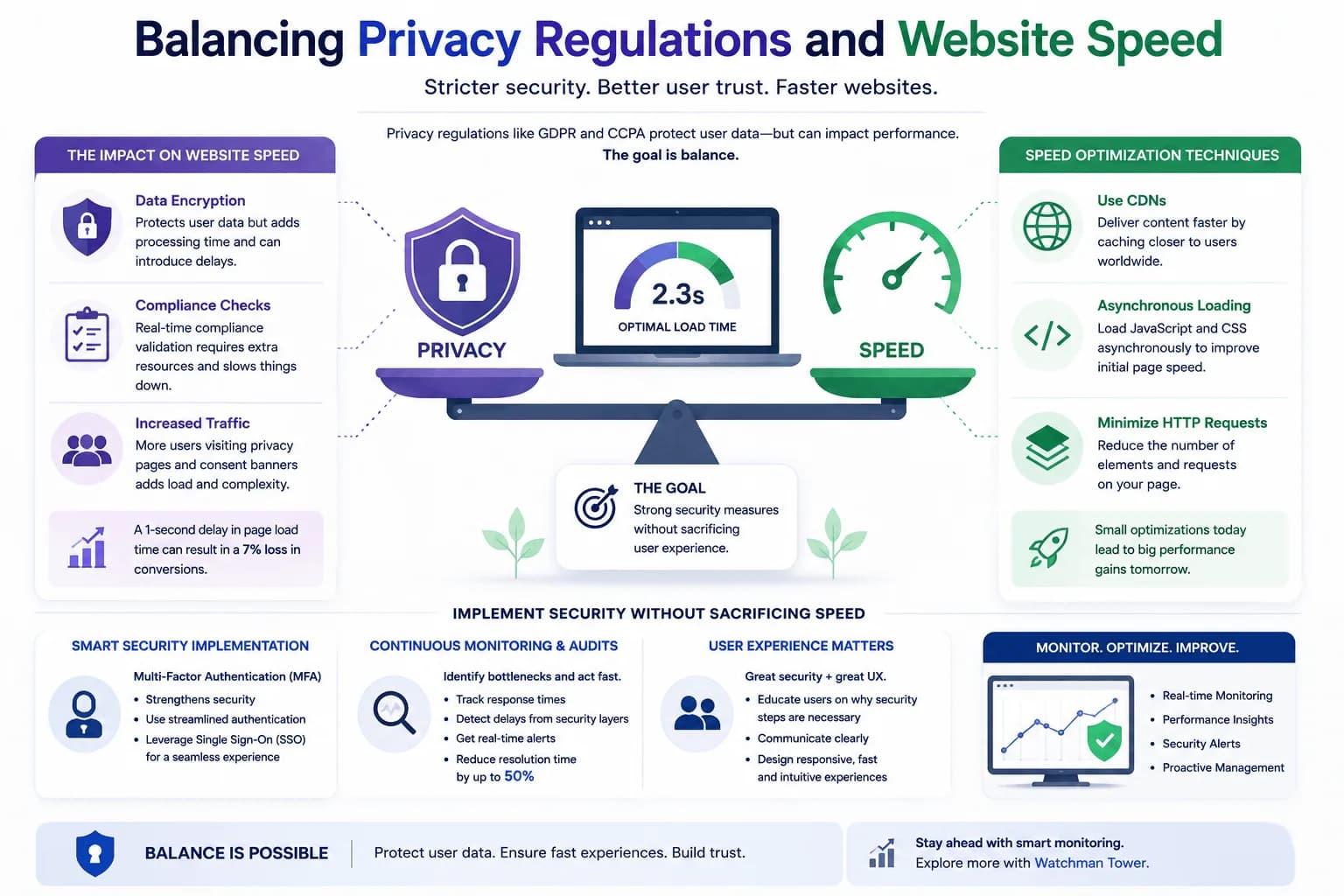
Website Performance in the Age of Privacy: Balancing Speed with Security...
Privacy, performance, and reliability increasingly interact in ways teams cannot treat separately. This guide explains how monitoring helps balance those pressures.
Learn more about Website Performance in the Age of Privacy: Balancing Speed with Security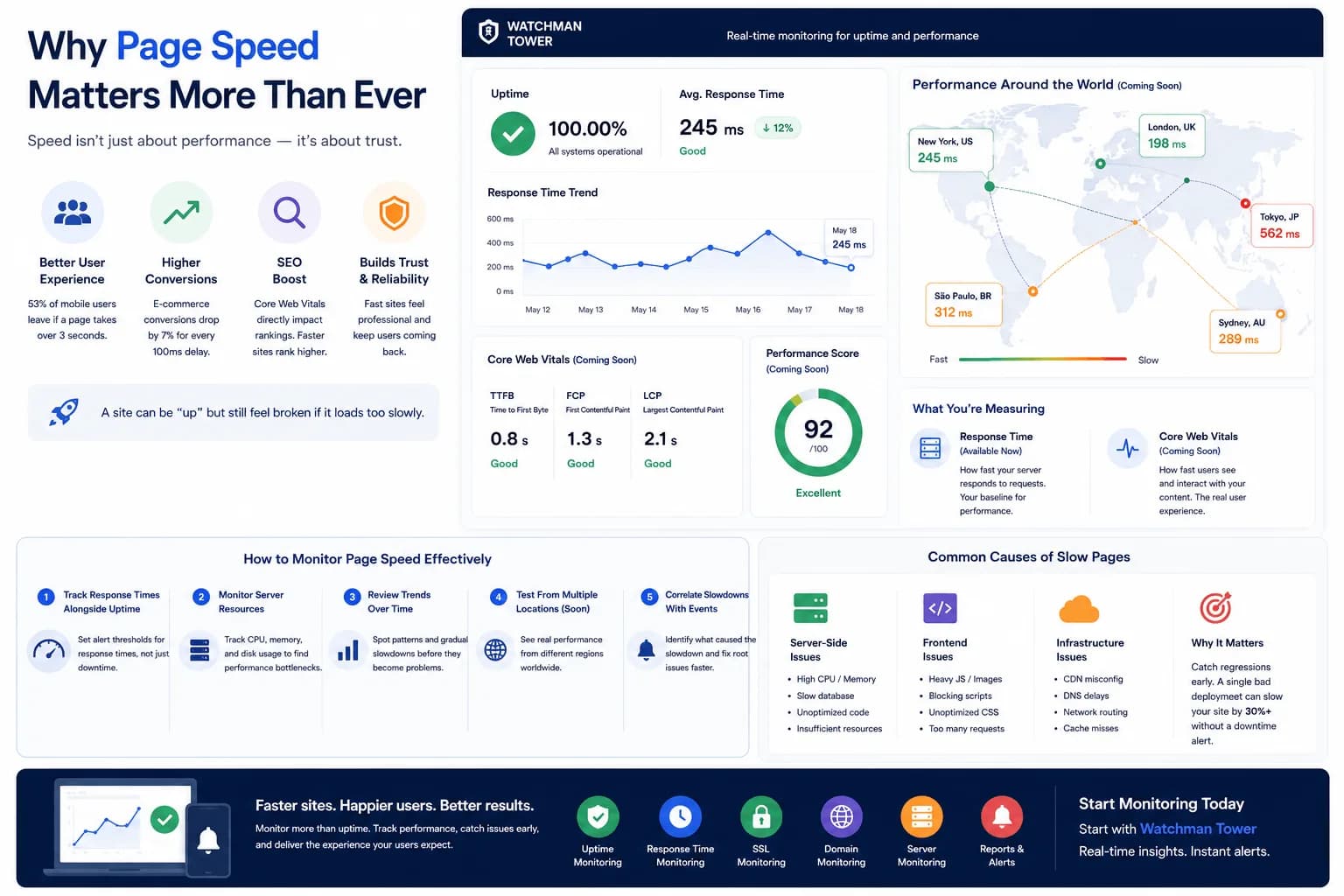
Page Speed Monitoring: Catch Every Millisecond Before It Costs You...
Page speed monitoring helps teams catch the slowdowns that damage trust and conversion before users describe the system as broken. This guide explains why every millisecond matters operationally.
Learn more about Page Speed Monitoring: Catch Every Millisecond Before It Costs You